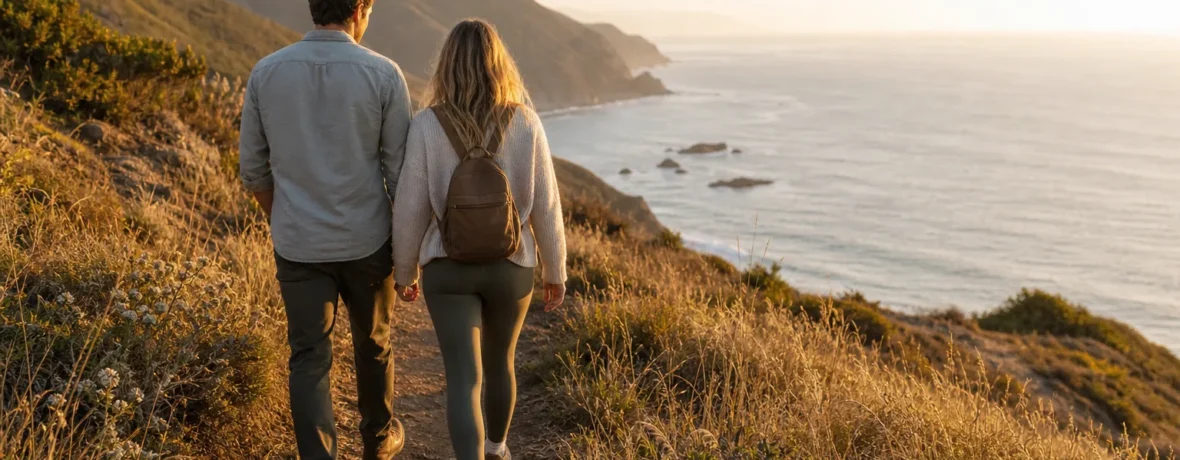
On a hiking date, wear broken-in trail shoes, moisture-wicking socks, breathable layers, and a clean outer layer that fits the weather. For a 2- to 5-mile [3.2- to 8-km] casual hike, skip cotton, new boots, heavy perfume, jeans, and anything you would hate getting dusty.
What should you wear on a hiking date?
Wear real hiking clothes that still look intentional.
A hiking date is still a hike. That means your outfit has to handle sweat, wind, dirt, sun, and possibly a clumsy creek crossing. But it is also a date, so you want to look like you made an effort. The sweet spot is clean, fitted, trail-ready, and relaxed.
Start with your feet. Wear trail runners, light hiking shoes, or broken-in hiking boots. If the trail is smooth and dry, trail runners are usually the easiest choice. If the trail is rocky, muddy, steep, or cold, hiking shoes or boots give more support and protection.
Next, build your clothing from the inside out. A synthetic or merino wool top beats cotton because it dries faster when you sweat. Add flexible hiking pants, leggings, or shorts depending on temperature and terrain. Bring a light jacket even if the day looks mild. The National Park Service includes extra clothing and rain protection in its Ten Essentials, and that advice fits a date hike too: comfort keeps the mood alive.
- Best top: moisture-wicking T-shirt, sun hoodie, or merino long sleeve.
- Best bottom: hiking pants, joggers, leggings, or trail shorts with stretch.
- Best footwear: broken-in trail runners, hiking shoes, or hiking boots.
- Best socks: wool or synthetic hiking socks, not cotton gym socks.
- Best extra layer: fleece, wind shell, rain jacket, or insulated vest.
What is a good hiking date outfit for different weather?
Match your outfit to the coldest, wettest, windiest part of the plan.
Do not dress only for the parking lot. Trailheads can be warm while ridgelines feel sharp and cold. Shady canyons can hold damp air. A sunset walk can drop fast once the sun leaves. Before you choose clothes, check the point forecast through the National Weather Service and look at temperature, wind, precipitation, and timing.
| Conditions | Wear this | Avoid this |
|---|---|---|
| Hot, sunny, 75°F+ [24°C+] | Light sun hoodie or breathable tee, trail shorts or thin pants, hat, sunglasses | Black cotton shirt, heavy leggings, sandals with no grip |
| Mild, 55-75°F [13-24°C] | Wicking top, hiking pants or leggings, light fleece or wind shell in your pack | Jeans, bulky sweatshirt, brand-new shoes |
| Cool, 35-55°F [2-13°C] | Base layer, fleece, hiking pants, beanie, gloves, wind or rain shell | One thick coat with no layers underneath |
| Wet or muddy | Rain jacket, quick-dry pants, wool socks, grippy shoes | White sneakers, denim, long dragging hems |
In warm weather, sun protection matters as much as looking good. The CDC recommends sunscreen plus protective clothing for sun safety, so a UPF-style sun shirt, brimmed hat, and sunglasses can be the better look and the smarter move. Use the CDC’s sun safety guidance if you burn easily or will be out during strong midday sun.
How do you look cute on a hiking date without dressing wrong?
Choose flattering trail clothes, not fragile fashion clothes.
Cute on a trail means clean lines, good fit, and clothes that move. You do not need to look like you are posing for an expedition catalog. You also do not want to look like you got lost on the way to brunch.
Pick one polished piece and keep the rest practical. A fitted merino long sleeve, clean trail joggers, a sharp fleece, a baseball cap, or a color-coordinated wind shell can carry the look. Earth tones work well: olive, rust, navy, charcoal, tan, cream, and forest green. Bright colors also make sense if you like them, especially on cloudy days or wooded trails.
- Wear clothes that fit close enough not to snag, but loose enough to climb steps and sit on a rock.
- Choose darker bottoms if the trail is dusty or muddy.
- Keep jewelry minimal: small studs, a simple chain, or a watch.
- Use a small daypack, running vest, or crossbody that does not bounce.
- Style your hair so wind and sweat will not wreck it in 20 minutes.
If you wear makeup, go light. Tinted moisturizer, brow gel, waterproof mascara, and lip balm are plenty for most hikes. Heavy foundation and glossy lipstick tend to lose the fight against sweat, dust, and water bottles.
What should women wear on a hiking date?
Women should wear supportive, flexible layers that can handle sweat and weather.
A great women’s trail date outfit can be simple: trail runners, wool socks, high-rise hiking leggings or pants, a wicking top, and a light jacket. If you prefer shorts, choose a pair with a secure waistband and enough inseam to prevent thigh rub. If you prefer leggings, pick thicker hiking or running leggings rather than thin lounge leggings that turn sheer when stretched.
A sports bra matters. Choose support based on the terrain, not the vibe. A smooth nature trail needs less support than a steep climb with rock steps. For cool weather, add a fleece or insulated vest over a long sleeve. For hot weather, a sun hoodie can look clean and save your shoulders.
Skorts and hiking dresses can work on easy, warm trails if they allow full stride and have built-in shorts. They are less ideal for scrambling, brushy trails, sitting on rough rock, or cold wind. If the date includes a meal afterward, pack a fresh shirt, deodorant wipes, and a lightweight overshirt. That tiny reset helps.
What should men wear on a hiking date?
Men should wear clean technical basics that fit well and do not smell like old gear.
The easiest formula is trail shoes, wool socks, hiking pants or shorts, a moisture-wicking tee, and a fleece or wind shell. Fit is the difference between sharp and sloppy. Baggy cargo shorts from the back of the drawer are not doing you favors. Neither is a skintight gym shirt if you will be sweating hard.
Choose a shirt that breathes and has no giant race logo unless that is your everyday style. A plain merino tee, synthetic athletic tee, or sun hoodie looks better than a cotton undershirt. Hiking pants should stretch when you step over logs and sit cleanly at the waist without a belt tug every 5 minutes.
Trim the extras. A watch, sunglasses, and a cap are useful. Too much cologne is not. On a trail, scent carries, bugs exist, and nobody wants to taste fragrance while climbing uphill.
Can you wear jeans on a hiking date?
No, skip jeans unless the “hike” is really a short park stroll on dry pavement.
Jeans are stiff, slow to dry, and uncomfortable once they get sweaty or wet. They also limit movement on steps, roots, and steep grades. If rain appears or you sit on damp ground, denim holds moisture and can chill you fast.
Wear hiking pants, joggers, leggings, or trail shorts instead. If you love the denim look, choose dark stretch hiking pants with a slim cut. You get the same casual feel with better movement and faster drying.
For a first hiking date, clothing should lower friction, not create it. You do not want to spend the date adjusting a waistband, peeling wet denim off your knees, or pretending chafing is fine.
What shoes should you wear on a hiking date?
Wear broken-in shoes with grip, support, and socks that prevent rubbing.
Footwear can make or ruin the date. New boots are a classic mistake. They may look fresh, but stiff collars, untested insoles, and hot spots can turn 3 miles [4.8 km] into a limp back to the car. Wear shoes you have already used for walking at least 1 hour without pain.
- Check the trail surface. Smooth dirt works with trail runners. Rocks, mud, snow, or steep downhill sections call for sturdier hiking shoes or boots.
- Choose socks first. Wool or synthetic hiking socks manage sweat better than cotton.
- Test the full combo. Shoes plus socks should leave enough toe room for downhill walking.
- Tie for the descent. Snug the heel and midfoot so your toes do not slam forward.
- Pack blister backup. A small strip of moleskin or blister bandage weighs almost nothing.
Sandals can work only on mellow, dry trails if they have heel straps and real tread. Flip-flops do not belong on a hiking date unless the date is sitting by a lake after the walk.
What should you pack for a hiking date?
Pack enough to be useful without turning the date into a full expedition.
A small daypack is better than overloaded pockets. Bring water, snacks, an extra layer, sun protection, a tiny first-aid kit, and whatever the trail requires. If the hike is 2 to 5 miles [3.2 to 8 km] on an easy local trail, you do not need to pack like you are crossing a mountain range. You do need enough gear to stay comfortable if the pace slows or the weather shifts.
- Water bottle or hydration bladder
- Snack that is easy to share: trail mix, bars, fruit, jerky, or crackers
- Light rain shell or wind shell
- Warm layer for shade, wind, or sunset
- Sunscreen, sunglasses, and hat
- Small first-aid kit with blister care
- Phone with offline map or saved trail details
- Hand wipes or small pack towel
- Bug repellent when mosquitoes or ticks are active
If you will be in tick country, clothing can help. The CDC recommends EPA-registered repellents and says treating clothing and gear with permethrin can help prevent tick bites; follow product labels and never apply permethrin directly to skin. Read the CDC’s tick prevention guidance before hiking through tall grass, brush, or wooded edges.
What should you not wear on a hiking date?
Do not wear anything untested, slippery, delicate, or miserable when sweaty.
The wrong outfit sends two signals: you did not think through the trail, and your comfort is now everyone’s problem. A hiking date should feel easy, playful, and safe. Your clothing should help you move, laugh, sit, climb, and change plans if needed.
- New boots: stiff footwear can cause hot spots fast.
- Cotton socks: they hold sweat and increase rubbing.
- Jeans: poor stretch, slow drying, heavy when wet.
- White fashion sneakers: fine for a coffee walk, bad for mud.
- Heavy perfume or cologne: strong scent is rough on a trail.
- Dangly jewelry: it can snag on hair, packs, and branches.
- Thin fashion leggings: they may pill, snag, or turn sheer.
- Unsupportive sandals: one bad step can spoil the whole plan.
Also skip anything you keep “saving.” Trails have dust, sap, pollen, mud, sunscreen, and snack crumbs. If a stain would break your heart, leave that piece at home.
How should you dress for a first hiking date?
Dress slightly nicer than your normal hike, but do not sacrifice function.
A first date already has enough pressure. Your outfit should disappear once you start walking. That means no tugging, no limping, no sweating through a cotton shirt in the first 10 minutes, and no jacket so bulky you regret bringing it.
Use this simple formula:
- Pick the shoes first. Comfort beats every other style choice.
- Choose one clean base outfit. Pants plus top, leggings plus long sleeve, shorts plus sun hoodie, or similar.
- Add one good-looking layer. Fleece, vest, flannel-style hiking shirt, or wind shell.
- Keep colors simple. Two neutrals plus one accent color works.
- Pack for after. Fresh shirt, wipes, and lip balm can save the post-hike drink or taco stop.
If your date chose the trail, ask one practical question before you dress: “Is it more of a walk, or are we climbing?” That is not uncool. That is how you avoid showing up in the wrong shoes.
When to see a doctor
Get medical help for severe cold stress, heat illness symptoms, infected blisters, or concerning bites.
Clothing prevents many trail problems, but it does not solve everything. If someone is confused, very drowsy, fumbling, slurring words, shivering hard then stops shivering, or seems dangerously cold, treat it as urgent. Mayo Clinic states that suspected hypothermia requires emergency help; review its hypothermia first-aid guidance before cold-weather hiking.
For blisters, clean protection is usually enough on a normal hike. See a health care professional if a blister shows signs of infection, such as increasing redness, warmth, swelling, pus, worsening pain, or red streaks; Mayo Clinic covers this in its blister first-aid guidance. If you develop fever, rash, severe headache, joint pain, or flu-like symptoms after a tick bite, contact a medical professional promptly.
Related reading
- Hiking Dates: Planning a First Date on the Trail
- What to Wear Hiking in Any Season
- What to Wear Hiking in Winter
- What to Wear Hiking in Summer and Hot Weather
FAQ
What should I wear on a casual hiking date?
Wear trail shoes, wool or synthetic socks, comfortable hiking pants or shorts, and a moisture-wicking top. Add a light jacket in your pack even for a casual 2-mile [3.2-km] trail.
Is it okay to wear leggings on a hiking date?
Yes, leggings are fine if they are thick, stretchy, and trail-appropriate. Choose hiking or running leggings with good coverage, and pair them with grippy shoes and a layer you can tie or pack.
What colors are best for a hiking date?
Earth tones, dark neutrals, and muted outdoor colors work well because they hide dust and look natural on trail. Olive, navy, rust, charcoal, tan, burgundy, and forest green are easy wins.
Should I bring an extra shirt?
Yes, bring an extra shirt if you will eat, drive, or hang out after the hike. A clean shirt takes little space and makes the post-hike part of the date feel much better.
Can I wear perfume or cologne on a hiking date?
Use none or a very small amount. Strong fragrance can feel overpowering on a warm trail and may attract unwanted insect attention.
What is the biggest outfit mistake for a hiking date?
The biggest mistake is wearing untested shoes. A stylish outfit cannot rescue sore feet, blisters, or a slow painful walk back to the trailhead.