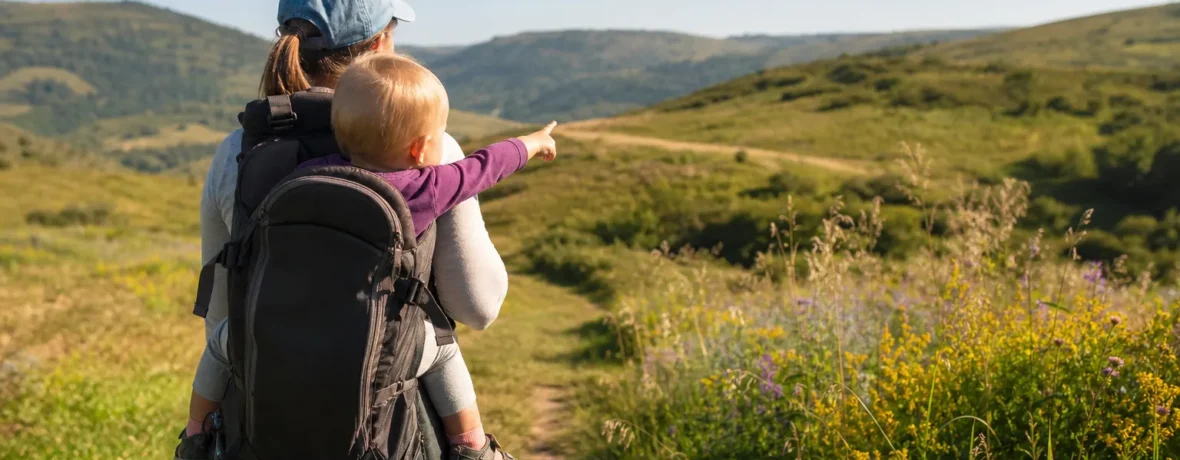
Hiking with toddlers works best when you plan for 0.5 to 2 miles [0.8 to 3.2 km], start early, carry more snacks than you think, and treat the trail as playtime instead of a march. Yes, toddlers can hike, if the route is short, flexible, shaded, and easy to quit.
How far can a toddler hike?
Most toddlers do best with 0.5 to 2 miles [0.8 to 3.2 km] total.
That range includes wandering, rock inspection, snack breaks, stick collecting, and the five-minute debate over one interesting pinecone. A toddler hike is not an adult hike with shorter legs. It is a moving picnic with dirt.
For a 1- to 2-year-old, plan on plenty of carrier time and very short walking bursts. For a 3-year-old, you may get a steady mile [1.6 km] on a good day. For a nearly 4-year-old, 2 miles [3.2 km] can work if the trail is fun and the mood is right.
| Toddler age | Realistic distance | Best trail style |
|---|---|---|
| 12-24 months | 0.25-1 mile [0.4-1.6 km] | Flat loop, stroller-friendly path, short nature trail |
| 2 years | 0.5-1.5 miles [0.8-2.4 km] | Wide dirt path with rocks, logs, or water views |
| 3 years | 1-2 miles [1.6-3.2 km] | Loop or out-and-back with a clear turnaround point |
| 4 years | 1.5-3 miles [2.4-4.8 km] | Easy trail with gentle climbs and lots of stops |
Keep the first few hikes comically easy. If everyone finishes happy, you win. Add distance later.
What is the best plan for hiking with toddlers?
The best plan is short, early, snack-heavy, and easy to abandon.
Pick a trail that makes you look smart even if the day goes sideways. A loop under 2 miles [3.2 km] is great, but an out-and-back is often better because you can turn around any time. Avoid trails with steep drop-offs, long exposed sections, tricky creek crossings, or a long drive home after nap time has been destroyed.
- Choose one simple goal. Make it “reach the bridge,” “touch the big boulder,” or “eat lunch at the pond.” Not “finish the trail.”
- Start early. Toddlers usually hike better before they are tired, overheated, or hungry.
- Set a turnaround time. Decide before you start. If you hike out for 35 minutes, turn around even if the overlook is “just ahead.”
- Pack the carrier. Even strong little walkers may quit suddenly. Plan for it.
- Stop before the crash. If the pace slows, the whining starts, or the toddler gets clumsy, take a break before it becomes a full trail meltdown.
Your adult brain wants progress. Your toddler wants control, novelty, and snacks. Build the day around that truth and the hike gets easier fast.
What should you pack for a toddler hike?
Pack for hunger, weather, bathroom surprises, and a child who may refuse to walk.
A toddler hiking pack should be boringly practical. Skip the fantasy loadout. You need layers, fluids, food, sun protection, bug protection, and cleanup gear. Put the most-used items where you can reach them without unpacking the whole bag.
- Water for you and your child
- Easy snacks: crackers, fruit, cheese, nut-free bars if needed, sandwiches, pouches
- Diapers or pull-ups, wipes, and a sealable trash bag
- Spare pants, socks, and shirt
- Light rain jacket or wind layer
- Warm layer, even on mild days
- Sun hat and child-safe sunscreen
- Insect repellent used according to the product label
- Small first-aid kit
- Map or downloaded offline map
- Whistle for older toddlers who can follow instructions
- Comfort item if your child uses one
- Carrier, even for kids who “want to walk” at the trailhead
For sun, the CDC recommends shade, protective clothing, hats, sunglasses, and sunscreen as part of a sun-safety plan. Read the CDC’s sun safety guidance before long exposed hikes.
For ticks, stay near the center of the trail, check clothing and skin after the hike, and shower soon after getting home when possible. The CDC’s tick prevention guidance gives clear steps for families, including tick checks after outdoor time.
Should you use a hiking carrier, stroller, or let your toddler walk?
Use all three when the trail allows it, but bring a carrier if the route is not stroller-friendly.
A toddler may walk proudly for 20 minutes and then fold like wet cardboard. That is normal. The right setup depends on trail surface, distance, weather, and your child’s size.
| Option | Best for | Watch out for |
|---|---|---|
| Soft carrier | Short hikes, younger toddlers, quick ups and downs | Less structure for long carries; hot in warm weather |
| Framed child carrier | Longer outings, uneven dirt trails, older toddlers | Bulky; changes your balance; needs a good fit |
| All-terrain stroller | Paved paths, gravel rail trails, wide park roads | Roots, stairs, mud, narrow bridges, and steep grades |
| Toddler walking | Short nature trails and low-risk terrain | Slow pace, sudden stops, sudden sprints |
If you carry your toddler, adjust the carrier before leaving the parking lot. Tighten the hip belt first, then shoulder straps, then load lifters if the carrier has them. The weight should ride close to your body, not pull you backward.
How do you keep toddlers safe on the trail?
Keep toddlers within arm’s reach near water, drop-offs, roads, dogs, and poison ivy.
Most toddler trail safety is simple and repetitive. You say the same things many times. “Stop at the big rock.” “Hold my hand near water.” “Feet stay on the trail.” “We look before touching.” That repetition is not wasted. It is the system.
- Use a trail rule. Try: “You can walk ahead until the next tree, then stop.”
- Dress them brightly. Orange, red, yellow, or bright blue is easier to spot than forest green.
- Teach stop. Practice at home and on safe paths before you need it.
- Keep snacks seated. Walking while eating raises choking risk.
- Skip risky edges. A viewpoint is not toddler-friendly just because adults can stand there safely.
- Watch temperature. Toddlers can get cold, hot, or tired before they can explain what is wrong.
Heat deserves respect. The Wilderness Medical Society’s heat illness guidance stresses planning, prevention, rest, cooling, and hydration in hot environments. For toddler hikes, that means shade breaks, early starts, light layers, and turning around before anyone looks cooked.
How do you keep a toddler interested while hiking?
Give the trail a job.
Toddlers love purpose. They do not need a summit. They need a mission that changes every few minutes. Make the hike interactive and the trail becomes a playground without swings.
- Find three round rocks.
- Count five birds.
- Look for a leaf bigger than your hand.
- Walk like a bear for 10 steps.
- Tiptoe past the “sleeping” log.
- Choose the next snack stop.
- Listen for water, wind, or woodpeckers.
- Match colors: green moss, brown bark, white clouds.
Use games before boredom hits. Once a toddler is fully done, your best material may not land. Switch activities often. Keep the energy light. If your child wants to stare at ants for seven minutes, congratulations, you are hiking.
What snacks work best for toddler hikes?
The best trail snacks are familiar, low-mess, and easy to hand out in small portions.
Bring more than you expect to use. Hunger makes toddlers unreasonable, and trail hunger hits fast. Choose foods your child already eats at home. A brand-new snack can wait for a less dramatic venue.
- Cut fruit in a hard container
- Crackers or pretzels
- Cheese sticks in a small cooler bag
- Mini sandwiches or tortilla roll-ups
- Applesauce or yogurt pouches
- Dry cereal
- Soft bars that do not crumble into dust
Set snack rules before the hike: snacks happen when seated, wrappers go back in the pack, and water comes with food. Keep one “reset snack” hidden for the final stretch. Not as a bribe. As survival.
What should toddlers wear for hiking?
Toddlers should wear comfortable layers, grippy shoes, and clothes that can get dirty.
Dress for the trail, not the photo. Cotton can be fine for a short dry walk near the car, but on cool or wet days, synthetic or wool layers handle moisture better. Bring a spare pair of socks. Wet toddler socks can end a hike with shocking speed.
- Shoes: flexible sneakers or light hiking shoes with traction
- Socks: wool or synthetic if the trail may be wet
- Pants: durable leggings, joggers, or hiking pants
- Top: breathable shirt plus a warm layer
- Weather shell: rain jacket or windbreaker
- Sun gear: brimmed hat and sunglasses if tolerated
Avoid oversized boots for easy hikes. Toddlers trip enough already. Shoes should bend, grip, and stay on.
How do you handle potty training, diapers, and accidents on the trail?
Assume there will be an accident and pack so it is no big deal.
If your toddler is in diapers, bring more than you think you need plus wipes and a sealable bag for packing out trash. If your toddler is potty training, keep the first hikes close to a restroom or the car. Trail bathrooms can be far away, seasonal, closed, or too weird for a toddler who likes one specific toilet at home.
Pack a small “bathroom kit” in its own bag:
- Diaper or backup underwear
- Wipes
- Hand sanitizer
- Spare pants and socks
- Two sealable bags
- Lightweight changing pad or sit pad
Do not turn potty training into a trail power struggle. Offer chances. Keep it calm. Celebrate dry pants if they happen. Clean up and move on if they do not.
What do you do when your toddler refuses to walk?
Pause first, then feed, change the game, or carry.
A refusal to walk usually means one of five things: hungry, tired, cold, hot, or bored. It can also mean the shoe has a pebble in it, the sock seam feels wrong, or the child has decided that gravity is a personal insult.
- Stop talking for 10 seconds. Too many words can make the moment bigger.
- Check basics. Water, snack, diaper, temperature, shoes.
- Offer two choices. “Do you want to walk to that tree or ride in the carrier?”
- Use a tiny goal. “Let’s get to the next shadow.”
- Switch positions. Carrier, shoulders only where safe, hand-hold, or slow walk.
- Turn around early. Quitting before disaster is good planning, not failure.
Do not threaten the outdoors into being miserable. If every hike becomes a battle, make the next one shorter and sillier.
When to see a doctor
Get medical help fast for severe symptoms, breathing trouble, confusion, fainting, or signs of serious dehydration.
Outdoor problems can move quickly with small kids. Do not diagnose on the trail. Your job is to cool, warm, hydrate when appropriate, stop the hike, and get help when symptoms worry you.
For dehydration, Mayo Clinic says young children are at higher risk and that severe dehydration needs medical treatment right away. Review Mayo Clinic’s dehydration symptoms and causes before hot-weather hikes.
Call a healthcare professional or seek urgent care if your toddler has:
- Extreme sleepiness, confusion, or unusual behavior
- Fainting or trouble staying awake
- Repeated vomiting or inability to keep fluids down
- Very little urination compared with normal
- Dry mouth, sunken eyes, or no tears when crying
- Hot skin, worsening weakness, or symptoms after heat exposure
- Breathing trouble, facial swelling, or widespread hives after a bite or sting
- Fever or rash after a tick bite
- A fall with head impact, worsening pain, or refusal to use an arm or leg
If your instincts say the situation is wrong, end the hike and get help. A missed overlook does not matter.
What kind of trail is best for toddlers?
The best toddler trail is short, shaded, interesting, and close to the car.
Look for nature trails, lake loops, boardwalks, rail trails, arboretum paths, and state or city park loops. A perfect toddler trail has a few features: safe footing, low consequence, clear landmarks, and a reward that arrives fast.
- Length under 2 miles [3.2 km]
- Gentle elevation gain
- Shade for at least part of the route
- Benches, logs, rocks, or safe spots to rest
- Water views without dangerous access
- Restroom near the trailhead if possible
- Cell service or a simple route you can follow offline
Avoid making the first hike a bucket-list hike. Pick the trail that lets your toddler succeed. Save the bigger route for later.
How do you make toddler hikes easier for adults?
Lower the mileage and raise the patience budget.
The adult mistake is trying to protect the old version of hiking. Long miles, quiet pace, summit lunch, clean gear. That version can come back. For now, the win is building a kid who thinks trails feel safe, fun, and normal.
Use these adult sanity rules:
- Bring another adult when you can.
- Keep the drive shorter than the hike window.
- Put clean clothes in the car for everyone.
- Pack a post-hike snack that stays in the car.
- Do not promise playgrounds, ice cream, or waterfalls unless you can deliver.
- Leave before the final meltdown if you see it coming.
Also, say yes to tiny discoveries. The caterpillar, the mud crack, the acorn cap, the hollow stump. That is the hike. Not the map line.
Related reading
- A Walk in the Woods: Bill Bryson's AT Story vs Reality
- Kids' Hiking Boots: How to Size and When to Buy
- Mountain Porters: The People Who Carry Expeditions
- Teaching Leave No Trace to Kids
FAQ
What age can you start hiking with a toddler?
You can start as soon as your child can safely ride in an appropriate carrier or walk short distances on easy ground. Keep the route short, close to the car, and timed around naps, meals, and weather.
Can a 2-year-old hike 2 miles?
Some 2-year-olds can cover 2 miles [3.2 km], but many will need carrier time. Plan the route so you can turn around early, and treat 1 mile [1.6 km] as a solid success.
Do toddlers need hiking boots?
No, most toddlers do not need boots for easy trails. Flexible sneakers or light hiking shoes with good traction are usually better because they are lighter and easier to walk in.
How much water should I bring for a toddler hike?
Bring enough for frequent small drinks, plus extra for delays, heat, and spills. For warm days or longer routes, carry more than you expect to use and turn around early if water is running low.
What is the biggest mistake when hiking with toddlers?
The biggest mistake is choosing a trail that matches adult ambition instead of toddler reality. Pick short, flexible routes and stop while everyone still has a little energy left.
How do I know when to turn around?
Turn around when your toddler is getting clumsy, unusually quiet, very cranky, too hot, too cold, or no longer interested in snacks or games. Also turn around at your planned turnaround time, even if the destination is close.