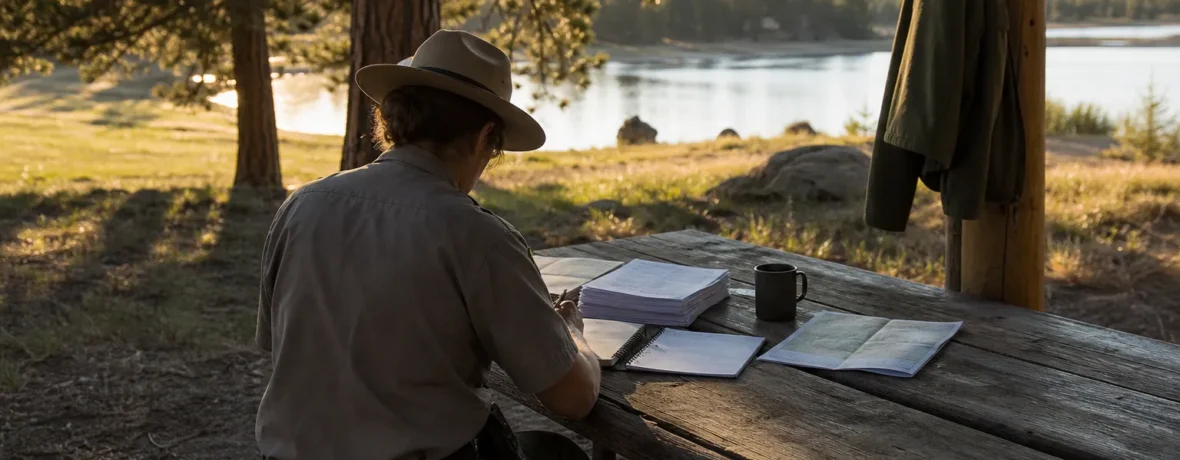
How much does a park ranger make? In the U.S., federal entry-level park rangers commonly earn $34,799 to $56,039 in 2026 base pay at GS-5 to GS-7 before locality pay. Mid-level GS-9 rangers earn $52,727 to $68,549 base. Law enforcement and high-cost locations can pay more.
How much does a park ranger make in 2026?
A federal park ranger usually starts in the mid-$30,000s to mid-$50,000s before locality pay.
For National Park Service and other Department of the Interior jobs, many rangers are hired under the federal GS-0025 Park Ranger series. The Department of the Interior Park Ranger career page lists entry-level park ranger work at GS-3 to GS-7, mid-level work at GS-8 to GS-11, journey-level work at GS-12 to GS-13, and senior work at GS-14 to GS-15.
That pay grade matters more than the job title. A seasonal ranger at a quiet historic site and a law enforcement ranger in a packed western park may both be “park rangers,” but the paycheck can look very different.
As of November 2026, the OPM 2026 General Schedule base table gives these annual base rates:
| Federal grade | 2026 base annual pay | Typical ranger stage |
|---|---|---|
| GS-5 | $34,799 to $45,239 | Entry seasonal or early career |
| GS-7 | $43,106 to $56,039 | Experienced entry or lead seasonal |
| GS-9 | $52,727 to $68,549 | Mid-level ranger or law enforcement track |
| GS-11 | $63,795 to $82,938 | Advanced program, specialist, or supervisor |
Base pay is not the final paycheck. Federal jobs also use locality pay, so a ranger stationed near San Francisco, Washington, DC, or Alaska can earn more than the same grade and step in a lower-cost area. Always read the salary range in the actual job announcement.
What is the average park ranger salary?
The closest national wage benchmark is $73,010 per year for park naturalist-type work.
Here’s the catch: “park ranger” is not one clean labor-market box. Some rangers teach school groups and lead walks. Some staff entrance stations. Some patrol backcountry trails, respond to rescues, or enforce federal law. Others manage volunteers, cultural sites, wildlife programs, or fire education.
For the interpretive and naturalist side of the job, O*NET’s Park Naturalists profile lists sample titles including Interpretive Park Ranger, Park Guide, Naturalist, and Environmental Educator. Its 2025 wage data, tied to the broader Conservation Scientists category, reports a median wage of $35.10 per hour, or $73,010 per year.
Use that number as a broad career benchmark, not a guarantee. Many true entry-level ranger jobs pay less. Permanent specialists, supervisors, and experienced natural resource staff can earn more.
Do national park rangers make more than state park rangers?
Sometimes, but not always.
Federal pay is easier to track because it follows the GS scale. State park systems set their own pay bands, and those vary wildly. A state ranger in California or Washington may see stronger pay than a federal seasonal job. A small county park system may pay less but offer year-round stability close to home.
Compare the whole package, not just the headline salary:
- Annual salary or hourly wage
- Seasonal versus permanent status
- Health insurance and retirement
- Housing availability in expensive gateway towns
- Overtime rules
- Training and promotion path
- Commute distance and fuel costs
A $42,000 job with affordable housing can beat a $52,000 job where rent eats the view before you ever reach the trailhead.
How much do seasonal park rangers make?
Seasonal rangers often earn entry-level GS or hourly wages for a limited appointment.
Many federal seasonal jobs are posted at GS-4, GS-5, or GS-7. That can be a fine foot in the door, but you need to read the appointment length. Some jobs are full-time for the summer only. Others run longer, but still have a hard cap or non-pay period.
Seasonal work can be rugged in a way the brochure does not show. You may answer the same bathroom question 90 times, hike out to check a sign in heat, give a campfire talk at dusk, and help with a lost-child search before breakfast the next day. Good work. Not cushy.
If you are chasing permanent ranger work, seasonal jobs can build the resume that gets you there. They also show hiring managers that you can handle crowds, radio calls, weather, weird questions, and long days in uniform.
Do law enforcement park rangers get paid more?
Law enforcement rangers can earn more because they follow GL grades and law enforcement pay rules.
The National Park Service says permanent law enforcement rangers are typically hired at GL-5, GL-7, or GL-9, and that the full performance level is GL-9. It also states that exact rates vary by location and points applicants to law enforcement pay tables through OPM on the NPS law enforcement ranger hiring page.
That higher pay comes with a heavier load. These rangers are federal law enforcement officers. The job can include arrests, investigations, emergency response, medical calls, search and rescue, vehicle stops, and hard conversations with people who picked a bad day to ignore the rules.
NPS also lists pre-employment screening, a background investigation, drug screening, a medical evaluation, and physical fitness requirements for candidates. If you want the badge, train for the whole job, not just the scenic parts.
What affects how much a park ranger earns?
Your pay depends on grade, location, role, season, and experience.
Here’s the short trail map:
- Find the grade. Look for GS, GL, or a state pay band in the job post.
- Check the step or range. Federal grades have 10 steps. Step 1 is the low end; Step 10 is the top of that grade.
- Add locality. Federal postings usually show the real salary range for that duty station.
- Read the appointment type. Permanent, term, seasonal, career-seasonal, and temporary jobs are not the same thing.
- Look for housing. In park towns, housing can decide whether the job works.
- Check promotion potential. A GS-5/7/9 ladder can move faster than a flat GS-5 job.
Experience matters, but so does specialization. Rangers with law enforcement credentials, emergency medical skills, interpretation chops, resource management background, wildfire training, foreign language ability, or supervisory experience may qualify for stronger roles.
Is being a park ranger a good-paying job?
It can be stable, but it is rarely a quick path to high income.
Park ranger work tends to pay best when you move from seasonal to permanent, from entry-level to specialist, or from field staff into supervisory and management roles. The tradeoff is real. You get public lands, meaningful work, and days outside. You may also get remote posts, competitive hiring, weekend shifts, modest early pay, and housing headaches.
If your dream is simple—wear the flat hat, protect a place, teach people why it matters—then the salary may be enough. If you need fast financial growth, you’ll want a clear plan from day one.
How can you make more money as a park ranger?
You make more by qualifying for higher grades and harder-to-fill roles.
- Build seasonal experience before applying for permanent jobs.
- Target ladder positions with promotion potential.
- Earn emergency medical, search-and-rescue, or interpretation credentials where useful.
- Consider law enforcement if you want that responsibility and can meet the standards.
- Apply across agencies: NPS, Bureau of Land Management, U.S. Fish and Wildlife Service, state parks, county parks, and city park systems.
- Be willing to move, at least early in your career.
- Learn to write a federal resume that matches the job announcement line by line.
That last point is boring. It also matters. Plenty of strong outdoor workers never make the certificate because their resume reads like a campfire story instead of proof of qualifications.
Related reading
- How to Become a Park Ranger: Education, Steps and Timeline
- What Does a Park Ranger Do? A Day in the Job
- The Park Ranger Hat: History of the Flat Hat
- How to Become a National Park Ranger (NPS)
FAQ
How much do entry-level park rangers make?
Federal entry-level rangers commonly fall between GS-5 and GS-7. As of November 2026, that equals $34,799 to $56,039 in annual base pay before locality adjustments.
Can park rangers make $100,000?
Yes, but usually not at the start. Senior federal grades, supervisors, high-locality duty stations, overtime-eligible roles, and specialized law enforcement positions can reach six figures.
Do park rangers get free housing?
Sometimes, but you should not assume it. Some remote parks offer government housing or seasonal dorm-style housing, while other jobs expect you to find your own place in town.
Are park rangers paid hourly or salary?
Both exist. Permanent federal rangers are commonly salaried under GS or GL pay, while many seasonal or local park jobs list hourly wages.
Is a degree required to become a park ranger?
Not for every job, but many competitive ranger roles favor education or specialized experience. Natural resources, history, interpretation, recreation management, biology, criminal justice, and education can all fit different ranger tracks.
What is the best-paid type of park ranger?
Law enforcement, supervisory, and specialist rangers often have the strongest earning potential. The best-paid path depends on the agency, grade, locality, overtime, and how far you climb.