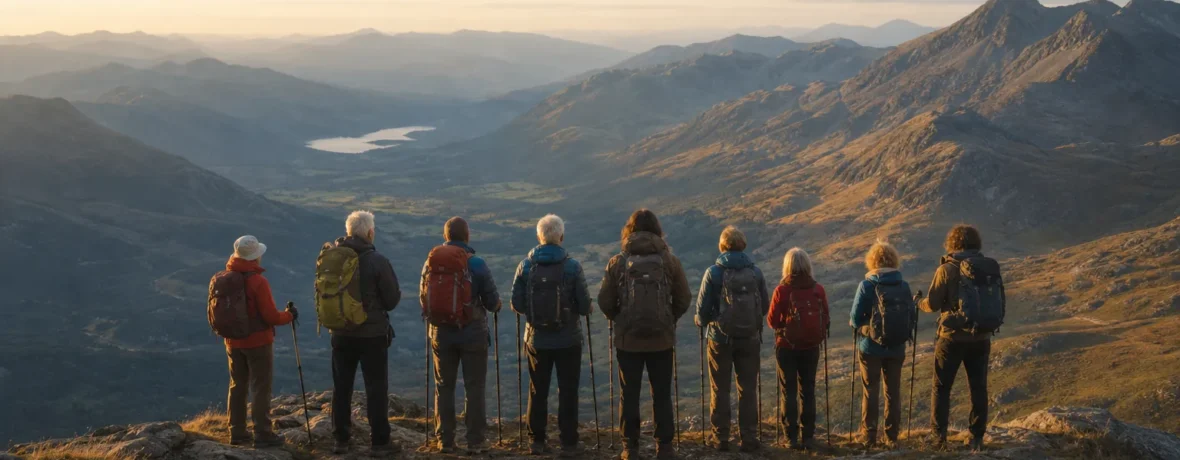
Yes—hiking groups are worth joining if you choose one that matches your pace, distance, risk tolerance, and social style. Start with 3 local options, attend 2 beginner-friendly hikes, and ask 5 safety questions before committing. The right group turns strangers into dependable trail partners.
How do you find hiking groups near you?
Start local, then widen the circle.
The best hiking community is usually closer than you think. You do not need a big expedition club or a perfect friend group already in place. You need one reliable trail calendar, one hike that fits your legs, and one organizer who communicates clearly.
Use this search order:
- Check local outdoor stores. Many shops host day hikes, skills nights, trail cleanups, and bulletin boards for regional clubs.
- Search city and county park calendars. Ranger-led walks are low-pressure, structured, and often easier for new hikers than informal social outings.
- Look at state park event pages. Naturalist walks, full-moon hikes, birding walks, and winter hikes can lead you to regulars.
- Search social platforms with your town, region, and trail names. Use terms like “women’s hiking,” “beginner hikes,” “weekday hikers,” “trail runners,” “backpacking club,” and “senior hiking.”
- Ask land trusts and conservation groups. Trail work days are one of the fastest ways to meet hikers who actually show up.
- Try national trail nonprofits. The American Hiking Society’s get involved page can point you toward advocacy, volunteering, and trail stewardship options.
- Search college outdoor programs and alumni groups. Some welcome community members, not only students.
Do not judge a group by one awkward event. Hikers are people. Some are quiet. Some overpack. Some talk nonstop on climbs. Attend two or three outings before deciding the whole scene is not for you.
What kind of group fits your pace, skill, and vibe?
Pick the group by pace first, personality second.
Most bad group hikes fail before the trailhead. The listing says “moderate,” one person thinks that means 3 miles [4.8 km] with a picnic, another thinks it means 12 miles [19.3 km] with 3,000 feet [914 m] of gain and no breaks. That mismatch is where resentment starts.
Read the event description like a route contract. You want mileage, elevation gain, expected pace, terrain, weather plan, dog policy, carpool details, and whether anyone will stay with the slowest hiker. If those details are missing, ask before you click join.
| Group type | Best for | Watch for |
|---|---|---|
| Beginner day-hike club | New hikers, relaxed walkers, people rebuilding fitness | Vague routes, oversized groups, no sweep hiker |
| Peak-bagging group | Strong hikers who like steep climbs and early starts | Pace pressure, loose turnaround plans, weather bravado |
| Backpacking club | Hikers ready for overnight gear, water planning, and camp skills | Gear snobbery, unclear permit planning, weak bailout plans |
| Trail stewardship crew | People who want community, purpose, and slower trail days | Physical labor, tool safety, less hiking mileage |
For a first outing, choose shorter than your normal solo hike. If you can comfortably hike 8 miles [12.9 km] alone, join a 5-mile [8 km] group hike first. You are not only testing your legs. You are testing the group’s style, communication, and decision-making.
Is a hiking meetup safe for beginners?
Yes, if the route is beginner-friendly and the organizer has a clear plan.
Beginner does not mean helpless. It means you are still learning how your body, gear, and judgment work outside. A good organizer respects that. They post the route, screen for fit, set expectations, and do not shame anyone for asking practical questions.
Look for these signs before joining:
- The distance and elevation gain are listed.
- The trail surface is described: dirt path, rocky steps, exposed ridge, creek crossings, snow, sand, mud.
- The meeting point and start time are exact.
- The event says if dogs, kids, or guests are allowed.
- The organizer names a turnaround time or bailout option.
- Someone is assigned to stay behind the last hiker.
- The weather policy is clear.
As of November 2026, the National Park Service’s Hike Smart guidance tells hikers to choose a trail that fits the group, carry the essentials, and leave trip details with someone who is not on the hike. That advice applies even when the trail is only 3 miles [4.8 km]. Short hikes still need a plan.
What should you ask before joining a group hike?
Ask direct questions before you commit.
You are not being difficult. You are doing the work that keeps a fun Saturday from turning into a cold, hungry, blistered mess. Good leaders welcome specific questions because they want the right people on the right hike.
Send a short message with the details you need. Keep it friendly and clean:
- “What pace do you expect on flat sections?”
- “Will the group stay together or split by speed?”
- “Is there a sweep hiker?”
- “Are there exposed sections, stream crossings, or scrambling?”
- “What is the turnaround time?”
- “Do I need traction, poles, rain gear, or extra water?”
- “Are permits, parking passes, or timed entry required?”
- “What happens if someone needs to turn back?”
If the answer is “Just show up, you’ll be fine,” pause. Maybe it is a mellow neighborhood walk. Maybe it is not. The farther the trailhead, the harsher the weather, and the steeper the route, the more detail you deserve.
What should you bring to your first group hike?
Bring your own basics, even when the group looks organized.
Never make another hiker responsible for your water, food, layers, headlamp, or ride home. Group hiking works best when everyone is self-sufficient enough to help someone else if needed.
Pack this for a standard day hike:
- Water in bottles or a reservoir
- Snacks with salt and calories
- Rain shell or wind shell
- Warm layer, even when the trailhead feels mild
- Map downloaded for offline use
- Fully charged phone
- Headlamp, not just a phone flashlight
- Small first-aid kit
- Sun protection: hat, sunglasses, sunscreen
- Toilet kit: trowel where needed, toilet paper, bags, hand sanitizer
- Personal medications and emergency contact info
- Cash or card for parking, shuttle, or post-hike food
Match your footwear to the terrain. Smooth dirt path? Trail shoes may be fine. Loose rock, mud, snow, or a heavy pack? You may want more traction and ankle support. If the listing mentions snow or ice, ask if traction devices are expected.
Follow the land manager’s rules. If the route crosses a national park, forest, state park, or wilderness area, check the official site for current closures, fire restrictions, dog rules, and permit requirements before you go. As of November 2026, the National Park Service hiking safety page also reminds hikers to pack out trash and follow Leave No Trace habits.
How do you make trail friends without feeling awkward?
Be useful, be steady, and give it time.
Trail friendships rarely start with a perfect deep conversation at mile 1. They start with small signals: you show up on time, you read the event description, you do not make the whole hike revolve around you, and you notice when someone needs a hand.
Try these low-pressure moves:
- Say hello at the trailhead before people sort themselves into pace clusters.
- Ask one simple question: “Have you hiked with this group before?”
- Offer to take a group photo, then actually send it.
- Share sunscreen, a blister bandage, or a snack only if someone wants it.
- Thank the organizer before you leave.
- Join the same group again within a month, so people remember your face.
Do not force instant closeness. Some hikers come to talk. Some come to breathe. Some are friendly at the trailhead and silent on climbs because they are working hard. Read the room, then read the trail.
If you want deeper community, volunteer. Trail maintenance days create better conversation than many social hikes because everyone has a job. You carry tools, clear brush, dig drains, clip branches, and eat lunch sitting in the dirt. That is bonding without small-talk gymnastics.
What red flags should you avoid?
Skip any group that treats safety as an inconvenience.
Charm does not make a hike safe. A huge following does not make a leader competent. Strong legs do not equal sound judgment. Look at how the group handles planning, weather, slower hikers, and mistakes.
Walk away from these signs:
- The organizer mocks “slow” hikers.
- The route is kept secret until the last minute.
- People are pressured to continue when they feel unwell.
- No one knows the trail, but everyone acts confident.
- The group ignores posted closures or private property signs.
- Dogs are off leash where leashes are required.
- Alcohol or drugs are part of the hike itself.
- The plan depends on one person’s gear for everyone.
- There is no regrouping plan at junctions.
- The leader changes the route to something harder without group agreement.
A strong group has standards without ego. They turn around when conditions go bad. They adjust pace without drama. They know a summit photo is not worth a rescue.
Should you start your own hiking group?
Yes, if you can plan clearly and keep the first hikes simple.
You do not need to be a mountaineering guide to organize a local walk. You do need honesty, consistency, and a route that fits the people you invite. Start with easy terrain, daylight, good cell coverage where possible, and a small group.
Use this starter format:
- Choose a familiar trail. Pick one you have completed in similar conditions.
- Cap the group size. Smaller groups are easier to manage and easier on the trail.
- Write a plain-English description. Include distance, elevation gain, pace, terrain, restroom access, parking, dog policy, and weather plan.
- Set expectations. Say if the hike is social, fitness-focused, beginner-friendly, or quiet.
- Ask people to confirm fitness fit. A simple “Can you comfortably walk this distance on uneven ground?” helps.
- Bring a backup plan. Know the shortcut, bailout trail, or turnaround point.
- Debrief after the hike. Ask what worked and what needs changing next time.
Keep your first three hikes boring on purpose. Boring means clear route, normal weather, easy parking, no sketchy creek crossings, no surprise scrambling, no race pace. Add complexity only after you know the group’s real ability.
When to see a doctor
Get medical help when symptoms are severe, worsening, or tied to a bite, fall, heat, or chest pain.
Group hikes can hide problems because people do not want to slow everyone down. Do not tough out warning signs to protect the mood. Speak up early, stop moving, and let the leader know what is happening.
Seek urgent help for confusion, fainting, slurred speech, chest pain, trouble breathing, or signs of heat stroke. The CDC’s heat-related illness guidance lists confusion, altered mental status, and slurred speech among serious heat-stroke signs that need immediate care.
After a tick bite, contact a healthcare professional if you develop a rash or fever in the days or weeks after removal. The CDC gives this same advice in its tick bite guidance, and recommends telling the doctor where and when the bite happened.
For ankle injuries, swelling, or pain that does not improve, follow medical guidance rather than trail gossip. Mayo Clinic’s sprain first-aid advice says to see a healthcare professional if a sprain does not improve after two or three days, and to seek emergency help if the joint cannot bear weight or looks misshapen.
Related reading
- Group Hiking Etiquette
- A Walk in the Woods: Bill Bryson's AT Story vs Reality
- Kids' Hiking Boots: How to Size and When to Buy
- Mountain Porters: The People Who Carry Expeditions
FAQ
How do I find local hiking partners?
Join local clubs, park programs, trail work days, and outdoor store events. Choose recurring events rather than one-off trips, because repeated contact turns familiar faces into real hiking partners.
Are hiking groups good for solo hikers?
Yes, they can be excellent for solo hikers who want company without planning every detail alone. Keep your independence: carry your own essentials, tell someone your plan, and choose groups that respect personal pace and boundaries.
What if I am slower than everyone else?
Pick hikes labeled beginner-friendly, relaxed, or no-drop, then ask the organizer how pace is handled. A good group will be honest before the hike and kind during it.
Can I join a group hike if I have no gear?
Yes, for some short local walks, but you still need water, snacks, weather-appropriate clothing, and safe footwear. For longer hikes, winter hikes, or backpacking trips, borrow or buy the required gear before joining.
How do I know if a hiking group is well run?
A well-run group posts clear route details, starts on time, watches weather, regroups at junctions, and has a plan for slower hikers. The best clue is how they treat someone who asks a basic safety question.
What should I do after my first group hike?
Thank the organizer, share any promised photos, and note what worked: pace, distance, terrain, and group style. If it felt like a fit, sign up again soon while the connection is still fresh.