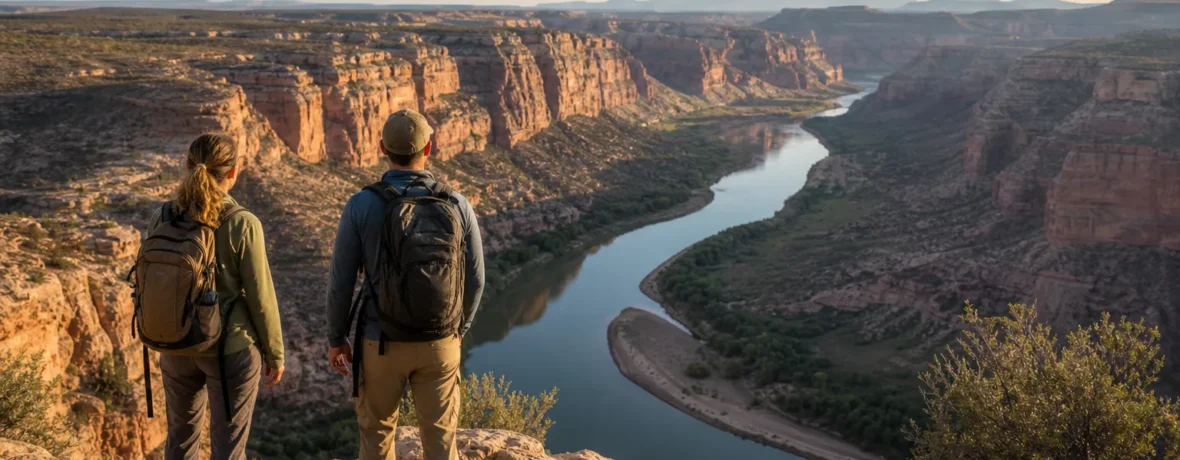
The newest national park is Chiricahua National Park in southeastern Arizona. It protects approximately 12,000 acres of volcanic rock spires, sky-island habitat, Apache history, and Faraway Ranch history. The National Park Service announced the redesignation. (nps.gov)
What is the newest national park in the United States?
It is Chiricahua National Park in Arizona. The official redesignation happened on October 20, 2026, when the Chiricahua National Park Act became Public Law 119-133 and changed the name from Chiricahua National Monument to Chiricahua National Park. (nps.gov)
If your mental list still ends with New River Gorge, update it. New River Gorge National Park and Preserve in West Virginia became a national park and preserve on December 27, 2020, and it held the “newest” title until Chiricahua took it in October 2026. The NPS now lists National Parks as 64 on its National Park System page. (home.nps.gov)
| Park | State | National park date | What changed |
|---|---|---|---|
| Chiricahua National Park | Arizona | October 20, 2026 | Renamed from Chiricahua National Monument |
| New River Gorge National Park and Preserve | West Virginia | December 27, 2020 | Renamed from New River Gorge National River |
| White Sands National Park | New Mexico | December 20, 2019 | Renamed from White Sands National Monument |
Where is Chiricahua National Park?
Chiricahua National Park is in southeastern Arizona, near Willcox. The NPS tells drivers using GPS to select the Visitor Center or use 13063 E Bonita Canyon Rd, Willcox, AZ 85643, and to stay on pavement by using Highway 186 from Willcox or Highway 181 from the southwest. Check the park’s Basic Information page before you roll in, especially if you are relying on phone maps. (nps.gov)
This is not a drive-by desert stop with one sign and a picnic table. The park climbs from 5,124 feet [1,562 m] at the entrance to 7,310 feet [2,228 m] on Sugarloaf Mountain, so the upper park can run 5 to 10°F [3 to 6°C] cooler and windier than the lower canyon, as of November 2026. Cell service is also thin: NPS says phones rarely work in the park or nearby areas, though limited public Wi-Fi is available at the visitor center. (nps.gov)
Why did Chiricahua become a national park?
Congress changed the designation to recognize Chiricahua’s national significance. The law redesignated the existing monument as a national park, kept the same boundaries, and said references to Chiricahua National Monument now mean Chiricahua National Park. (govinfo.gov)
The landscape earns the fuss. Chiricahua protects rhyolite spires, balanced rocks, and a “sky island” meeting zone where desert, grassland, and forest ecosystems stack together in one rugged mountain pocket. NPS says the volcanic rock formations were shaped by an eruption roughly 27 million years ago. The park also preserves deep human history, including Chiricahua Apache homeland connections and the Faraway Ranch story. (nps.gov)
Did the rules change when Chiricahua became a national park?
No big visitor-rule reset came with the new title. NPS says Chiricahua’s existing management framework continues, the legislation does not change the park boundaries, and the park remains approximately 12,000 acres. (home.nps.gov)
That matters for hikers. A national park name can pull more attention, but it does not magically add wider roads, more campsites, or better cell service. Treat Chiricahua like the compact, fragile, high-desert mountain park it is. Pack patience with your water.
Do you need a reservation or entrance pass for Chiricahua National Park?
No entrance pass is required, and there is no entrance or parking fee as of November 2026. NPS also says Chiricahua does not have timed entry, parking reservations, or activity reservations, though camping is different. The park’s Fees and Passes page lists Chiricahua as fee-free year-round. (nps.gov)
- Entrance fee: $0 as of November 2026.
- Parking fee: $0 as of November 2026.
- Timed entry: Not required as of November 2026.
- Camping: Reservation required as of November 2026.
- Backcountry camping: Prohibited as of November 2026.
Can you camp at the newest national park?
Yes, but only in Bonita Canyon Campground with a reservation. As of November 2026, NPS says all campsites are on Recreation.gov, the park does not offer walk-in or first-come, first-served camping, and the campground often fills during holidays and the busy January-to-April season. Read the Bonita Canyon Campground rules before booking. (nps.gov)
The campground is small and old-school. As of November 2026, the NPS lists a 29-foot [8.8 m] maximum for any single vehicle or trailer, including racks, because a dip in the campground road can damage longer rigs. The same page says quiet hours run 8 p.m. to 8 a.m., generators are allowed from 8 to 10 a.m. and 4 to 6 p.m., and there are no utility hookups. (nps.gov)
What are the best hikes in Chiricahua National Park?
The classic hikes thread through rock spires, grottos, balanced rocks, and high-country views. If you want the headline route, NPS describes The Big Loop as a strenuous 9.5-mile [15.3 km] hike using Echo Canyon, Upper Rhyolite Canyon, Sarah Deming, Heart of Rocks, Big Balanced Rock, Inspiration Point, Mushroom Rock, and Ed Riggs trails. (nps.gov)
For a shorter taste, the 2026 NPS hiking guide lists Echo Canyon Loop at 3.3 miles [5.3 km] with 560 feet [171 m] of elevation gain, Sugarloaf Peak at 1.8 miles [2.9 km] round trip with 500 feet [152 m] of gain, and Massai Point Nature Trail at 0.5 mile [0.8 km]. (nps.gov)
Here is a simple way to plan your first hiking day:
- Start at the visitor center. Grab the current map, ask about weather, and confirm any fire or trail alerts.
- Pick one rock-country hike. Echo Canyon Loop is the compact sampler; The Big Loop is the long, leggy option.
- Carry more water than you think. Shade comes and goes, and the upper trails are exposed.
- Download maps before arrival. NPS says cell phones rarely work in the park.
- Leave extra time for the road. The scenic drive is winding, and parking is limited in the high-use trailhead areas.
Can you bring a dog to Chiricahua National Park?
Yes, but a dog will limit your hiking. As of November 2026, pets are allowed on leashes in the campground, paved parking lots, and lower trails between the campground and entrance, including the Bonita Creek, Silver Spur Meadow, and Faraway Ranch areas. The official pet rules say pets are not allowed on trails through the rock formations or on trails above 5,500 feet [1,676 m], including Echo Canyon, Heart of the Rocks, Natural Bridge, Sugarloaf, and Massai Point Nature trails. (home.nps.gov)
The leash rule is plain: no longer than 6 feet [1.8 m]. Pets also may not be tied to trees or objects, and owners must pick up waste. If your main goal is hiking the spires, leave the dog with a trusted sitter.
What should you know before visiting Chiricahua National Park?
Plan for a remote park with serious hiking and limited services. The name may be new, but the place is still a quiet corner of southeast Arizona where your preparation does real work.
- Bring water, food, sun protection, layers, and a paper or downloaded map.
- Use the official visitor center address rather than dropping a random pin.
- Book Bonita Canyon Campground before driving in if you want to sleep inside the park.
- Expect little to no cell service.
- Keep wildlife wild: store food, never feed animals, and give them room.
- Check current NPS alerts before you leave town.
Related reading
- National Park Pass Changes for 2026
- How Big Is Yellowstone National Park?
- Every Kid Outdoors: The Free 4th Grade National Park Pass
- How Big Is Yosemite National Park?
FAQ
What is the newest national park as of 2026?
Chiricahua National Park is the newest U.S. national park as of November 2026. It became a national park on October 20, 2026, when Chiricahua National Monument was redesignated under Public Law 119-133. (nps.gov)
Is Chiricahua the 64th national park?
Yes. NPS lists 64 National Parks as of November 2026, and its Chiricahua FAQ identifies Chiricahua as the newest and the 64th national park. (nps.gov)
Is New River Gorge still the newest national park?
No. New River Gorge National Park and Preserve was redesignated on December 27, 2020, but Chiricahua became newer on October 20, 2026. (home.nps.gov)
Does Chiricahua National Park charge an entrance fee?
No. As of November 2026, Chiricahua National Park has no entrance fee and no parking fee. Camping fees are separate and tied to Bonita Canyon Campground reservations. (nps.gov)
Can you visit Chiricahua National Park in one day?
Yes. One full day gives you time for the visitor center, the scenic drive, overlooks, and a signature hike such as Echo Canyon Loop. If you want The Big Loop, camping, stargazing, or slower photography time, stay overnight nearby or reserve Bonita Canyon Campground.
Are dogs allowed on Chiricahua’s main hikes?
No, not on the main rock-formation hikes. As of November 2026, pets are not allowed on trails above 5,500 feet [1,676 m], including Echo Canyon, Heart of the Rocks, Natural Bridge, Sugarloaf, and Massai Point Nature trails. (home.nps.gov)