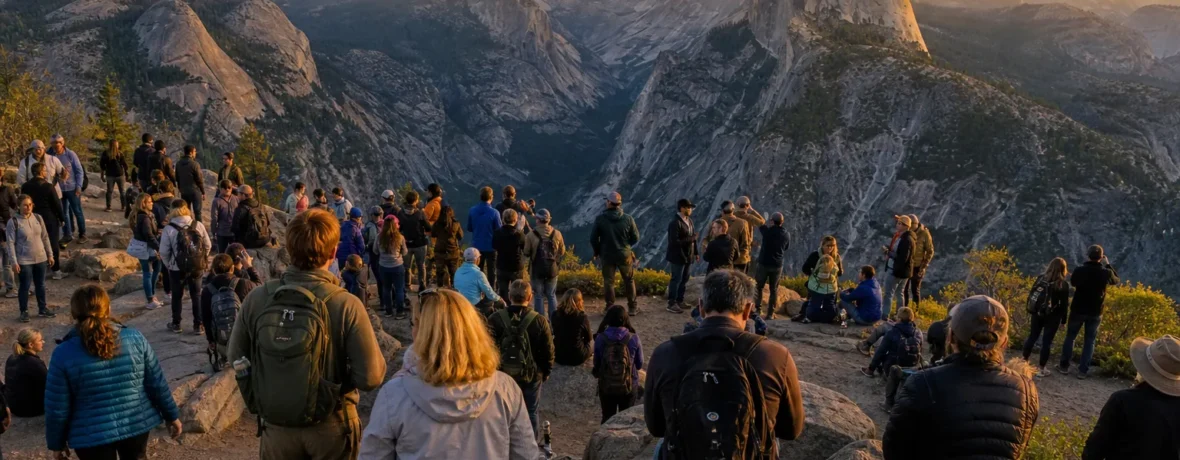
The most visited is Great Smoky Mountains National Park. In the latest full-year National Park Service count, 2025, it recorded 11,527,939 recreation visits—more than twice Zion’s 4,984,525 in second place. The park straddles North Carolina and Tennessee.
What is the most visited national park in the US?
Great Smoky Mountains National Park is the most visited national park in the United States. The National Park Service ranked it No. 1 among national parks for 2025, with 11,527,939 recreation visits, according to the agency’s official 2025 visitation release.
That number is not a headcount of unique people. It is recreation visits. If you enter a park more than once on a trip, the system can count more than one visit. Still, the ranking tells you what matters on the ground: some parks carry a much heavier daily load than others.
For hikers, that means parking fills earlier, shuttles get busier, permits vanish faster, and the best trailheads are rarely sleepy by midmorning. The payoff is clear too. These parks are famous because they deliver: big views, strong trail networks, classic geology, wildlife habitat, and easy enough access for millions of people to actually get there.
What are the most visited national parks?
The top 10 national parks by 2025 recreation visits are led by Great Smoky Mountains, Zion, and Yellowstone. Here are the latest full-year figures from the National Park Service, verified as of November 2026.
| Rank | National park | 2025 recreation visits |
|---|---|---|
| 1 | Great Smoky Mountains | 11,527,939 |
| 2 | Zion | 4,984,525 |
| 3 | Yellowstone | 4,762,988 |
| 4 | Grand Canyon | 4,430,653 |
| 5 | Yosemite | 4,278,413 |
| 6 | Rocky Mountain | 4,171,431 |
| 7 | Acadia | 4,079,318 |
| 8 | Grand Teton | 3,800,648 |
| 9 | Olympic | 3,584,187 |
| 10 | Glacier | 3,136,557 |
The spread is huge. Great Smoky Mountains took in 6,543,414 more recreation visits than Zion in 2025. That gap alone is larger than the full-year visitation of every national park below No. 1.
Why is Great Smoky Mountains National Park so popular?
Great Smoky Mountains wins because it is scenic, free-flowing, road-accessible, and close to major population centers. You can reach it from busy Southeastern and Midwestern travel corridors without flying across the country.
It also has a rare mix that works for nearly every kind of visitor: windshield views, waterfalls, old-growth forest, wildlife watching, family-friendly paths, hard climbs, Appalachian Trail access, and towns with beds and food right outside the boundary.
That ease is the secret. Many bucket-list parks require a long flight, a rental car, and a big planning window. The Smokies can be a long weekend. They can also be a serious hiking trip if you aim for steeper trails, quieter ridges, and longer backcountry days.
When should you visit busy national parks to avoid crowds?
Go outside peak hours and peak seasons. That is the simplest crowd strategy, and it works better than any secret-trail fantasy.
For the top parks, start before sunrise if you want a good shot at parking at a headline trailhead. Late afternoon can also work, especially for shorter hikes where you can finish before dark. Midday is when traffic, parking, heat, and frustration tend to stack up.
Season matters too. Summer is popular because school is out and high-country roads are open, but it is not always the best hiking season. Spring brings water and flowers in many parks. Fall brings cooler air and sharper light. Winter can be excellent in lower-elevation parks, though snow, ice, short daylight, and road closures can change the plan fast.
Your best move is simple: pick the hike first, then build the timing around it. If a trail is famous, assume it will be crowded. If it starts near a scenic drive, assume parking will go early. If it requires a shuttle or permit, sort that out before you book lodging.
Do you need reservations, permits, or passes for the most visited national parks?
Sometimes, yes. Entrance passes, timed-entry systems, and trail permits vary by park, season, and activity, so check the official park page before you drive.
As of November 2026, the National Park Service lists park-by-park entrance fees on its official entrance fees page. It also lists America the Beautiful pass options on its official entrance passes page, including a $80 Resident Annual Pass for U.S. citizens and residents and a $250 Non-Resident Annual Pass.
Permits are separate from entrance passes. As of November 2026, everyone hiking Angels Landing in Zion needs a permit, issued through a lottery system, according to Zion’s official Angels Landing permit page. Rocky Mountain National Park also used timed-entry reservations for certain dates and hours in 2026, according to its official timed entry page.
That is the pattern to remember: one park may require nothing beyond an entrance pass for your plan, while another may require a reservation just to enter a corridor or hike a marquee route. Don’t guess. Check.
How do you plan a trip to a crowded national park?
Plan the bottlenecks first. Pretty lodging and scenic picnic spots can wait; permits, shuttle windows, parking, and daylight cannot.
- Pick your must-do hike or viewpoint, then check the official park page for current access rules.
- Buy or confirm your entrance pass before you leave home, if the park charges a fee.
- Look for timed-entry requirements, trail permits, shuttle rules, and road status.
- Book lodging close enough that an early start is realistic, not heroic.
- Build a backup hike for the same area in case parking is full, weather turns, or a trail closes.
- Pack for a longer day than planned: headlamp, layers, rain shell, water, food, map, and a charged phone.
- Arrive early, hike early, and leave room in the day for slow traffic at the exit.
A crowded park can still feel wild if you move with intention. Skip the lazy 10 a.m. trailhead arrival. Walk farther than the first overlook. Eat lunch away from the main pullout. The masses often cluster within a short stroll of the parking lot.
What should you pack for the most popular parks?
Pack like services will be limited, even when the map looks developed. Busy parks can still leave you exposed, thirsty, cold, or stuck in traffic with no quick exit.
- Water and salty snacks
- Printed or downloaded map
- Headlamp, even for day hikes
- Rain shell and warm layer
- Sun hat, sunglasses, and sunscreen
- Small first-aid kit
- Trash bag for packing out waste
- Required permit, pass, or reservation confirmation saved offline
The last item matters. Cell service is often weak exactly where you need it. Save confirmations before you enter the park, and keep a backup screenshot.
Related reading
- National Park Pass Changes for 2026
- How Big Is Yellowstone National Park?
- Every Kid Outdoors: The Free 4th Grade National Park Pass
- How Big Is Yosemite National Park?
FAQ
What is the most visited national park right now?
Great Smoky Mountains National Park is the most visited national park based on the latest full-year NPS ranking. It recorded 11,527,939 recreation visits in 2025.
What is the second most visited national park?
Zion National Park ranked second in 2025 with 4,984,525 recreation visits. That still put it more than 6.5 million visits behind Great Smoky Mountains.
Are the busiest national parks still worth visiting?
Yes, if you plan around crowds instead of pretending they won’t exist. Start early, check permits, avoid peak trailhead hours, and keep a backup route ready.
Do all national parks charge an entrance fee?
No. Entrance fees vary by park, and some sites are fee-free. As of November 2026, the National Park Service lists current fee details park by park on its official entrance fees page.
Do the most visited national parks require reservations?
Some do for certain roads, times, shuttles, or hikes, but not all year and not for every visitor. Check the official NPS page for your specific park and date before booking the rest of the trip.