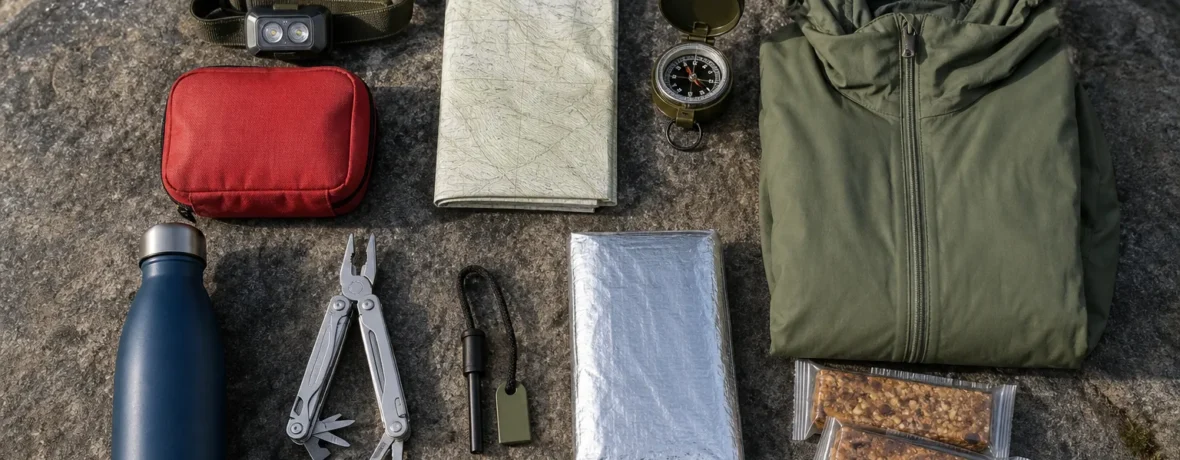
What is the 10 essentials? It is the 10-category safety kit hikers carry on every trip: navigation, sun protection, insulation, illumination, first aid, fire, repair tools, food, water, and emergency shelter. The goal is simple: if weather turns, daylight fades, or someone gets hurt, you can stay found, warm, visible, hydrated, and alive.
The Ten Essentials are not a macho gear dump. They are the difference between a small problem and a miserable night out. A missed junction. A twisted ankle. A storm that rolls in at 3 p.m. A headlamp you packed because you were not gambling on sunset.
What is the 10 essentials list for hiking?
It is a backup system, not a trophy shelf. As of November 2026, the National Park Service Ten Essentials page describes the 10 Essentials as items that can help with minor injuries, sudden weather changes, and unexpected emergencies, and organizes them into 10 categories. (nps.gov)
- Navigation: Carry a paper map, compass, GPS device, or downloaded map, plus the skill to use them. A dead phone is not a plan.
- Sun protection: Pack sunglasses, sunscreen, a brimmed hat, and sun-protective layers when exposure is likely.
- Insulation: Bring layers for the coldest and wettest conditions you could realistically face, not the weather you wish you had.
- Illumination: Pack a headlamp or flashlight and spare power. Hands-free light wins when you are filtering water, reading a map, or helping a friend.
- First aid: Carry blister care, wound supplies, personal medications, and the knowledge to use the kit.
- Fire: Bring a lighter, waterproof matches, or fire starter where legal and appropriate. Check local fire restrictions first.
- Repair kit and tools: A small knife, multitool, duct tape, and cord can fix a torn pack strap or busted trekking pole basket.
- Food: Bring extra no-cook calories. Salty, easy-to-eat snacks are better than food that needs a stove you may not be able to use.
- Water: Carry water and a way to treat more: filter, purifier, chemical treatment, or boiling setup where fires and stoves are allowed.
- Emergency shelter: A bivy sack, tarp, emergency blanket, or ultralight shelter helps block wind, rain, and cold ground.
What should be in your Ten Essentials hiking kit?
Pack the category first, then choose the item that fits your trail. A shady 2-mile [3.2 km] loop near town needs a smaller kit than a cold ridge walk, but the categories stay the same.
| Essential | Simple day-hike pick | Harder-weather pick |
|---|---|---|
| Navigation | Paper map and downloaded map | Map, compass, GPS, spare battery |
| Insulation | Rain shell or fleece | Rain shell, warm hat, gloves, puffy layer |
| Illumination | Headlamp | Headlamp plus spare batteries or power bank |
| Emergency shelter | Emergency blanket | Bivy sack or tarp with cord |
Do not build the kit once and forget it. Check batteries. Replace expired first-aid supplies. Refill sunscreen. Make sure your water filter did not freeze on a previous trip. A kit that almost works is still dead weight.
Do you need all 10 essentials on a short hike?
Yes, you still carry the 10 categories. The National Park Service says additional items may be needed depending on the activity and tells visitors to check the specific park website before heading out, as of November 2026. (nps.gov)
Short hikes create false confidence. You leave late. You skip the jacket. You bring one bottle and no light. Then a trail junction is missing, a creek crossing takes longer than expected, or your friend’s knee quits. The Ten Essentials do not guarantee a rescue. They buy you time and options.
- For a local greenway: small kit, basic first aid, water, light, phone, map.
- For a mountain day hike: full kit, real layers, food, water treatment, shelter.
- For desert or exposed terrain: more water capacity, shade, sun gloves, and a hard look at heat.
- For winter: traction, warmer insulation, extra gloves, and a shelter you can deploy with cold hands.
How do you use the Ten Essentials before you leave the trailhead?
Run the kit through the actual day, not the fantasy version. Gear works best when it is tied to a plan.
- Check the official land-manager page. Rules for fires, dogs, drones, bear canisters, camping, timed entry, and wilderness permits vary by park, forest, and season. As of November 2026, NPS tells hikers to visit the specific park’s website and learn local rules before heading out. (nps.gov)
- Tell someone your route. Share your trailhead, intended route, turnaround time, vehicle location, and when to call for help.
- Match gear to the forecast. Wind, lightning, heat, smoke, and snow change the kit. “No rain” does not mean “no cold.”
- Set a turnaround time. Pick it before you start. Pride gets quieter when the clock is already decided.
- Keep core items reachable. Headlamp, rain shell, snacks, map, and first aid should not be buried under everything else.
How much water and food should you carry?
Carry more than you expect to use, and bring a way to treat water when natural sources are part of the plan. The NPS recommends extra food and water treatment supplies in its Ten Essentials guidance, as of November 2026. (nps.gov)
A smart food bag has calories you will eat while tired: bars, nuts, dried fruit, tortillas, jerky, cheese, nut butter packets, or salty crackers. Keep one emergency snack sealed until the end. That tiny rule helps you avoid eating the backup at the first overlook.
Water is more personal. Heat, altitude, humidity, pace, body size, and sweat rate all change demand. If the route has streams or lakes, confirm they exist for the season and treat before drinking. If the route is dry, carry the full amount from the start. Your filter is useless on a bone-dry ridge.
What should you do if the weather turns bad?
Stop early, layer up, and get off exposed ground before the storm owns the day. As of November 2026, the National Weather Service lightning safety guidance says there is no completely safe place outside during a thunderstorm; a substantial building or hard-topped metal vehicle is the safer shelter, and people should wait 30 minutes after the last thunder before returning outside. (weather.gov)
- If you hear thunder, leave ridges, summits, open fields, water, and isolated trees.
- If rain starts, put on the shell before your insulation gets wet.
- If wind chills you, eat, add layers, and reduce exposed skin.
- If visibility drops, stop and confirm your location before wandering.
- If daylight is fading, put on the headlamp early. Do not wait until you are stumbling.
When to see a doctor
Get medical help fast for red flags, not pride. This section is safety guidance, not a diagnosis.
For heat illness, the CDC heat-related illness guidance says heat stroke can involve confusion, altered mental status, slurred speech, loss of consciousness, seizures, hot dry skin or heavy sweating, and very high body temperature; call 911 for emergency care if heat stroke is suspected. CDC guidance also says heat exhaustion can include headache, nausea, dizziness, weakness, thirst, heavy sweating, elevated body temperature, and decreased urine output. (cdc.gov)
For cold exposure, the Mayo Clinic hypothermia first-aid guidance says hypothermia occurs when body temperature drops below 95°F [35°C] and advises calling 911 or the local emergency number if you suspect it. Watch for shivering that may stop, slurred speech, slow breathing, weak pulse, clumsiness, drowsiness, confusion, or loss of consciousness. (mayoclinic.org)
After a tick bite, the CDC tick-bite guidance says to see a doctor if a rash or fever develops within several days to weeks after removing a tick, as of November 2026. Tell the clinician when and where the bite likely happened. (cdc.gov)
Related reading
- Hiking Essentials for Women
- Hiking Essentials 2026: The Gear List That Covers Every Day Hike
- America the Beautiful Pass: Price, Coverage and Where to Buy
- Machu Picchu Tickets: Circuits and Entry Rules
FAQ
What are the 10 essentials in order?
The 10 categories are navigation, sun protection, insulation, illumination, first aid, fire, repair kit and tools, food, water, and emergency shelter. The order matters less than carrying all 10 and knowing how to use them.
Are the Ten Essentials required by law?
Usually no, they are safety guidance rather than a blanket legal requirement. Specific parks can have rules for permits, fires, food storage, pets, and camping, so check the official land-manager page before each trip.
Is a phone enough for navigation?
No, a phone alone is fragile. Batteries die, screens crack, apps fail, and signal disappears; carry a backup such as a paper map and compass, and download maps before leaving home.
What is the most forgotten hiking essential?
Illumination is one of the easiest to skip. A headlamp weighs little, but it changes everything if an easy afternoon hike turns into a dark walk out.
Should beginners buy all-new gear?
No, start with reliable basics and borrow or rent what you can. Spend money first on footwear that fits, rain protection, insulation, a headlamp, water capacity, and a simple first-aid kit.
What should I add beyond the Ten Essentials?
Add trip-specific gear. That may mean bug protection, traction, a satellite messenger, bear spray where appropriate and legal, a water filter, extra socks, or a permit printed or saved offline.