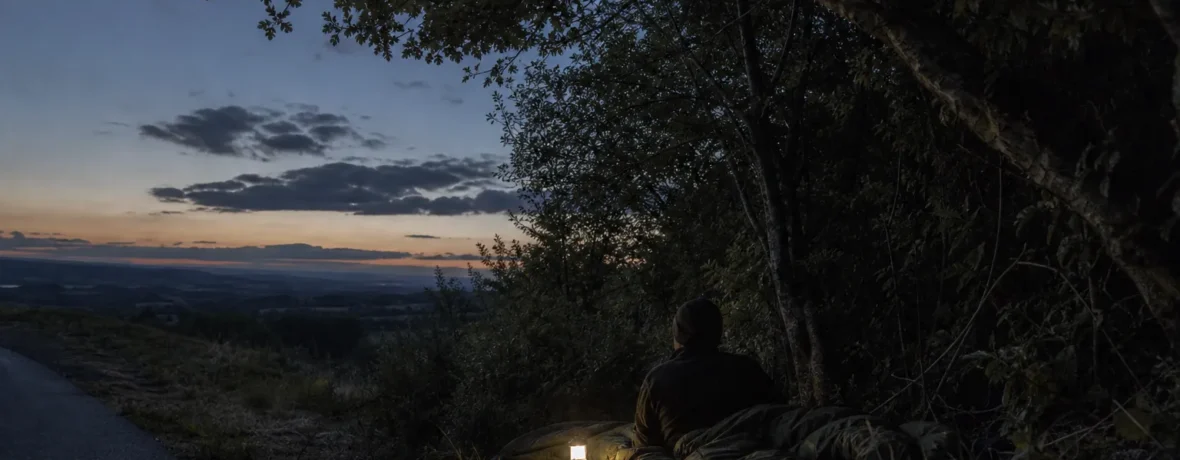
What is stealth camping? It is sleeping overnight in a low-profile, unofficial spot, usually without drawing attention. Is it legal? Yes only when camping is allowed on that land and you follow permits, closures, fire rules, and stay limits. On private land or restricted public land, it is trespassing.
What is stealth camping, exactly?
Stealth camping is camping where you are trying not to be noticed.
That can mean pitching a dull-colored tent behind a screen of trees, sleeping in a bivy off a dirt road, or rolling out late and leaving early from a legal dispersed campsite. The “stealth” part is not a legal category. Land managers do not usually issue a “stealth camping permit.” They talk about backcountry camping, dispersed camping, designated campsites, overnight parking, and closures.
That distinction matters. A quiet camp on legal public land can be fine. A hidden camp behind a trailhead bathroom in a national park, on ranch land, beside a city greenway, or inside a day-use-only area can get you fined, moved along, or worse.
Think of stealth camping as a style, not a loophole.
Is stealth camping legal in the United States?
Stealth camping is legal only where overnight camping is already allowed.
In the U.S., legality depends on who manages the land under your feet. National forests, BLM land, national parks, state parks, local parks, wildlife refuges, tribal lands, and private parcels all run on different rules. A site can look wild and empty and still be closed to camping.
As of November 2026, the Bureau of Land Management says most BLM lands allow dispersed camping unless an area is posted closed or has specific resource restrictions; the agency also tells visitors to check local office rules because stay limits, permits, and fire restrictions vary by area. Read the current BLM guidance on camping on public lands before you go.
National forests often allow dispersed camping outside developed campgrounds, but the details change by forest, road, wilderness area, fire season, and special order. As of November 2026, the U.S. Forest Service describes dispersed camping as camping outside a developed campground and reminds visitors that they are responsible for knowing local rules before they set up; start with the Forest Service’s official dispersed camping guidance and then check the specific forest office.
National parks are stricter. Backcountry camping usually requires a permit and often limits you to designated campsites or zones. As of November 2026, the National Park Service’s Bryce Canyon backcountry page says overnight backcountry stays require a permit and camping is allowed only in designated campsites; other parks have their own systems, so check the exact park page before assuming anything.
Where can you stealth camp legally?
You can legally stealth camp where dispersed or backcountry camping is permitted and you are following the local rules.
The easiest legal places are usually public lands that explicitly allow dispersed camping. “Stealthy” here means quiet and low-impact, not sneaky. You are not hiding from the law. You are keeping the camp small, dark, and respectful so wildlife, other hikers, and future visitors are not affected.
| Land type | Stealth camping outlook | What to check first |
|---|---|---|
| BLM land | Often allowed if not posted closed | Local field office rules, stay limits, fire restrictions, road access |
| National forest | Often allowed as dispersed camping | Forest orders, Motor Vehicle Use Map, wilderness permits, seasonal closures |
| National park | Usually permit-based and tightly controlled | Backcountry permit rules, designated campsite rules, food storage rules |
| Private land | Not legal without permission | Written or direct permission from the landowner |
Where is stealth camping usually illegal?
Stealth camping is usually illegal where camping is not posted, permitted, or clearly allowed.
Red flags include “day use only” signs, trailheads with no overnight parking, city parks, beach access lots, highway pullouts, railroad corridors, utility roads, golf courses, school forests, closed campgrounds, private timberland, and any place where you had to cross a fence or ignore a sign to get there.
Private land is the cleanest line. If you do not have permission, do not camp there. “No one will see me” is not permission. Neither is “it looks abandoned.”
Another trap: legal hiking does not always mean legal camping. Some trails cross land where walking is allowed by easement but overnight use is not. Long-distance hikers run into this around road walks, town edges, reservoirs, state game lands, and conservation areas.
How do you find a legal stealth campsite?
Find the legal status first, then choose a low-impact spot.
- Identify the land manager. Use an official map, public land app, forest map, park map, or county parcel map. Do not rely on vibes.
- Search the exact rule. Look for “dispersed camping,” “backcountry camping,” “overnight use,” “camping closure,” and “fire restrictions” on the land manager’s site.
- Check access. Legal land can be surrounded by private land. You need a legal route in and out.
- Pick durable ground. Choose rock, gravel, sand, dry grass, snow, or an already impacted legal site. Do not flatten plants to make a bedroom.
- Stay away from water and trails. Leave No Trace recommends camping at least 200 feet [61 m] from lakes and streams to protect riparian areas and wildlife access; see its official guidance on traveling and camping on durable surfaces.
- Arrive late, leave early. Not because you are dodging rules. Because a short, quiet stay leaves less impact.
- Leave no sign. No fire scar, no toilet paper flower, no trampled meadow, no food crumbs, no cut branches.
What gear works best for stealth camping?
The best stealth camping gear is small, dark, quiet, and weather-ready.
You are not building basecamp. You are sleeping, recovering, and moving on. That means fewer shiny surfaces, less flapping fabric, and no camp furniture parade.
- Shelter: A low-profile tent, tarp, bivy, or hammock in muted colors.
- Light: A headlamp with red mode, used sparingly and pointed down.
- Sleep system: A pad and bag or quilt matched to the overnight low.
- Water: Enough capacity to camp away from lakes and streams.
- Food storage: Bear canister, approved bag, or other method required by the land manager.
- Bathroom kit: Trowel, toilet paper, waste bags, hand sanitizer, and a plan for places where you must pack out waste.
- Stove: A small stove where allowed. Skip fires unless they are legal, safe, and low-impact.
How do you stealth camp without trashing the place?
You keep the camp invisible after you leave, not just while you sleep.
That means no new fire ring. No chopped branches. No trench around your tent. No food waste buried under a rock. No “biodegradable” soap dumped into a creek. If someone can find your campsite at breakfast, you did it wrong.
For human waste, follow the local rule first. Some desert, alpine, canyon, river, and high-use areas require pack-out systems. Where catholes are allowed, the National Park Service describes the common method as walking 200 feet [61 m] from water, trails, and campsites, then digging a 6 to 8 inch [15 to 20 cm] hole; check the NPS guide to disposing of waste properly.
What are the risks of stealth camping?
The biggest risks are legal trouble, poor site choice, wildlife conflicts, and bad weather.
Legal trouble usually starts with a bad assumption: “Nobody will care.” Rangers, sheriffs, landowners, and residents may care very much, especially near trailheads, water sources, neighborhoods, fire-prone zones, and closed restoration areas.
Site choice can bite harder. Dry washes can flood. Dead trees can drop limbs. Exposed ridges can turn ugly in wind. Low spots collect cold air. Camping too close to water can block wildlife and increase impact.
Then there is the social risk. A hidden camper who leaves trash or starts an illegal fire makes access harder for everyone else. One sloppy night can lead to signs, gates, closures, and stricter rules.
What should you do if someone finds your camp?
Be calm, be honest, and leave if asked.
Do not argue from inside your sleeping bag. If a ranger, landowner, or law enforcement officer contacts you, explain that you were trying to camp responsibly, show any permit if you have one, and follow instructions. If you made a mistake, pack up cleanly and go.
If another hiker finds you, keep it simple. A quiet “Hey, I’m heading out early” is enough. The goal is not secrecy at all costs. The goal is low impact.
Related reading
- How to Plan a Camping Trip
- How to Start Camping: A Beginner's Guide
- Dispersed Camping in Colorado: Best Areas and Rules
- Camping Checklist: What to Bring
FAQ
Is stealth camping the same as dispersed camping?
No. Dispersed camping is a land-management term for camping outside developed campgrounds. Stealth camping is a low-profile style that may be legal or illegal depending on where you do it.
Can you stealth camp in a national park?
Usually only with a valid backcountry permit and only where that park allows overnight camping. Many national parks restrict campers to designated sites, zones, or specific itineraries.
Can you stealth camp on BLM land?
Often, yes, if the area allows dispersed camping and is not posted closed. As of November 2026, BLM says most of its lands allow dispersed camping unless local restrictions apply, so check the field office before you go.
Is stealth camping safe?
It can be safe if your site is legal, well chosen, and protected from hazards. Avoid dead trees, flood channels, avalanche terrain, exposed ridges, private land, and places where people may drive at night.
What color tent is best for stealth camping?
Muted green, brown, gray, or tan works best. Bright orange or blue may be great for visibility in emergencies, but it is not low-profile.
What is the golden rule of stealth camping?
Leave before anyone can tell you were there. If your camp leaves tracks, trash, ashes, cut vegetation, food scraps, or an angry landowner, it was not responsible stealth camping.