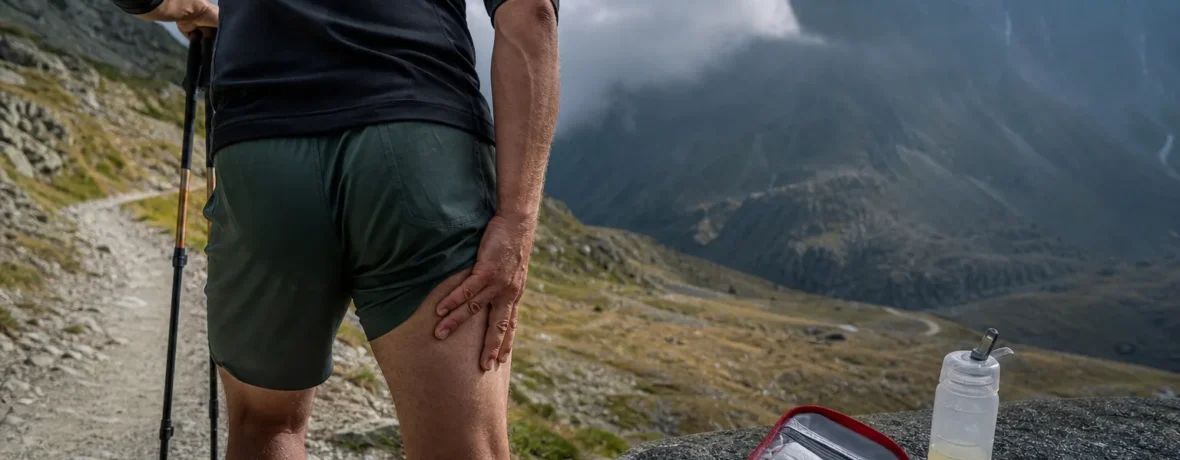
What is rhabdomyolysis? It is a medical condition where injured skeletal muscle breaks down and leaks proteins and electrolytes into your blood. Yes, a hard hike can trigger it, especially with heat, steep descents, dehydration, or unaccustomed effort. Red flags include severe muscle pain, weakness, swelling, and dark cola-colored urine.
What is rhabdomyolysis?
Rhabdomyolysis, often shortened to “rhabdo,” is muscle damage that can stress your kidneys and heart.
When muscle cells are injured, they release cell contents into the bloodstream. One key protein is myoglobin. In high amounts, myoglobin can be hard on the kidneys. Electrolyte shifts can also affect heart rhythm. That is why rhabdo is not just “bad soreness.” It can become a medical emergency.
The CDC lists the main symptoms of rhabdomyolysis as muscle pain, dark urine, and feeling weak or tired. The same source says symptoms may start hours or days after the muscle injury, so you can feel decent at the trailhead and still run into trouble later.
Can hiking cause rhabdomyolysis?
Yes, hiking can cause exertional rhabdomyolysis when the workload overwhelms your muscles.
The classic setup is simple: too much, too hot, too soon. A long climb after months off the trail. A heavy pack on a steep descent. A canyon hike where the easy downhill comes first, then the hot climb out punches you in the legs. Add poor sleep, illness, heat, or limited food and fluids, and your margin shrinks.
Downhill hiking deserves special respect. Lowering your body step after step creates eccentric muscle contractions, where the muscle lengthens while under load. That can leave your quads wrecked even if your lungs felt fine. The Wilderness Medical Society has also discussed the risks of prolonged downhill movement, including exertional rhabdomyolysis signs such as debilitating pain, heavy limb swelling, or dark urine.
What are the symptoms of rhabdomyolysis after a hike?
The big warning signs are severe muscle pain, weakness, swelling, and urine that looks tea- or cola-colored.
Normal soreness usually feels familiar. Rhabdo feels wrong. The pain may be sharper, deeper, or more disabling than your usual post-hike aches. You may struggle with stairs, standing from a chair, lifting your arms, or walking across the room.
- Muscle pain, cramps, or aches that are stronger than expected
- Weakness or heavy limbs that limit basic movement
- Swollen, tight, or tender muscles
- Dark red, brown, tea-colored, or cola-colored urine
- Low urine output after a hard day
- Nausea, confusion, unusual fatigue, or feeling generally ill
The NIH’s StatPearls review on rhabdomyolysis describes potential complications including acute kidney injury, electrolyte abnormalities, and compartment syndrome. You do not need every symptom to be in trouble. Dark urine alone after a hard hike is enough to get checked.
Is it rhabdomyolysis or normal muscle soreness?
Normal soreness improves with time; rhabdo symptoms can worsen and may come with dark urine, swelling, or major weakness.
| Sign | Typical post-hike soreness | Possible rhabdomyolysis |
|---|---|---|
| Pain level | Achy, stiff, familiar | Severe, unusual, or disabling |
| Movement | Stiff but functional | Hard to walk, stand, climb stairs, or lift limbs |
| Urine | Normal yellow to darker yellow | Tea-colored, red-brown, or cola-colored |
| Timing | Often peaks 24 to 72 hours after effort | Can appear hours to days later and feel out of proportion |
You cannot confirm rhabdo by feel. The CDC says blood testing for creatine kinase, also called CK or CPK, is the accurate test. A clinician may also check kidney function, electrolytes, urine, and heart rhythm depending on symptoms.
What should you do on the trail if you suspect rhabdomyolysis?
Stop pushing and get medical help as soon as you suspect rhabdo.
- Stop the hike. Do not “walk it off” if pain is severe, limbs are weak, or urine is dark.
- Get out of heat. Move to shade, loosen clothing, and cool the person if conditions are hot.
- Call for help. Use 911, a satellite messenger, ranger contact, or your group’s emergency plan.
- Do not force fluids. Sipping to thirst is reasonable if the person is alert, but overdrinking can be dangerous, especially if confusion, vomiting, or headache suggests low blood sodium.
- Track symptoms. Note urine color, urination frequency, mental status, temperature stress, distance covered, and when pain began.
- Avoid more exertion. If evacuation is needed, reduce pack weight and pace. If symptoms are serious, wait for rescue rather than turning a medical problem into a bigger one.
The CDC’s treatment guidance for rhabdomyolysis says early treatment can prevent serious complications, and moderate to severe cases may need IV fluids and hospital monitoring.
When to see a doctor
Seek medical care right away if you have dark urine, severe muscle pain, marked weakness, or swelling after a hike.
This is not a trail-brag injury. You want labs, not guesses. Rhabdo can look like dehydration, heat illness, or ordinary soreness, and those can overlap. A healthcare provider can order the right tests and decide whether you need observation, IV fluids, heart monitoring, or other care.
Go urgently if any of these show up after a hike:
- Cola-colored, tea-colored, red, or brown urine
- Severe pain in one muscle group, especially thighs, calves, glutes, shoulders, or back
- Muscle swelling or tightness that keeps increasing
- Weakness that makes normal walking difficult
- Little or no urination
- Confusion, fainting, chest discomfort, or shortness of breath
For medication-related muscle symptoms, the Mayo Clinic notes that intense muscle pain and dark or cola-colored urine can be signs of rhabdomyolysis. If you take prescription medications and develop these symptoms after exertion, tell the clinician exactly what you take.
How can hikers lower the risk of rhabdomyolysis?
Build hiking stress gradually and take heat, descents, and pack weight seriously.
You do not need to baby yourself. You do need progression. Muscles adapt well when you give them repeated, sensible stress. They rebel when you throw them into a furnace with a heavy pack and a deadline.
- Ramp up volume. Increase distance, elevation gain, and pack weight in steps, not leaps.
- Train downhill. Add descents before a canyon, peak-bagging, or big-staircase route.
- Respect heat. Start early, rest in shade, and turn around before heat turns your plan stupid.
- Fuel the work. Long hikes need calories and electrolytes, not just willpower.
- Drink to thirst. Avoid both dehydration and forced overdrinking.
- Back off when sick. Fever, vomiting, diarrhea, and poor sleep can all reduce your buffer.
- Know your meds and conditions. Ask your clinician if any health issue or medication changes your exertion risk.
- Watch the next 48 hours. Check urine color and muscle function after unusually hard hikes.
Also, be careful with the summit fever mindset. If your legs are failing at mile 6 of a 12-mile [19 km] loop, the mountain is already giving you useful information. Listen while the exit is still easy.
Related reading
- Lyme Disease Symptoms After a Hike
- Hantavirus and Camping: Cabins, Shelters and Risk
- Electrolytes for Hikers: What They Are and How Much You Need
- What Does Poison Ivy Look Like? Leaves of Three and Lookalikes
FAQ
Can you get rhabdomyolysis from one hike?
Yes, one hike can trigger rhabdomyolysis if the effort is intense enough for your current fitness. Heat, steep downhill travel, heavy packs, illness, and unaccustomed mileage all raise the risk.
What color is urine with rhabdomyolysis?
Urine may look tea-colored, red-brown, or cola-colored. Dark urine after a hard hike is a medical red flag, especially with severe muscle pain or weakness.
How soon do rhabdomyolysis symptoms appear?
Symptoms can appear within hours or several days after muscle injury. That delay means you should keep watching your body after the hike, not just during it.
Can mild rhabdomyolysis go away on its own?
Only a healthcare provider can tell whether a case is mild. Because rhabdomyolysis can injure the kidneys or affect electrolytes, get medical evaluation rather than trying to grade it yourself.
Should you keep hiking if your legs are extremely sore?
No, not if the pain is severe, unusual, or paired with weakness, swelling, or dark urine. Stop, cool down, reduce exertion, and seek medical help.
How do doctors test for rhabdomyolysis?
Doctors usually use blood tests, especially creatine kinase, plus kidney and electrolyte checks when needed. Urine color helps raise suspicion, but lab testing is how clinicians confirm and monitor the problem.