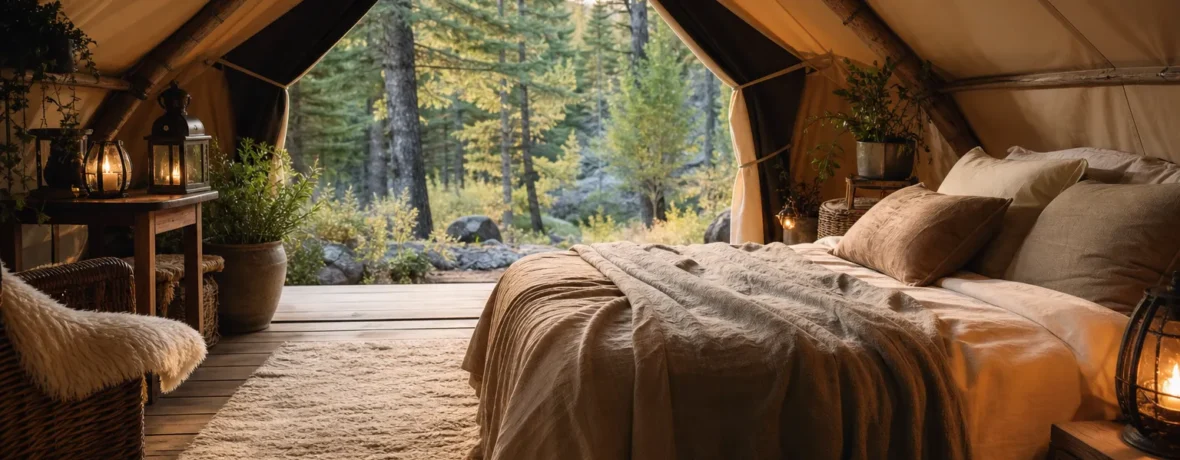
What is glamping? Glamping is camping with built-in comfort: a real bed, shelter already set up, and often heat, electricity, toilets, or meals. Yes, it can be real camping if you sleep outdoors or in a camp-style shelter and treat the land responsibly. No, it is not backpacking.
Here’s the clean answer: glamping is camping on training wheels, and that is not an insult. It strips away the fussy parts—pitching a tent in wind, sleeping on a thin pad, cooking in the dark—and keeps the best part: waking up close to trees, rock, weather, birds, and dirt.
The problem starts when people pretend it is the same thing as carrying a full pack 12 miles [19 km] into the backcountry. It is not. It does not ask the same skills from you. It does not demand the same tolerance for discomfort. It does not give you the same margin for error.
But “not the same” does not mean “fake.” A cabin is not a tarp. A yurt is not a bivy sack. A safari tent with a queen bed is not a two-person tent in a sleet storm. Still, if you are sleeping in a low-impact outdoor lodging setup, sharing space with weather and wildlife, and following the same ethics as everyone else outside, you are camping. Softer camping. Still camping.
What is glamping, and is it real camping?
Yes, glamping is real camping when the outdoor setting is the point, not the wallpaper.
Glamping blends “glamorous” and “camping,” but the name makes it sound flimsier than it is. At its best, glamping is a bridge between a hotel and a campsite. You may sleep in a canvas tent, yurt, tiny cabin, wall tent, treehouse, wagon, or dome. You may have a mattress instead of a sleeping pad, a stove instead of a pocket burner, and a porch instead of a muddy vestibule.
That extra comfort changes the trip, but it does not erase the outdoor part. You still hear rain hit the roof. You still step outside for sunrise. You still need to respect fire rules, food storage, quiet hours, pets, waste, and fragile ground. The National Park Service camping planning guidance puts the focus where it belongs: know the site, know the conditions, and prepare before you go.
The line is not luxury. The line is detachment. If your “glamping” stay is basically a resort room with a pine-tree mural and a fire pit staged for photos, call it a rustic hotel. Fine. Enjoy it. But do not pretend it is camping just because the marketing copy says “wild.”
What is glamping camping compared with tent camping?
Glamping camping is easier, more comfortable, and usually less skill-heavy than tent camping.
That matters. Tent camping asks you to bring shelter, build shelter, manage condensation, choose a flat spot, stake correctly, keep gear dry, sleep close to the ground, and handle more of your own kitchen system. Glamping often handles those jobs before you arrive.
| Trip style | What you usually provide | What it teaches you |
|---|---|---|
| Glamping | Clothes, food, personal gear, day hiking kit | Outdoor comfort, camp rhythm, basic land ethics |
| Car camping | Tent, sleep system, stove, cooler, full camp kit | Camp setup, weather prep, simple self-reliance |
| Backpacking | Everything on your back | Weight discipline, route judgment, backcountry risk management |
This is why the “real camping” argument gets so noisy. People are arguing over status when they should be talking about skills. Glamping is real enough for a family that wants one night under canvas without buying $900 worth of gear. It is real enough for someone recovering from injury. It is real enough for a hiker who wants a dry basecamp before a big trail day.
It is not the same skill set as backpacking. That is the truth. Nobody needs to act wounded by it.
Does glamping count if you have a bed and electricity?
Yes, a bed and electricity do not automatically disqualify it.
A campground with RV hookups is still a campground. A frontcountry site you drive to is still camping; the National Park Service describes frontcountry camping as the kind where visitors drive to an established campground, as of November 2026. So comfort alone cannot be the test.
The better test is this:
- Are you sleeping in an outdoor-oriented shelter or campsite?
- Are you close enough to weather that it shapes the experience?
- Do you need to follow outdoor rules for fire, food, trash, noise, and wildlife?
- Would poor behavior from you damage the place or bother other campers?
- Is the setting more important than the décor?
If the answer is yes, you are camping in a cushier lane. If the answer is no, you booked lodging with a camp theme.
Is glamping good for hikers?
Yes, glamping can be useful for hikers when it supports time outside instead of replacing it.
A glamping site can make a strong basecamp. You can hike hard all day, then come back to a dry bed, a chair, and enough comfort to sleep well before the next trail. That is not weak. That is practical.
It also lowers the barrier for people who are new to the outdoors. Not everyone grew up with a tent in the garage. Not everyone knows how to use a camp stove, guy out a rainfly, or stay warm when the temperature drops 30°F [17°C] after sunset. A good glamping trip can teach the rhythm of outdoor life without throwing every hard lesson at you at once.
The danger is when glamping becomes a substitute for learning. If you want to move into car camping, backpacking, or shoulder-season hiking, you still need the real skills: layering, water treatment, navigation, campsite selection, weather judgment, and food storage. Comfort can introduce you to the outdoors. It cannot think for you.
When is glamping not camping?
Glamping is not camping when nature becomes a prop.
If you never feel the temperature shift, never step on dirt, never hear the night, never think about your impact, and never do more than sip coffee beside a staged fire feature, the word “camping” has been stretched too thin.
That does not make the trip bad. A soft weekend away can be excellent. Just call it what it is. The outdoor world already has enough inflated labels. A walk is not a thru-hike. A scenic pullout is not a summit. A luxury suite with antler lamps is not a camp.
The point is not to police fun. The point is to keep words honest. Honest words help you choose the right gear, understand the risk, and show respect for people doing harder things in harder places.
How do you choose a glamping trip without kidding yourself?
Choose glamping by matching comfort to the outdoor experience you actually want.
- Decide what you want from the land. Pick the hike, lake, desert, forest, or dark sky first. Pick the bed second.
- Read the site rules before you book. Look for food storage, fire, pet, parking, trash, and quiet-hour rules on the official property or land manager page.
- Check who manages the land. Public land, private ranch, state park, and national forest sites can have very different expectations.
- Pack like weather can still win. Bring warm layers, rain protection, a headlamp, water bottles, and shoes that can handle mud.
- Use Leave No Trace habits. The Leave No Trace Seven Principles apply even when your shelter has a mattress.
- Be honest about bragging rights. Enjoy the comfort. Just do not sell it as a survival epic.
What should you pack for glamping?
Pack less than you would for tent camping, but do not pack like you are staying downtown.
- Headlamp or flashlight with spare batteries
- Warm layer, rain jacket, and sleep clothes
- Hiking shoes or boots plus camp shoes
- Water bottles or hydration reservoir
- Trail snacks and simple breakfast food
- First-aid kit for minor cuts, blisters, and stings
- Map download or paper map for nearby trails
- Trash bags, especially if the site is pack-in, pack-out
- Toiletries in a small kit
- Binoculars, book, or camp game instead of another screen
If you are camping outside developed campgrounds on public land, do not guess. Check the relevant agency first. The USDA Forest Service dispersed camping guidance explains that dispersed camping means camping outside developed campgrounds and points campers back to local forest rules, as of November 2026. That local piece matters. Fire restrictions, closures, permits, and food-storage rules can change fast.
So, is glamping real camping?
Yes—with an asterisk big enough to see from the trailhead.
Glamping is real camping when it keeps you outdoors, asks you to respect the land, and gives you a closer relationship with weather, darkness, wildlife, and quiet than a hotel would. It is not backpacking. It is not primitive camping. It is not proof that you can handle a bad night in the mountains.
But the sneering around glamping has gotten stale. The outdoors does not need more gatekeeping. It needs more people who care enough to behave well once they get there. If a canvas tent with a bed gets someone to watch sunrise, learn trail manners, pack out trash, and book a harder trip next time, good.
Call it camping. Call it soft camping. Call it basecamp comfort. Just do not call it fake when it gets people outside for the right reasons.
Related reading
- Type 2 Fun: Why Hard Hikes Feel Good Later
- The Seven Summits Explained
- What Is Geocaching?
- What Is Hiking, Really? A Definition Worth Arguing About
FAQ
What is glamping in simple terms?
Glamping is comfortable camping. You usually get a prepared shelter and real bed, while still staying in an outdoor setting such as a campground, forest, ranch, desert site, or park-style lodging area.
Is glamping considered camping?
Yes, glamping is considered camping when the stay is centered on an outdoor site and outdoor rules. It is a more comfortable version, not the same thing as backpacking or primitive camping.
What is the difference between glamping and camping?
The main difference is how much work and discomfort you take on. Traditional camping usually requires your own tent, sleep system, and camp setup, while glamping often provides shelter, a bed, and sometimes heat, electricity, or bathrooms.
Is glamping good for beginners?
Yes, glamping is a good first step for beginners. It lets you learn camp routines, weather awareness, and outdoor etiquette without buying a full gear closet before your first night outside.
Can you go glamping in national parks?
Sometimes, but options vary by park and concessionaire. Check the official park lodging and camping pages before booking, because availability, operating seasons, reservations, and rules change by location.
Do you need camping gear for glamping?
Usually you need less gear, but you still need outdoor basics. Bring layers, a light, sturdy shoes, water, personal items, and anything the host specifically says is not provided.