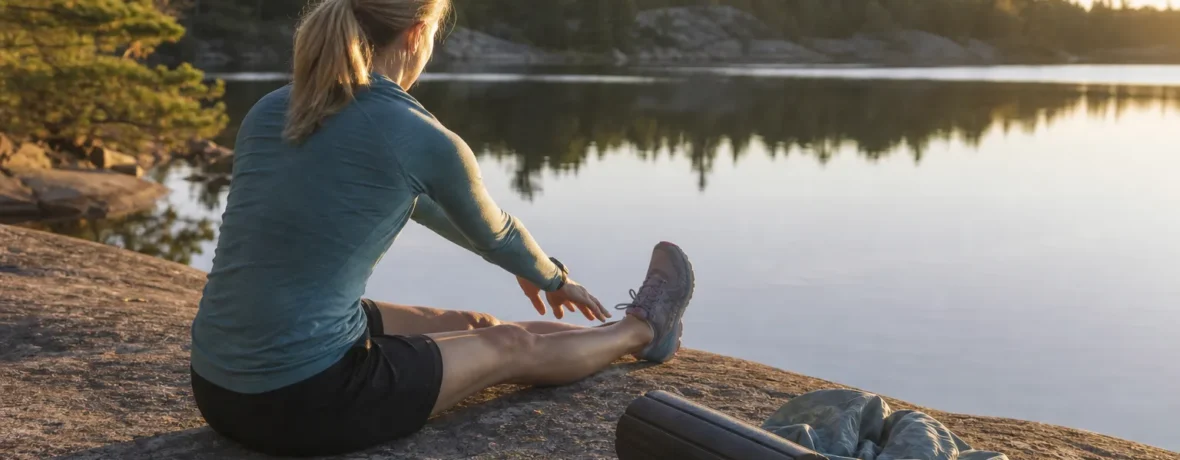
What is active recovery? It is low-effort movement done the day after hard hiking to help you recover without adding new training stress. For hikers, that usually means 20 to 45 minutes of easy walking, mobility work, light cycling, or gentle stretching, kept at a pace where you can talk comfortably.
What is active recovery for hikers?
Active recovery is easy movement that helps your body settle down after trail stress.
A hard hike loads your calves, quads, glutes, feet, hips, back, and shoulders. Add a long descent, a heavy pack, heat, or uneven terrain, and your body has real repair work to do. Active recovery gives you circulation and gentle range of motion without turning the next day into another workout.
Think mellow. Not “sneaky training.” If you finish your recovery session feeling more tired, you went too hard. The right effort feels like loosening a stuck zipper: small pulls, no yanking.
The Physical Activity Guidelines for Americans from CDC and HHS recommend increasing activity gradually because injury risk rises when the gap between your usual workload and a new workload gets too big. That is exactly where recovery days earn their keep.
Is an active recovery day the same as a rest day after hiking?
No, but they both belong in a smart hiking plan.
A full rest day means you skip structured exercise and let your body rebuild. An active recovery day means you move gently on purpose. Use full rest when you are wiped out, sick, injured, sleep-deprived, or sore enough that stairs feel ugly. Use active recovery when you are stiff, heavy-legged, or mildly sore but still moving well.
| Day type | Best when | Good choices |
|---|---|---|
| Full rest | Pain, illness, deep fatigue, poor sleep | Sleep, easy meals, short walks only if they feel good |
| Active recovery | Mild soreness, stiffness, normal energy | Easy walk, mobility, gentle cycling, relaxed swimming |
| Training day | Fresh legs, no sharp pain, solid energy | Hill repeats, loaded hike, strength work, longer miles |
A simple rule: if movement makes you feel better after 10 minutes, active recovery is probably fine. If movement makes your stride worse, your pain sharper, or your mood darker, call it rest.
What should you do on an active recovery day after a hike?
Choose light movement that keeps effort low and joints happy.
Your goal is not calorie burn. Your goal is to come out of the day ready for the next hike, strength session, or normal life. Keep the session short, smooth, and easy enough that your breathing stays under control.
- Start with a body check. Rate soreness from 1 to 10. If you are above 6, favor full rest or a very short walk.
- Walk easy for 10 minutes. Use flat ground. No loaded pack. No chasing pace.
- Add 8 to 12 minutes of mobility. Focus on ankles, calves, hips, hamstrings, glutes, upper back, and shoulders.
- Do 5 minutes of gentle balance work. Stand on one foot near a wall, then switch sides. Keep it controlled.
- Stop while you still feel good. Active recovery works best when you finish fresh, not proud and cooked.
Good active recovery options include:
- 20 to 45 minutes of flat walking
- 10 to 20 minutes of easy mobility
- 15 to 30 minutes of relaxed cycling on low resistance
- Easy swimming or water walking
- Light household movement broken into short chunks
Skip hard intervals, long climbs, weighted stair sessions, heavy lower-body lifting, and “just one quick” sufferfest. Your legs know the difference.
How sore is too sore for active recovery?
Soreness is workable when it is mild, even, and improves as you warm up.
Normal post-hike soreness often shows up in the quads after downhill miles, in the calves after steep climbs, or across the hips after carrying a pack. That kind of stiffness can respond well to easy movement.
Back off if the discomfort is sharp, one-sided, getting worse, or changing your gait. Do not “walk off” pain that makes you limp. Muscle aches tied to overuse or exercise are common, but MedlinePlus guidance on muscle aches says muscle pain can also come from injury, illness, medication changes, tick bites, or other causes that need care.
- Green light: dull stiffness, both legs feel similar, movement helps within 10 minutes.
- Yellow light: soreness above 6 out of 10, heavy fatigue, swollen feet, tender joints.
- Red light: sharp pain, limping, chest pain, trouble breathing, fever, rash, severe weakness, or swelling with redness.
Can active recovery help prevent hiking injuries?
It can help manage training stress, but it cannot cancel bad pacing, poor footwear, or sudden mileage jumps.
Most hiking aches come from simple math: too much load, too much descent, too much speed, or too little recovery. Active recovery helps you notice that math before it turns into a forced break.
The NIH National Institute of Arthritis and Musculoskeletal and Skin Diseases advises choosing activity that fits your fitness level, increasing intensity gradually, and using proper equipment and technique. For hikers, that means building climbing, downhill tolerance, pack weight, and weekly mileage in steps.
Use active recovery to check your trend. One stiff day is normal. Three straight days of worsening soreness is a message. Listen early and you may only need an easy week instead of six weeks on the couch.
What should you eat and drink on a recovery day?
Eat real meals, drink to thirst, and replace what the trail took out of you.
After a long hike, your body needs fluid, carbohydrates, protein, sodium, and sleep. You do not need a complicated recovery ritual. You need enough food, enough water, and enough calm time for your tissues to repair.
A practical recovery plate looks like this:
- Protein: eggs, Greek yogurt, tofu, chicken, fish, beans, lentils, or lean meat
- Carbs: rice, potatoes, oats, pasta, tortillas, fruit, or whole-grain bread
- Color: vegetables or fruit at 2 meals
- Salt: especially after hot hikes, heavy sweating, or salty sweat marks on clothing
- Fluids: steady drinking through the day instead of chugging at night
Heat changes the recovery picture. The Wilderness Medical Society heat illness guidelines support rest in a cool area and fluid replacement for minor heat illness, and stress rapid cooling and medical care for suspected heat stroke. If yesterday’s hike involved confusion, collapse, fainting, or severe heat symptoms, that is not an active recovery problem. That is a medical-care problem.
When to see a doctor
Get medical help when pain is severe, unusual, worsening, or paired with warning signs.
Do not diagnose yourself from a recovery article. Use the red flags. Mayo Clinic guidance on muscle pain recommends urgent care for muscle pain with trouble breathing, dizziness, extreme weakness, high fever with stiff neck, or a severe injury that prevents movement.
Make an appointment with a health care professional if muscle pain does not improve with home care, follows a tick bite, comes with a rash, shows redness or swelling around a sore area, or starts after a medication change. If you have chronic conditions, a history of heat illness, or recurring joint pain, get personal advice before stacking harder hikes.
How do you build active recovery into a hiking week?
Place active recovery after your hardest trail day.
If Saturday is your long hike, Sunday should usually be active recovery or full rest. If you hike both weekend days, make Monday easy. The harder the descent, the heavier the pack, and the hotter the weather, the more recovery you need.
Try this simple weekly rhythm:
- Day 1: Strength training or hill work
- Day 2: Easy walk or mobility
- Day 3: Moderate hike or cardio
- Day 4: Rest or active recovery
- Day 5: Strength training
- Day 6: Long hike
- Day 7: Active recovery or full rest
Change the plan when life changes. Bad sleep, work stress, travel, dehydration, and heat all count as training load. Your calendar may say “workout.” Your body may say “walk the dog and stretch.” The body gets the vote.
Related reading
- How Many Steps in a Mile (Walking vs Hiking)?
- What Is the Best Cardio for Hikers?
- What Is VO2 Max and Why It Matters for Hikers
- Calf Stretches for Hikers
FAQ
Is walking good active recovery after hiking?
Yes, easy walking is one of the best active recovery choices for hikers. Keep it flat, light, and short enough that your legs feel looser afterward.
How long should active recovery last?
Most hikers do well with 20 to 45 minutes. If you are very sore, start with 10 minutes and stop if your stride gets worse.
Should I stretch sore legs after hiking?
Yes, gentle stretching can help stiffness, but do not force deep stretches into painful tissue. Use slow calf, hip, hamstring, quad, and glute stretches after a short warm-up.
Is yoga active recovery?
Yes, if it is gentle yoga. Skip power flows, long holds that strain your legs, or heated classes when you are already depleted.
Can I hike again the day after a hard hike?
Yes, if the second hike is easy and your body feels good. Choose lower mileage, less elevation gain, and a lighter pack so the day functions as recovery, not another hard effort.