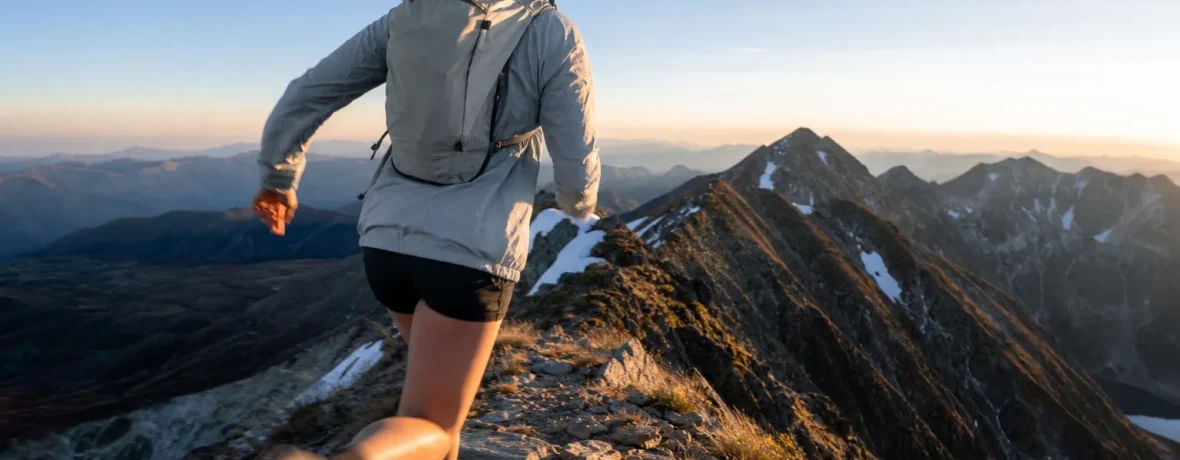
Fastpacking is lightweight backpacking done at a faster pace, usually by mixing hiking, power hiking, and easy trail running with an overnight kit. You carry only essential gear, often 8-20 lb [3.6-9.1 kg], so you can cover 15-30 miles [24-48 km] per day without moving like you are on a forced march.
What is fastpacking in practical terms?
Fastpacking is backpacking trimmed down for speed.
You still sleep outside. You still carry shelter, insulation, food, water treatment, layers, navigation, and emergency basics. The difference is that everything is lighter, smaller, and chosen with movement in mind. A fastpacking kit fits closer to your body than a standard backpacking setup, and your day has fewer long stops.
Think of it as the middle ground between ultralight backpacking and trail running. You are not racing every mile. Most of the time, you hike the climbs, jog smooth flats and downhills when the trail allows, and keep breaks short enough that your shoes do not get cold.
The goal is simple: travel farther with less strain by carrying less and moving efficiently.
How is fastpacking different from backpacking and trail running?
Fastpacking sits between backpacking and trail running.
| Activity | Typical load | Main goal | Best pace |
|---|---|---|---|
| Backpacking | 20-40 lb [9.1-18.1 kg] | Comfortable overnight travel | Steady hiking |
| Ultralight backpacking | 10-25 lb [4.5-11.3 kg] | Lower effort over long miles | Efficient hiking |
| Fastpacking | 8-20 lb [3.6-9.1 kg] | Longer distance with overnight gear | Hike-run mix |
| Trail running | 1-8 lb [0.5-3.6 kg] | Fast single-day movement | Running |
The big difference is commitment. On a trail run, you can turn around and drive home. On a fastpacking route, you may be sleeping miles from the trailhead. That changes your margin for weather, injuries, food, water, and navigation.
Backpacking rewards comfort in camp. Fastpacking rewards comfort while moving. That means lighter sleep systems, simpler meals, quick-access snacks, running-friendly layers, and a pack that does not swing around when you jog.
What gear do you need for fastpacking?
You need the lightest safe version of a full overnight kit.
Start with the big four: pack, shelter, sleep system, and clothing. Then add food, water treatment, navigation, light, first aid, and repair items. Leave luxury items at home until you know exactly what they cost you in sweat.
- Pack: A 20-30 L running-style pack or vest-pack works for many overnight trips. Look for front bottle pockets, minimal bounce, and easy access to snacks.
- Shelter: A tarp, bivy, trekking-pole tent, or tiny freestanding tent can work. Choose based on weather, bugs, and your skill level.
- Sleep system: A quilt or light sleeping bag, compact pad, and dry sleep clothes are the core.
- Footwear: Trail runners usually beat boots for fastpacking because they flex, drain, and move quickly.
- Clothing: Pack one active layer, one warm layer, rain protection, socks, and a hat or buff suited to conditions.
- Water setup: Soft bottles plus a filter or chemical treatment keep weight low and access quick.
- Navigation: Carry a map, downloaded route, and power backup. Do not rely on cell signal.
- Safety: Headlamp, small first aid kit, repair tape, fire starter, emergency blanket, whistle, and personal locator beacon or satellite messenger for remote routes.
Use the National Park Service Leave No Trace principles when choosing camps, managing waste, and moving through fragile terrain. Fast does not mean careless.
How light should a fastpacking pack be?
A loaded fastpacking pack should be light enough that you can jog without fighting it.
For many people, that means 8-20 lb [3.6-9.1 kg] with food and water included. A one-night summer kit can land near the low end. A cold, wet, or waterless route pushes the weight higher fast.
Do not chase a low number by deleting safety. Cut weight by choosing compact gear, carrying only the food you will actually eat, planning water carefully, and removing duplicates. Your rain shell, warm layer, headlamp, and navigation do not become optional because your spreadsheet looks tidy.
A simple test: load your pack, jog 200 yards [183 m], hike uphill for 10 minutes, then jog downhill on easy ground. If the pack bounces, rubs, or changes your stride, fix the fit before you take it overnight.
How do you train for fastpacking?
Train by combining hiking endurance, easy running, strength work, and loaded practice.
You do not need to be a fast runner. You need durable legs, calm pacing, and the ability to keep eating and moving for hours. The CDC adult physical activity guidelines recommend weekly aerobic activity plus muscle-strengthening work, which fits fastpacking training well.
- Build a base. Spend 4-6 weeks walking, hiking, or running 3-5 days per week before adding big mileage.
- Add hills. Climbing strength matters more than flat speed. Use stairs, steep trails, or treadmill incline.
- Practice run-hike pacing. Hike the climbs, jog short smooth sections, and keep your effort conversational.
- Train with weight. Start with 5-8 lb [2.3-3.6 kg], then build toward your real trip load.
- Strengthen the chassis. Squats, lunges, step-ups, calf raises, planks, and hip work help your knees, ankles, and back tolerate long descents.
- Practice fueling. Eat during training hikes so your gut learns the job before the real trip.
- Do one shakedown overnight. Pick a short route with an easy bail-out. Test sleep, food, pack fit, and morning routine.
Increase distance gradually. If soreness changes your stride, lingers for days, or sharpens while you move, back off and reassess.
What should you eat and drink while fastpacking?
Eat early, eat often, and keep water easy to reach.
Fastpacking burns steady energy for long hours, so waiting until you feel hollow is a bad plan. Pack snacks you can eat while walking: bars, tortillas, nut butter, jerky, dried fruit, candy, chips, nuts, and drink mixes. For dinner, keep it simple. A freezer-bag meal, instant potatoes, ramen, couscous, or a no-cook wrap can all work.
Water planning depends on heat, effort, elevation, humidity, and source spacing. Carry enough capacity for the dry stretches on your route, and treat natural water before drinking. In hot conditions, slow your pace, cover skin, and watch for heat stress. The Wilderness Medical Society heat illness guidelines emphasize prevention, cooling, and hydration in wilderness settings.
How do you plan your first fastpacking trip?
Choose a route that is short, familiar, and forgiving.
Your first trip is not the time for a remote traverse with sketchy water and exposed passes. Pick one night, moderate elevation gain, reliable water, legal camping, and a bailout option. A loop or out-and-back of 12-20 miles [19-32 km] total is plenty for learning.
- Check land rules, camping zones, fire restrictions, and permit needs through official land manager sites.
- Study elevation gain, not just mileage.
- Mark water sources and dry stretches.
- Download offline maps and carry a backup.
- Tell someone your route, camp area, and return time.
- Pack for the forecast, then add a margin for the forecast being wrong.
- Start early enough that you are not hunting for camp in the dark.
Keep the first one almost too easy. If you finish with dry socks, a working stove, and no angry hotspots, you won.
What mistakes do beginners make when fastpacking?
Most beginner mistakes come from going too far, too light, or too fast.
The classic error is treating fastpacking like a long trail run with a nap in the middle. It is not. You need enough gear to handle a bad night, a missed turn, a soaked layer, or a stomach that suddenly hates your favorite bar.
- Skipping shakedowns: Untested gear feels heavier at 9 p.m. in the rain.
- Running too early: Jogging the first downhill can wreck your quads before camp.
- Packing awkwardly: Dense items should ride close to your back, not swing at the bottom.
- Ignoring feet: Hotspots need attention before they become blisters.
- Underestimating weather: A tiny kit still needs warmth and rain protection.
- Forgetting recovery: Eat, rehydrate, and sleep after the trip. Your legs earned it.
When to see a doctor
Get medical help right away for severe symptoms, worsening symptoms, or anything that feels beyond normal trail fatigue.
Stop your trip and seek urgent help for chest pain, fainting, confusion, severe shortness of breath, signs of heat illness, suspected fracture, severe allergic reaction, or dehydration symptoms that do not improve with rest and fluids. Mayo Clinic advises medical care for severe dehydration and concerning symptoms such as extreme thirst, little or no urination, dizziness, or confusion; read its dehydration symptoms and causes guide before hot-weather trips.
If you have heart disease, diabetes, asthma, a recent injury, or you are returning after a long break, talk with a qualified clinician before ramping up fastpacking training. No article can clear you for hard mountain miles.
Related reading
- How Many Steps in a Mile (Walking vs Hiking)?
- What Is the Best Cardio for Hikers?
- What Is VO2 Max and Why It Matters for Hikers
- Calf Stretches for Hikers
FAQ
Is fastpacking just running with camping gear?
No. Fastpacking is usually a mix of hiking and running with an overnight kit. You run only where the trail, pack weight, and your legs make it efficient.
Can beginners try fastpacking?
Yes, if you already hike comfortably and start with a short overnight route. Keep the distance modest, pack real safety gear, and test your setup before heading far from the trailhead.
Do you need an ultralight tent for fastpacking?
No. An ultralight tent helps, but a tarp, bivy, or compact backpacking tent can work if it fits your route and weather. The best shelter is the one you can pitch fast and trust overnight.
What is a good fastpacking distance for a first trip?
A good first trip is 12-20 miles [19-32 km] total over one night. Pick lower mileage if the route has big climbs, heat, rough footing, or long water carries.
Is fastpacking safe alone?
Solo fastpacking can be safe for skilled hikers, but it leaves less room for mistakes. Carry reliable navigation, tell someone your plan, consider a satellite messenger, and choose a route that matches your experience.
What pack size is best for fastpacking?
A 20-30 L pack works for many one-night fastpacking trips. Go smaller only when your gear is dialed and the weather is forgiving; go larger for cold, wet, or remote routes.