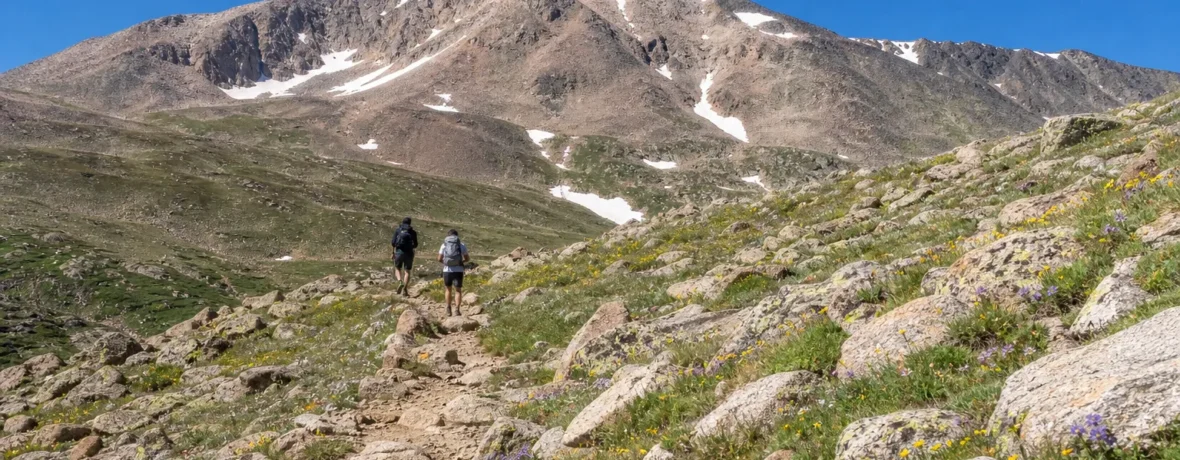
No. Pikes Peak is not one of the 64 U.S. National Parks. The 14,115-foot [4,302-meter] summit sits west of Colorado Springs, with land tied to Pike National Forest and access managed through Pikes Peak – America’s Mountain.
Is Pikes Peak a National Park or a national forest?
No. Pikes Peak is not a National Park; it is a famous mountain in Colorado, not a National Park Service unit with “National Park” status.
The National Park Service list of National Parks, as of November 2026, includes Colorado’s Black Canyon of the Gunnison, Great Sand Dunes, Mesa Verde, and Rocky Mountain national parks. Pikes Peak is not on that list.
That does not make it small-time. Far from it. Pikes Peak is one of Colorado’s best-known fourteeners, with a summit at 14,115 feet [4,302 meters]. The official NPS National Register record for Pikes Peak places it 15 miles [24 kilometers] west of Colorado Springs in Pike National Forest, in El Paso County.
Who manages Pikes Peak?
Pikes Peak is managed through a mix of public-land and city-run access, so rules depend on where you are on the mountain.
For most visitors, the key name is Pikes Peak – America’s Mountain, the City of Colorado Springs operation that manages the Pikes Peak Highway corridor, summit access, visitor services, rangers, reservations, and tollgate fees. The highway is the paved road most drivers use to reach the top.
For hikers, the answer gets more layered. Parts of the mountain are in Pike National Forest, while the highway and summit visitor corridor have their own posted rules. That means you should not assume “national forest” rules apply everywhere. Read the posted signs. Check current conditions. And if you are using the road corridor, follow Pikes Peak Highway rules.
What is the difference between Pikes Peak and Rocky Mountain National Park?
Pikes Peak is a single mountain destination; Rocky Mountain National Park is a National Park Service unit.
| Place | Status | What that means for you |
|---|---|---|
| Pikes Peak | Mountain in Colorado, tied to Pike National Forest and city-managed highway access | Rules, tolls, timed-entry permits, road hours, and closures come from Pikes Peak – America’s Mountain and local land managers. |
| Rocky Mountain National Park | U.S. National Park | Entrance fees, timed entry, backcountry rules, camping rules, and closures are set by the National Park Service. |
Both are high, scenic, and busy. But they are not the same kind of place. Your America the Beautiful Pass may help at many federal recreation sites, but you still need to check the exact Pikes Peak admission and reservation rules before you go.
Do you need a reservation to visit Pikes Peak?
Yes, during the posted timed-entry season for summit access by vehicle.
As of November 2026, the official Pikes Peak Highway rate and hours sheet says daily timed-entry permits for the summit are effective from the Friday before Memorial Day through September 30 and cost $2 per vehicle. Admission is separate.
Outside that window, the highway still runs on posted hours and weather conditions. Snow, ice, wind, special events, and maintenance can change access fast. This is a 14,115-foot [4,302-meter] summit, not a city overlook with a snack machine and a shrug.
How much does it cost to drive up Pikes Peak?
As of November 2026, Pikes Peak Highway charges seasonal admission, with higher rates from May 1 through November 30.
The official rate sheet lists these Pikes Peak Highway admission prices:
- Adults 16 and older: $18 from May 1 to November 30; $10 from December 1 to April 30.
- Children ages 6 to 15: $8 from May 1 to November 30; $5 from December 1 to April 30.
- Carload discount, up to 5 passengers: $65 from May 1 to November 30; $35 from December 1 to April 30.
- Bicycle riders: $18 from May 1 to November 30; $10 from December 1 to April 30.
- Daily timed-entry summit permit: $2 per vehicle during the posted summit permit season.
Those figures are current as of November 2026. Always check the official rate sheet before you build your day around them, because fee schedules can change.
Can you hike Pikes Peak?
Yes, you can hike Pikes Peak, but you cannot hike just anywhere you please.
The mountain has established hiking routes, and serious hikers often plan full-day or multi-day efforts depending on route, fitness, weather, and logistics. But the highway itself is not a hiking route. The official Pikes Peak safety page, as of November 2026, says there is no hiking and no overnight camping or parking allowed on Pikes Peak Highway. Drone use is also prohibited in that corridor.
That last point catches people. You may see the road on a map and think, “I’ll just walk the shoulder.” Don’t. It is a narrow, winding mountain road with vehicles, weather, falling rock, and limited room for mistakes.
What rules should you know before going?
Know the road, reservation, camping, and altitude rules before you start up the mountain.
- Check the day’s access. Weather can close all or part of the highway, even when Colorado Springs feels mild.
- Reserve if required. During the timed-entry season, get the summit permit before you expect to drive all the way up.
- Pay the correct admission. The highway has seasonal rates, and the summit permit is a separate vehicle permit.
- Stay off the highway on foot. Hiking is not allowed on Pikes Peak Highway, as of November 2026.
- Do not plan to camp or park overnight in the highway corridor. That is prohibited on the highway, as of November 2026.
- Leave the drone packed away. Drone use is prohibited in the Pikes Peak Highway corridor, as of November 2026.
- Build in time. The road climbs more than 6,000 feet [1,829 meters] over 19 miles [31 kilometers] to the summit, so this is not a quick flatland cruise.
What should you bring to Pikes Peak?
Bring mountain gear, not just city-day gear.
- Warm layer and wind shell, even in summer.
- Sun protection: sunglasses, sunscreen, and a brimmed hat.
- Water and salty snacks.
- Sturdy footwear if you plan to walk around the summit or hike nearby trails.
- Printed or saved reservation details if you are driving during timed-entry season.
- Enough gas or battery range for the full mountain drive.
- A flexible plan in case weather closes the summit.
When to see a doctor
Talk to a doctor before visiting Pikes Peak if you have heart disease, lung disease, sleep apnea, sickle cell trait, or another condition that could be affected by high altitude.
The CDC guidance on high-altitude travel says unacclimatized travelers sleeping at 8,000 feet [2,438 meters] or higher can be at risk for altitude illness, and Pikes Peak’s summit is far above that. Get medical help right away for severe shortness of breath, confusion, trouble walking straight, chest symptoms, worsening headache, or symptoms that do not improve with descent. This is not a place to tough it out for a selfie.
Related reading
- National Park Pass Changes for 2026
- How Big Is Yellowstone National Park?
- Every Kid Outdoors: The Free 4th Grade National Park Pass
- How Big Is Yosemite National Park?
FAQ
Is Pikes Peak run by the National Park Service?
No. Pikes Peak is not run as a National Park Service national park. The mountain is associated with Pike National Forest, while the highway and summit visitor access are managed through Pikes Peak – America’s Mountain.
Is Pikes Peak in Colorado a National Park?
No. Pikes Peak is in Colorado, but it is not a National Park. Colorado’s National Parks include Black Canyon of the Gunnison, Great Sand Dunes, Mesa Verde, and Rocky Mountain, as listed by the National Park Service as of November 2026.
Can you drive to the top of Pikes Peak?
Yes, when the Pikes Peak Highway is open and conditions allow. You may need a timed-entry permit during the posted summit permit season, and you must pay the current highway admission fee.
Can you camp on Pikes Peak Highway?
No. Overnight camping and overnight parking are prohibited on Pikes Peak Highway, as of November 2026. If you want to camp in the wider region, look for legal campgrounds or dispersed camping areas under the correct land manager’s rules.
Are drones allowed on Pikes Peak?
No, drone use is prohibited in the Pikes Peak Highway corridor, as of November 2026. Do not launch from pullouts, the road, or the summit visitor area unless an official rule changes and you have written authorization.
Why do people think Pikes Peak is a National Park?
Because it feels like one: huge mountain, famous summit, visitor center, road access, fees, and crowds. But status matters. Pikes Peak is a landmark mountain, not a National Park.