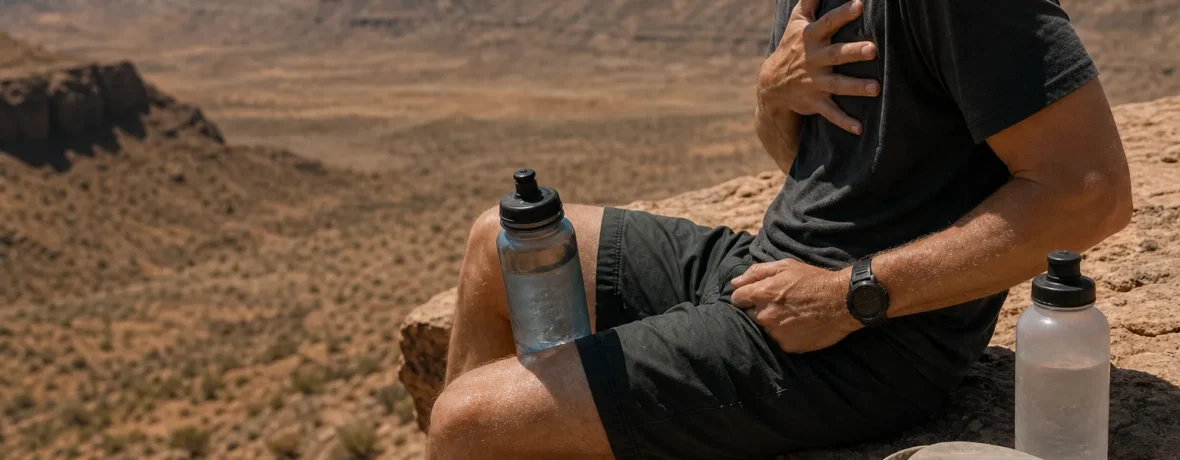
Yes, dehydration can cause heart palpitations, especially when sweat, heat, vomiting, diarrhea, or hard climbing drop your fluid volume and disturb electrolytes. A 2% body-weight fluid loss can raise heat strain and hiking performance problems; palpitations with chest pain, fainting, confusion, or shortness of breath need urgent care.
Can dehydration cause heart palpitations?
Yes, dehydration can make your heart beat faster, harder, or irregularly.
When you’re low on fluid, your blood volume drops. Your heart has to work harder to move blood to your muscles, skin, and brain. Add a hot climb, a heavy pack, altitude, caffeine, alcohol the night before, or not eating enough salty food, and you’ve got a perfect setup for a thumpy chest.
Mayo Clinic lists racing heartbeat or palpitations as symptoms that can show up as dehydration worsens. CDC/NIOSH heat guidance also connects dehydration with heat syncope and recommends water plus carbohydrates and electrolytes during heat cramps.
On trail, palpitations may feel like:
- A fluttering fish-flop in your chest
- A skipped beat, then a hard “thud”
- A fast pulse that feels out of proportion to your pace
- Pounding in your throat or neck
- A racing heart after you stop moving
Why does dehydration make your heart race?
Dehydration can make your heart race because there is less fluid moving through your bloodstream.
Think of your circulatory system like a pump-and-hose setup. Lose too much water through sweat, breathing hard, vomiting, or diarrhea, and the pump has to work faster to keep pressure up. Your body may also release stress hormones to keep you upright and moving. That can make the heartbeat feel stronger.
Electrolytes matter too. Sodium, potassium, chloride, calcium, and magnesium help your nerves and muscles fire correctly. Your heart is a muscle with an electrical system. Heavy sweating without enough food or electrolyte replacement can throw that system off enough to cause uncomfortable beats.
The Wilderness Medical Society heat illness guidelines recommend starting hikes well hydrated and drinking to thirst during activity in a way that prevents more than 2% body-weight loss. That’s 3.6 lb [1.6 kg] for a 180 lb [82 kg] hiker. You don’t need to obsess over every ounce. You do need to pay attention before your body starts shouting.
What are the signs that palpitations are from dehydration?
Palpitations are more likely tied to dehydration when they show up with thirst, dark urine, heat exposure, or heavy sweating.
No one can diagnose the cause of palpitations from a trail-side guess. Still, the pattern gives clues. If your heart starts pounding after a dry ridge walk, you haven’t peed in hours, your mouth feels cottony, and your shirt is crusted with salt, dehydration is a strong suspect.
| Clue | What it can mean | Trail response |
|---|---|---|
| Dark yellow urine or no urine for several hours | You may be behind on fluids | Stop, shade up, sip fluids |
| Dizziness when standing | Low fluid volume or heat stress | Sit or lie down; cool your body |
| Heavy sweating plus cramps | Fluid and salt loss | Use a salty snack or electrolyte drink |
| Confusion, fainting, chest pain | Possible emergency | Call 911 or activate emergency help |
What should you do if your heart starts pounding on a hike?
Stop hiking, cool down, and rehydrate slowly.
Do not “push through” heart symptoms just because the summit is close. Mountains do not care how tough you are. Your job is to get home with the same heartbeat you started with.
- Stop moving. Drop your pack. Sit in shade if you can find it.
- Check your symptoms. Chest pain, fainting, severe shortness of breath, confusion, or weakness on one side of the body means emergency help now.
- Cool your body. Loosen tight clothing, wet a bandana, fan your skin, and move away from sun-baked rock.
- Sip fluids. Take small, steady drinks instead of chugging. If you’ve been sweating for hours, pair water with salty food or an electrolyte drink.
- Eat something simple. Crackers, pretzels, trail mix, a tortilla, or soup mix can help replace sodium and calories.
- Wait. Give your heart time to settle. If palpitations keep going, worsen, or return when you stand, turn around and seek medical care.
Should you drink water or electrolytes for dehydration palpitations?
Water is often enough for shorter hikes, but electrolytes can help during long, hot, sweaty days.
For mild dehydration from a short outing, plain water plus food usually works. For hard hiking in heat, repeated big climbs, stomach illness, or sweat-soaked clothing, an electrolyte drink or salty snack may be the better tool. The CDC says people with heat cramps should stop activity, drink water, and have a snack or drink that replaces carbohydrates and electrolytes every 15 to 20 minutes.
Do not swing to the other extreme and force water nonstop. Overhydration can dilute blood sodium, a dangerous condition called exercise-associated hyponatremia. The Wilderness Medical Society guidance favors drinking to thirst during activity rather than rigidly forcing fluids.
A practical hiking checklist:
- Start the trail with pale-yellow urine, not a sloshing stomach.
- Carry enough water capacity for dry stretches.
- Pack salty snacks, not only sweet bars and gels.
- Use electrolytes for hot weather, long climbs, or heavy sweating.
- Slow down before heat and dehydration gang up on you.
- Avoid alcohol before big heat-exposed hikes.
How much water should you carry to prevent palpitations?
Carry enough water for the weather, distance, climb, and your sweat rate.
There is no single magic number. A cool 3-mile [4.8 km] forest walk is not the same as a 12-mile [19.3 km] desert route with a 3,000-foot [914 m] climb. Your size, pace, fitness, pack weight, sun exposure, humidity, altitude, and access to water all change the math.
Use this trail plan instead of guessing:
- Before you leave: Check the forecast, heat index, water sources, and shade. Carry a filter if natural water is available and safe to treat.
- During the hike: Drink when thirsty, eat salty food on longer outings, and watch for headache, dizziness, dry mouth, dark urine, and unusual fatigue.
- At breaks: Look at your pace and water left. If you are halfway through your water before halfway through the route, turn around or shorten the day.
- After the hike: Keep sipping and eat a normal meal. Rehydration is not only water; food brings sodium and other electrolytes back into the system.
Can dehydration palpitations happen at night after hiking?
Yes, palpitations can show up later if you finish the day underhydrated.
After a long hike, your heart may feel jumpy when you lie down because there are fewer distractions and your body is still catching up. Heat stress, sore muscles, poor sleep, alcohol, too much caffeine, and a salty-sweaty day can all add noise.
If the feeling settles after fluids, food, cooling down, and rest, dehydration may have played a role. If it keeps happening, wakes you repeatedly, or comes with chest pressure, fainting, shortness of breath, or a very fast pulse at rest, get medical advice.
When to see a doctor
Get medical help right away for palpitations with red-flag symptoms.
Palpitations are common, and many are harmless. Some are not. You cannot sort out heart rhythm problems, heat illness, anemia, thyroid issues, medication effects, panic attacks, infection, or electrolyte problems with trail logic alone.
Seek urgent care or call emergency services if palpitations come with:
- Chest pain, pressure, or tightness
- Fainting or near-fainting
- Severe shortness of breath
- Confusion or altered mental status
- Weakness, numbness, or trouble speaking
- A racing or irregular heartbeat that does not settle with rest
- Symptoms after vomiting, diarrhea, heat exposure, or known heart disease
Make a non-urgent appointment if palpitations repeat, last longer than a few minutes, appear with exercise, or feel new for you. A clinician may use an exam, blood work, or heart monitoring to look for causes. No trail article can diagnose the rhythm in your chest.
Related reading
- Can Dehydration Cause High Blood Pressure?
- Can Dehydration Cause Dizziness?
- Can Dehydration Cause a Fever?
- Can Dehydration Cause Headaches?
FAQ
Can dehydration cause heart palpitations even if I drank some water?
Yes. You can still be dehydrated if sweat loss, heat, altitude, vomiting, diarrhea, or hard exertion outpaces what you drank. Water without food or electrolytes may also fall short on long, sweaty hikes.
How long do dehydration palpitations last?
They may settle within minutes to hours after rest, cooling, fluids, and food. If palpitations continue, worsen, or come with red-flag symptoms, get medical care instead of waiting them out.
Do electrolytes stop heart palpitations?
Electrolytes may help if palpitations are linked to heavy sweating and electrolyte loss. They will not fix every cause of palpitations, and they are not a substitute for medical care when symptoms are severe or recurring.
Can drinking too much water cause palpitations?
Yes, overhydration can contribute to low blood sodium, which can cause serious symptoms and may feel similar to heat illness. Drink to thirst on trail and include salty food during long, hot efforts.
Should I keep hiking if my heart is fluttering?
No. Stop, rest, cool down, and drink small amounts while checking for red flags. Turn back or get help if symptoms persist, return when you stand, or feel unusual for you.