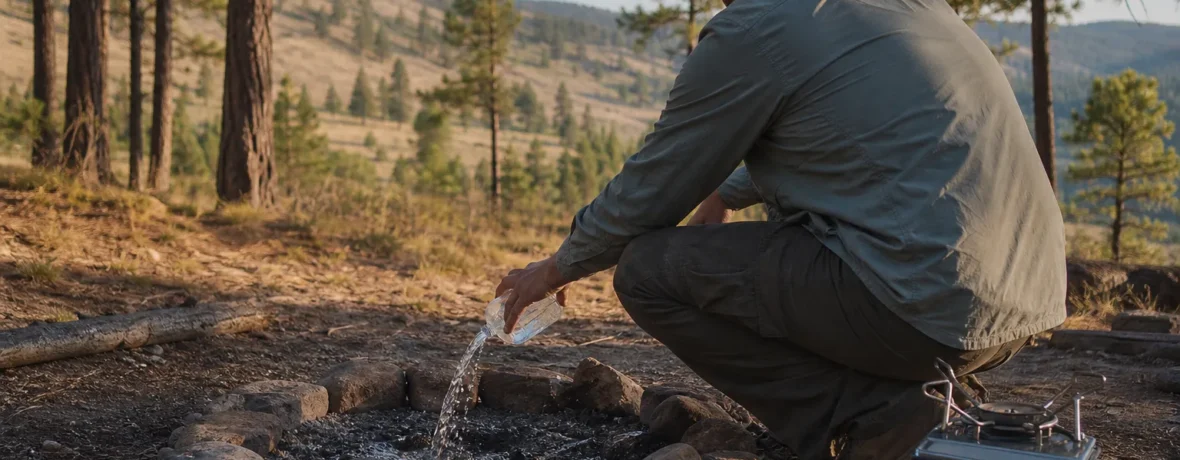
A burn ban is a legal fire restriction that can limit or prohibit campfires, charcoal, wood stoves, fireworks, smoking, target shooting, or equipment use when wildfire risk is high. Yes, you can still hike during many burn bans, but you must follow the exact order for that park, forest, county, or BLM field office.
What does a burn ban mean?
A burn ban means open flames are restricted by the agency or local government in charge of that land. The order may be temporary, seasonal, or year-round, and it applies only within the boundaries named in the order.
That boundary matters. A county rule may cover private land and county parks. A national forest order may cover one ranger district, one wilderness area, or the whole forest. A national park can have its own rule even when nearby Forest Service or BLM land has a different one.
As of November 2026, the National Park Service says park managers may implement fire restrictions during very high or extreme fire danger, and that in most parks campfires are allowed only in designated campsites and campfire rings. Check the park’s official alerts page before you pack marshmallows or firewood: National Park Service Wildland Fire FAQ.
On BLM land, restrictions can also cover more than campfires. As of November 2026, BLM says restrictions and temporary closures are used to reduce wildfire risk and may affect campfires, off-road driving, equipment use, and recreational target shooting: BLM fire restrictions.
What is a campfire ban, and is it different from a fire restriction?
A campfire ban usually targets wood and charcoal fires, while a fire restriction can cover a wider list of activities. Read the actual order, not just the headline.
One sign might say “No campfires.” Another might say “Stage 1 Fire Restrictions.” A third might ban charcoal, smoking outside a cleared area, welding, chainsaws after certain hours, or driving off designated roads. Same dry weather. Different rulebook.
The safest way to read the language is this: if the order says “prohibited,” do not do it. If it says “allowed only in designated metal fire rings,” a rock ring you found beside a dispersed campsite does not count. If it says “developed campground,” a flat pullout with tire tracks does not count either.
| Term you may see | What it usually means | What you must check |
|---|---|---|
| Fire danger rating | A daily assessment of how easily fires may start and spread. | It is not the same as a legal ban. |
| Red Flag Warning | Critical fire weather is expected or occurring. | Local rules still come from the land agency or fire authority. |
| Stage 1 restriction | Often allows fires only in designated rings or developed sites. | The exact order for that forest, park, or field office. |
| Stage 2 restriction | Often bans wood and charcoal fires more broadly. | Whether gas stoves are allowed and where. |
Can you have a campfire during fire restrictions?
Sometimes yes, but only if the specific order allows it. A metal ring in a developed campground may be legal under one restriction and illegal under another.
For example, as of November 2026, Rocky Mountain National Park says it always has Stage 1 fire restrictions in place, with campfires prohibited throughout the park except within designated campfire rings in picnic areas and frontcountry campgrounds. That is one park’s rule, not a national rule for every park: Rocky Mountain National Park fire regulations.
Some national forests use staged restrictions. A Forest Service FAQ for fire restrictions says Stage 1 is the lowest level and allows campfires in Forest Service-installed metal fire rings only, Stage 2 does not allow fires of any kind, and Stage 3 can close the forest to visitors. That staged language is useful, but the binding document is still the current forest order posted for your destination.
Are backpacking stoves allowed during a burn ban?
Often, but not always. Many restrictions treat a gas stove with an on/off valve differently from a wood fire, charcoal fire, or twig stove.
Do not guess based on fuel type alone. A small canister stove may be allowed in one area because you can shut it off instantly. A wood-burning backpacking stove may be banned because it produces embers. Alcohol stoves can be restricted because they can spill burning fuel.
Look for wording like:
- “Pressurized gas stove with an on/off switch.”
- “Petroleum-fueled stove.”
- “Liquid fuel stove.”
- “Wood-burning stove.”
- “Charcoal grill.”
- “Open flame.”
If the order does not clearly allow your stove, call the ranger station, visitor center, county fire authority, or BLM field office before you leave cell service. A cold dinner beats a citation. It also beats starting the fire everyone else has to run from.
How do you check burn bans before a hike?
Check the official page for the exact land unit you will enter. Then check again the morning you go.
Fire rules can change fast after wind, lightning, dry heat, or new fire starts. Do this before every trip:
- Identify the land manager. Is your route in a national park, national forest, state park, county park, BLM land, tribal land, or private timberland?
- Open the official alerts or fire restrictions page. Use agency pages ending in nps.gov, fs.usda.gov, blm.gov, state domains, or county fire pages.
- Read the order boundaries. Match the rule to your trailhead, campsite, road, wilderness area, or ranger district.
- Check what is banned. Look for campfires, charcoal, stoves, smoking, fireworks, target shooting, chainsaws, generators, and vehicle access.
- Check what is allowed. Some orders list exemptions for developed sites, enclosed vehicles, paved areas, or specific stove types.
- Save a screenshot. Service disappears. Rules do not.
Red Flag Warnings add another layer. As of November 2026, the National Weather Service defines a Red Flag Warning as a fire-weather alert for conditions that may produce extreme burning conditions: NWS Red Flag Warning definition. A warning is not the same thing as a land-agency order, but it is a loud signal to skip flames altogether.
What should you pack when campfires are restricted?
Pack like you will not have a fire. Then you are covered if the rule changes while you are driving to the trailhead.
- A legal stove for the area, plus enough fuel.
- No-cook meals as a backup.
- A headlamp or lantern for light.
- Warm layers instead of “we’ll just sit by the fire.”
- A shovel and water if fires are allowed where you camp.
- A printed or saved copy of the current order.
- A plan to turn around if smoke, closures, or evacuation orders appear.
For putting out a legal fire, use the old, blunt method because it works: drown, stir, drown, and feel. As of November 2026, Smokey Bear’s official campfire safety guide says to pour water until hissing stops, stir embers and ashes, keep adding water until material is cool, and feel for heat with the back of your hand: Smokey Bear campfire safety.
What happens if you ignore a burn ban?
You can be cited, fined, removed from the area, or held responsible for suppression costs if your fire escapes. The exact penalty depends on the agency, state law, and the order you violated.
Do not rely on “but other people had a fire” as your legal strategy. Fire rings full of ash are not proof that fires are allowed. They may be old. They may be illegal. They may have been built by someone who never checked.
Here is the straight trailhead test: if you cannot prove a fire is allowed, do not light one. If the weather feels wrong, do not light one. If the wind is pushing dust across the road and grass sounds like paper under your boots, do not light one even if the website has not caught up yet.
Related reading
- How Many Calories Does Walking Burn vs Hiking?
- Does Incline Walking Burn Fat?
- How Many Calories Does Hiking Burn? Pack Weight and Grade Matter
- America the Beautiful Pass: Price, Coverage and Where to Buy
FAQ
Does a burn ban mean trails are closed?
No, not usually. Many burn bans restrict fire-related activities while trails, campgrounds, and roads remain open, but a separate fire closure can close an area completely.
Can I use a propane stove during a fire ban?
Sometimes. Many orders allow pressurized gas stoves with an on/off valve, but some stricter orders do not, so check the exact wording for your destination.
Are charcoal grills treated like campfires?
Often yes. Charcoal produces embers and hot coals, so many restrictions ban charcoal along with wood fires, even when certain gas stoves are allowed.
Is a Red Flag Warning the same as a burn ban?
No. A Red Flag Warning is a National Weather Service fire-weather alert, while a burn ban is a legal restriction from a land manager or local authority.
Can I build a fire in an existing rock ring?
Only if the current rules allow it. Under many restrictions, only agency-provided metal fire rings in developed sites count; user-built rock rings may still be illegal.
Where is the best place to check current campfire rules?
Use the official page for the land you are visiting. Start with the park, forest, BLM field office, state park, or county fire authority, then verify again on the day of your trip.