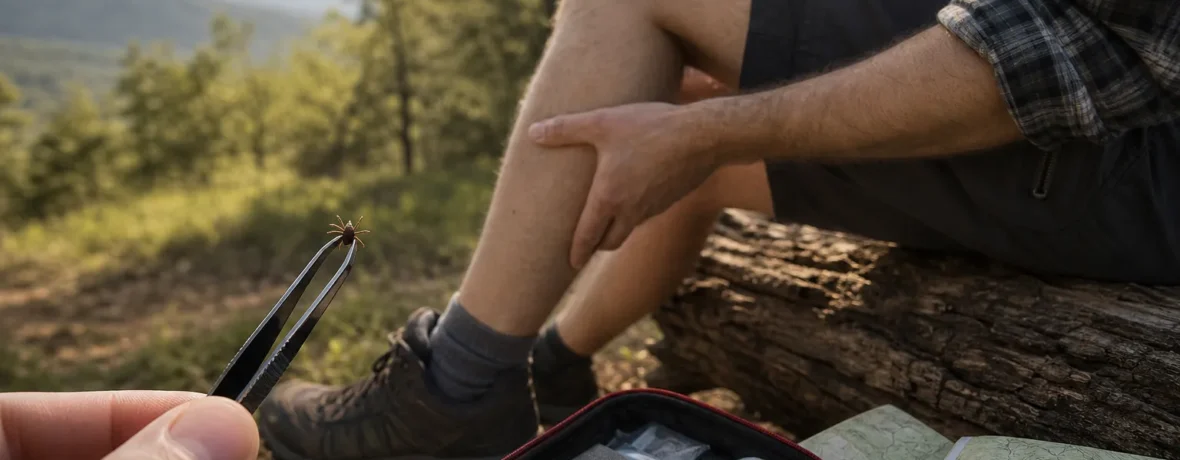
You should worry about a tick bite if you get a rash, fever, chills, headache, muscle aches, swollen lymph nodes, weakness, facial droop, trouble breathing, or severe headache within days to weeks. Also call a clinician if the tick was attached 36 hours or more, looked engorged, or came from a Lyme-prone area.
When to worry about a tick bite: what signs matter most?
Worry when symptoms show up, not just because a tick was there.
A tick bite can look creepy and still be harmless. Many bites leave a small red bump, mild itch, or a sore spot that settles down. The bigger concern is what happens after the tick is gone.
The CDC’s tick bite guidance says to watch for rash or fever in the days to weeks after removing a tick. That’s your main trail marker. If your body starts acting sick after a bite, don’t shrug it off as “just sore from the hike.”
Pay attention to these red flags:
- Fever or chills
- New rash, especially one that expands
- Headache that feels unusual for you
- Muscle aches or joint pain
- Swollen lymph nodes
- Fatigue that hits hard and doesn’t match your effort
- Facial droop, weakness, numbness, or trouble walking
- Difficulty breathing or a severe headache
What should you do right after finding a tick?
Remove it fast and clean the bite.
Skip the folklore. No petroleum jelly. No nail polish. No lit match. Those tricks waste time and can irritate your skin. The goal is simple: get the tick out in one steady move.
- Use fine-tipped tweezers or a tick removal tool.
- Grab the tick as close to your skin as you can.
- Pull upward with steady, even pressure. Don’t twist.
- Wash the bite and your hands with soap and water or use alcohol-based sanitizer.
- Save the tick in a sealed bag or container if you can. Write down the date and where you were hiking.
- Take a clear photo of the bite and, if possible, the tick.
The Mayo Clinic’s tick bite first aid matches this straight-pull approach and lists emergency symptoms such as trouble breathing, paralysis, and severe headache.
What does a normal tick bite look like?
A normal bite is usually small, local, and improving.
After you pull a tick, you might see a little redness, swelling, itching, or a pinpoint scab. That can happen from the bite itself, the tweezers, or your skin reacting to tick saliva. A small bump under 1 inch [2.5 cm] that fades over a few days is usually less concerning than a spreading rash or whole-body symptoms.
Here’s a quick comparison:
| What you see or feel | More likely routine | More concerning |
|---|---|---|
| Redness | Small spot around the bite | Expanding rash, especially over 2 inches [5 cm] |
| Timing | Appears right after removal | Appears days later or keeps growing |
| Body symptoms | None | Fever, chills, headache, aches, weakness |
| Bite site | Itchy or tender | Increasing pain, warmth, swelling, pus, or red streaks |
What does a Lyme disease rash look like?
It can look like a bull’s-eye, but it doesn’t have to.
That’s the part many hikers miss. The classic bull’s-eye rash gets all the attention, but Lyme-related rashes can be solid red, oval, bluish, or uneven. They often expand over time. They may feel warm, but they’re not always painful or itchy.
The CDC’s Lyme disease symptom page lists early symptoms such as fever, chills, headache, fatigue, muscle and joint aches, swollen lymph nodes, and an erythema migrans rash. Later signs can involve joints, nerves, the heart, or facial muscles. That does not mean every tick bite becomes Lyme disease. It means a spreading rash after a tick bite deserves medical care.
How long should you watch for symptoms after a tick bite?
Watch yourself for 30 days.
Put a note in your phone the day you remove the tick. Add where you were hiking, where on your body the tick attached, and whether it looked flat or swollen with blood. That sounds fussy. It is not. If symptoms show up two weeks later, those notes help a clinician connect the dots.
Different tick-borne illnesses can show up on different timelines. Rocky Mountain spotted fever symptoms often begin 3 to 12 days after the bite of an infected tick, according to the CDC’s RMSF clinical signs page. MedlinePlus notes that tick paralysis can start with leg weakness 2 to 7 days after a bite. Lyme symptoms can appear days to weeks later.
When to see a doctor
See a doctor if you feel sick after a tick bite.
Don’t wait for a perfect bull’s-eye rash. Don’t wait for a tick test to come back. Don’t wait until you can “tough it out” through the workweek. If you have a recent tick bite and a rash, fever, headache, muscle aches, joint pain, swollen glands, weakness, numbness, facial droop, or unusual fatigue, call a healthcare professional.
Get urgent care now if you have:
- Trouble breathing
- Severe headache
- Paralysis, leg weakness, or trouble walking
- Confusion, fainting, or a stiff neck
- Chest pain, heart palpitations, or shortness of breath
- A rapidly spreading rash or signs of skin infection
Tell the clinician where you hiked. “Tick bite in Pennsylvania,” “tick bite in the Ozarks,” or “tick bite after a Sierra trip” is more useful than “bug bite.” Tick species and diseases vary by region.
Can you get antibiotics after a tick bite?
Sometimes, but not for every bite.
Some high-risk tick bites may qualify for preventive antibiotic treatment for Lyme disease. The CDC says this may be considered when the bite happened in an area where Lyme is common, the tick was a blacklegged tick or possibly one, it was attached long enough to be engorged or at least 36 hours, treatment can start within 72 hours of removal, and the medicine is safe for that person.
That’s a clinician decision. Don’t borrow pills, guess at old prescriptions, or self-treat from a forum thread. Also, preventive antibiotics for Lyme do not prevent every tick-borne disease. The Wilderness Medical Society tick-borne illness guidelines support prompt mechanical removal, symptom monitoring, and evacuation from backcountry settings when symptoms appear.
How do you lower your risk next time?
Build tick checks into your hike routine.
Ticks love the places hikers brush through without thinking: tall grass, leaf litter, brushy trail edges, game trails, and shaded rest spots. You don’t need to panic. You need a system.
- Use an EPA-registered repellent on exposed skin.
- Wear permethrin-treated clothing or treat hiking clothes before the trip, following the label.
- Tuck pants into socks when moving through heavy brush. Not stylish. Effective.
- Stay near the center of the trail when possible.
- Check warm, hidden spots: behind knees, groin, waistline, armpits, scalp, behind ears, and under pack straps.
- Shower after hiking and do a full skin check with a mirror.
- Run hiking clothes through a hot dryer cycle when you get home.
Do one quick check during the hike, then a real check after. Small nymph ticks can be poppy-seed tiny. That’s why the after-hike scan matters.
Related reading
- When to Worry About a Sprained Ankle
- What Does a Tick Bite Look Like? Photos and Warning Signs
- Tick Bites on Dogs After a Hike: What to Look For
- What to Do After a Tick Bite: Removal and Aftercare
FAQ
Should I worry if the tick head stayed in?
Usually, no. If tiny mouthparts stay in the skin, your body often pushes them out as the skin heals. Clean the area and watch for increasing redness, swelling, warmth, pus, or pain.
How long does a tick need to be attached to make you sick?
Risk generally rises the longer a tick stays attached. For Lyme disease prevention decisions, 36 hours is a key cutoff used in CDC guidance, but other tick-borne diseases can have different patterns.
Is a bull’s-eye rash the only Lyme rash?
No. A Lyme rash may be bull’s-eye shaped, but it may also be solid, oval, expanding, or uneven. A growing rash after a tick bite deserves a medical call.
Do all tick bites need a doctor visit?
No. If you remove the tick quickly, feel well, and the bite stays small and improves, home monitoring is often enough. See a clinician if symptoms appear within days to weeks.
Can I send the tick for testing?
You can, but don’t wait on tick testing if you feel sick. A tick test cannot prove whether you were infected, and treatment decisions are based on your symptoms, exposure, and medical evaluation.