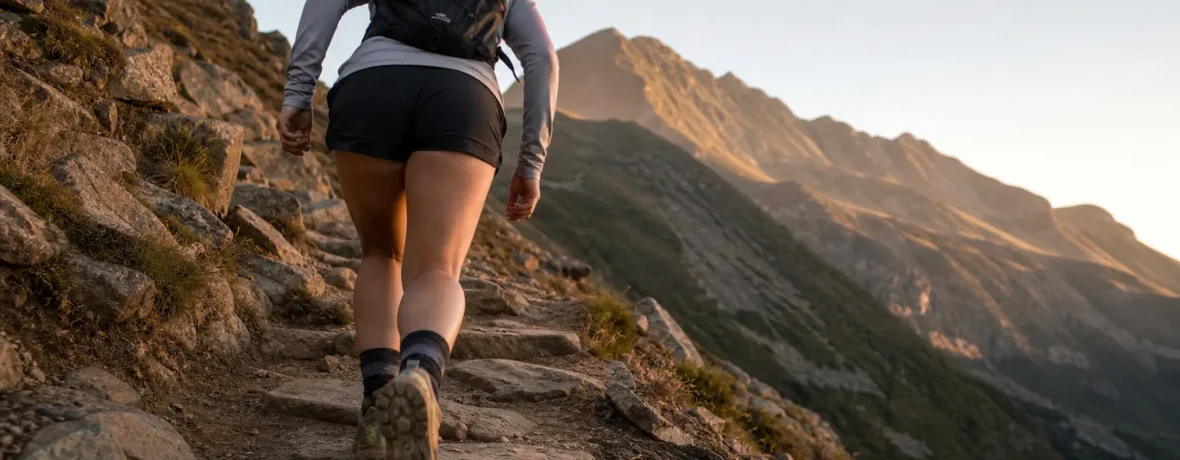
You can get in shape for hiking in 4 weeks if you train 4–5 days per week: walk briskly, climb hills or stairs, strength train twice, and carry a loaded pack once weekly. Start easier if you’ve been inactive, and choose a first hike that matches your current fitness.
How fast can you get in shape for hiking?
Most people can feel trail-ready for an easy to moderate hike in 3–6 weeks.
That does not mean you’ll be ready for a 14-mile [22.5 km] mountain day with 4,000 feet [1,219 m] of gain. It means your legs, lungs, feet, and back can adapt enough to handle steady walking, uneven ground, and a light pack without turning the day into a survival march.
Your starting point matters. If you already walk 30 minutes several days per week, you can move faster. If you sit most of the day and haven’t exercised in months, take the slower lane. The CDC’s adult physical activity guidance recommends 150 minutes of moderate-intensity activity each week plus 2 days of muscle-strengthening work, which lines up well with a hiking fitness plan.
The fast route is simple. Not easy. Simple. Walk often, climb often, get stronger, and practice with the shoes and pack you’ll use on trail.
What is the best way to get in shape for hiking in 4 weeks?
The best plan combines walking, hill work, strength training, pack practice, and recovery.
Hiking is not just cardio. It is repeated step-ups, controlled descents, balance corrections, bracing under a pack, and long hours on your feet. A treadmill jog helps, but it does not cover the whole job.
- Walk 4 days per week. Use brisk walks to build your base. You should breathe harder but still speak in short sentences.
- Climb 2 days per week. Use hills, stairs, a treadmill incline, stadium steps, or a stair machine.
- Strength train 2 days per week. Focus on legs, hips, core, calves, and upper back.
- Carry a pack once per week. Start with 5–10 pounds [2.3–4.5 kg], then build toward your expected trail load.
- Practice downhill control. Step-downs, lunges, and real descents train your quads and knees for the part of hiking people underestimate.
- Rest before the hike. Cut training volume during the final 2–3 days so you start fresh, not sore.
Use the Mayo Clinic talk test to keep the effort honest. During moderate work, you can talk but not sing. During harder intervals, you may only get out a few words. You do not need to crush every session. You need enough repeatable work to build durable legs.
What 4-week hiking training plan should you follow?
Follow this plan if you have 4 weeks and want the fastest sensible buildup.
Before you start, pick a realistic target hike. For a first or comeback hike, aim for 3–6 miles [4.8–9.7 km] with moderate elevation gain, not a sufferfest. Your training should prepare you for the hike you’ll actually do.
| Week | Cardio and hills | Strength and pack work | Goal |
|---|---|---|---|
| Week 1 | 3 brisk walks of 25–35 minutes; 1 short hill or stair session | 2 strength sessions; 1 easy walk with 5–10 pounds [2.3–4.5 kg] | Wake up your legs without wrecking them |
| Week 2 | 3 walks of 35–45 minutes; 1 hill session with 6–8 repeats | 2 strength sessions; 1 pack walk with 10–15 pounds [4.5–6.8 kg] | Build steady time on feet |
| Week 3 | 2 brisk walks; 1 longer walk of 60–90 minutes; 1 hill session | 2 strength sessions; pack walk on rolling ground | Make your body handle hiking duration |
| Week 4 | 2 moderate walks; 1 short hill session early in the week | 1 lighter strength session; 2–3 easy days before the hike | Arrive rested and ready |
If this schedule feels too easy, add time before you add speed. If it feels too hard, keep the same structure and cut each session by 25–40 percent. The goal is not to win training. The goal is to show up on trail with spring in your legs.
How do you train your legs for uphill hiking?
Train uphill hiking with repeated climbs, step-ups, lunges, and loaded walking.
Uphill hiking punishes weak glutes and undertrained calves. It also exposes poor pacing. Most new hikers start too fast, spike their breathing, and spend the next mile paying for it. Slow down before the hill forces you to slow down.
Use one of these uphill workouts once or twice per week:
- Hill repeats: Climb for 60–90 seconds, walk down easy, repeat 6–10 times.
- Stair repeats: Climb 2–5 minutes at a controlled pace, descend carefully, repeat 4–6 times.
- Treadmill incline: Walk 20–30 minutes at 6–12 percent incline without holding the rails.
- Step-up circuit: Step onto a sturdy 12–18 inch [30–46 cm] box or bench, 8–12 reps per leg for 2–4 rounds.
Keep your steps short on climbs. Stand tall. Drive through the whole foot, not just your toes. If you use trekking poles, push lightly through them and keep your shoulders relaxed.
How do you prepare your knees for downhill hiking?
Prepare your knees by strengthening your quads, hips, calves, and balance before you hit long descents.
Downhill hiking creates braking forces with every step. That is why your legs can feel fine going up and shaky coming down. You need eccentric strength, which means your muscles control your body while lengthening.
Add these moves 2 days per week:
- Step-downs: Stand on a low step, lower one heel toward the floor, then stand back up. Do 6–10 reps per side.
- Reverse lunges: Step back instead of forward to reduce knee irritation. Do 8–12 reps per side.
- Wall sits: Hold 20–45 seconds. Build toward 3 rounds.
- Calf raises: Do 12–20 reps, slow on the way down.
- Single-leg balance: Stand on one foot for 30–60 seconds. Make it harder by turning your head slowly.
On trail, take shorter steps downhill. Don’t stomp. Don’t lean far back. If the slope is loose, soften your knees and place each foot before loading it. Trekking poles can help spread effort across your arms and reduce the feeling that your knees are doing every bit of the braking.
What strength exercises help most for hiking?
The most useful hiking exercises are squats, step-ups, lunges, deadlifts, calf raises, rows, and core carries.
You do not need a fancy gym plan. You need strong legs, stable hips, a trunk that resists twisting, and shoulders that tolerate pack straps. Train twice per week with controlled form.
- Squat: Trains quads and glutes for climbing and standing up from low positions.
- Step-up: Closest gym move to hiking uphill.
- Reverse lunge: Builds single-leg strength for uneven trail.
- Romanian deadlift: Strengthens hamstrings and glutes for hip drive.
- Calf raise: Helps with climbing, descending, and foot fatigue.
- Row: Builds upper back strength for carrying a pack.
- Plank or dead bug: Trains your core to stay stable under load.
- Farmer carry: Builds grip, trunk, and postural strength.
Pick 5–6 exercises. Do 2–4 sets each. Keep 1–3 reps “in the tank” instead of grinding to failure. Soreness does not prove the workout worked. Better movement next week proves it worked.
How should beginners build hiking endurance?
Beginners should build endurance by increasing time on feet before chasing speed or steep trails.
Your first target is consistency. Walk 20–40 minutes on most training days. Once that feels normal, extend one weekly walk to 60 minutes, then 75, then 90. This longer session teaches your feet, calves, hips, and lower back to keep working after the fresh feeling fades.
Use this progression:
- Start with flat walking. Build the habit and protect your joints.
- Add gentle hills. One hilly route per week is enough at first.
- Add a light pack. Use 5–10 pounds [2.3–4.5 kg] before loading more.
- Add uneven ground. Grass, dirt, gravel, and rocky paths train your feet and balance.
- Practice hiking pace. A steady pace beats a hard start and long stops.
If your planned hike is 5 miles [8 km], get at least one training walk to 4 miles [6.4 km] or 90 minutes. You do not need to match the full hike in training, but you should get close enough that the distance no longer feels mysterious.
How much pack weight should you train with?
Train with a pack that starts light and builds toward the weight you’ll carry on your hike.
For day hikes, many hikers carry water, snacks, layers, a first aid kit, navigation, sun protection, a headlamp, and emergency items. That load often feels heavier after 3 hours than it did in the parking lot. Train for that feeling.
Start with 5–10 pounds [2.3–4.5 kg]. Add 2–5 pounds [0.9–2.3 kg] each week if your feet, knees, hips, and back feel good. Keep the heaviest items close to your spine and centered between your shoulder blades. Tighten the hip belt so your hips carry much of the load instead of letting the shoulder straps drag you backward.
Do not do every walk with a loaded pack. One pack walk per week is enough for most fast plans. Your other sessions can focus on speed, hills, strength, and recovery.
What should you do in the final week before a hike?
In the final week, reduce training and keep your legs fresh.
This is where eager hikers mess up. They realize the hike is close, panic-train, and show up sore. Don’t do that. Fitness does not jump in the final 72 hours. Fatigue does.
Use this final-week checklist:
- Do your hardest workout 5–7 days before the hike.
- Take an easy walk 2–3 days before the hike.
- Skip heavy leg strength in the final 48 hours.
- Wear the socks and shoes you plan to hike in.
- Pack early, then weigh the pack.
- Trim toenails to reduce downhill toe bang.
- Check the route, weather, daylight, and water availability.
Sleep matters. So does food. Eat normal meals, hydrate steadily, and avoid turning the night before into a gear explosion across the floor.
How do you avoid getting hurt while training for hiking?
Avoid injury by increasing training gradually and treating pain as useful information.
Muscle effort is fine. Sharp pain, limping, chest pain, faintness, or joint pain that changes your stride is not something to push through. Back off and adjust.
For heat, train early or late, wear breathable layers, and carry enough fluid. NIH MedlinePlus heat illness guidance recommends drinking fluids to prevent dehydration, replacing lost salt and minerals, and limiting time in heat. The Wilderness Medical Society heat illness guidelines also emphasize rest, cooling, and proper care when heat illness symptoms appear.
Hydration has a second edge: do not force huge amounts of water for hours. Overdrinking during long exertion can contribute to exercise-associated hyponatremia, a low blood sodium problem discussed in the Wilderness Medical Society hyponatremia guidelines. For normal training hikes, drink to thirst, bring salty snacks when you’ll sweat for hours, and seek medical help for confusion, severe headache, repeated vomiting, collapse, or altered mental status.
When to see a doctor
See a doctor before hard hiking training if you have health concerns or warning symptoms.
Get medical guidance before starting if you have heart disease, lung disease, diabetes, kidney disease, a history of fainting, recent surgery, pregnancy-related concerns, or a long break from exercise with new symptoms. Also get checked if you develop chest pressure, unusual shortness of breath, dizziness, fainting, irregular heartbeat, severe joint pain, or swelling that does not improve with rest.
This guide is training advice, not a diagnosis or treatment plan. If a symptom feels wrong, stop the workout. The mountain can wait.
What should your first hike be after training?
Your first hike should be slightly easier than your biggest training day.
If your longest training walk was 5 miles [8 km] on rolling terrain, do not make your first hike 9 miles [14.5 km] with steep switchbacks and a heavy pack. Choose a route with clear mileage, moderate elevation gain, good footing, and bailout options if possible.
Use this simple filter:
- Distance: Equal to or 10–20 percent longer than your longest training walk.
- Elevation: Manageable climbs, not endless steep gain.
- Trail surface: Dirt or packed trail before loose rock or snow.
- Pack: Only what you need for safety, weather, water, and food.
- Pace: Start slower than you think you should.
During the hike, eat before you feel empty and adjust layers before you’re soaked with sweat. Take short standing breaks instead of long sit-down breaks that let your legs stiffen. Turn around while you still feel strong enough to enjoy the return.
Related reading
- How to Get to Dry Tortugas National Park
- How to Get to Channel Islands National Park
- How to Get to Isle Royale National Park
- How to Get to Katmai National Park
FAQ
Can you get in hiking shape in 2 weeks?
Yes, but only for an easier hike if you start with some fitness. In 2 weeks, focus on brisk walking, stairs or hills, and one or two light strength sessions; don’t cram hard workouts into the final days.
Is walking enough to train for hiking?
Walking is the base, but it is not enough for steep or rough hikes. Add hills, stairs, step-ups, calf work, and a loaded pack so your body is ready for climbing, descending, and uneven ground.
How many days per week should you train for hiking?
Train 4–5 days per week if you want fast progress. That can include 3–4 walking or hill sessions and 2 strength sessions, with at least 1 easier recovery day.
Should you run to get better at hiking?
Running can help cardio, but it is optional. Hiking fitness comes faster from inclined walking, stairs, long walks, strength training, and pack practice because those match trail demands more closely.
How do you know if you are ready for a hard hike?
You are ready when you can walk 75–90 minutes comfortably, climb hills without redlining, carry your planned pack, and recover well the next day. For a hard hike, your training should include similar terrain, not just flat neighborhood miles.