Start rucking with 10% of your body weight if you’re new, 15% if you already hike or lift, and cap most training at 30%. For many adults, that means 15-30 lb [7-14 kg] at first, with heavier loads only after pain-free progression.
How much weight for rucking should beginners carry?
Beginners should carry 10% of body weight for the first few weeks.
That sounds light until the hill tilts up, the shoulder straps bite, and your calves realize this is not a normal walk. A 180 lb [82 kg] person starts at 18 lb [8 kg]. A 150 lb [68 kg] person starts at 15 lb [7 kg]. Round down if you are returning from injury, new to hiking, or walking on pavement.
Do not copy military loads on day one. The U.S. Army’s field manual for physical readiness says loads above 30% of body weight should be increased with caution, which is a useful ceiling for recreational rucking too. See the Army’s FM 7-22 ruck marching guidance.
| Body weight | Beginner load: 10% | Fit hiker load: 15% | Heavy training cap: 30% |
|---|---|---|---|
| 120 lb [54 kg] | 12 lb [5 kg] | 18 lb [8 kg] | 36 lb [16 kg] |
| 150 lb [68 kg] | 15 lb [7 kg] | 23 lb [10 kg] | 45 lb [20 kg] |
| 180 lb [82 kg] | 18 lb [8 kg] | 27 lb [12 kg] | 54 lb [24 kg] |
| 220 lb [100 kg] | 22 lb [10 kg] | 33 lb [15 kg] | 66 lb [30 kg] |
How much weight should I ruck with if I already hike?
Start at 15% of body weight if you are already trail-fit.
If you hike weekly, lift weights, and have no current foot, knee, hip, or back pain, 15% is a clean starting point. Keep the first rucks short: 30-45 minutes on easy ground. You are teaching your feet, tendons, hips, and back to handle load, not proving anything.
The phrase “how much weight should i ruck with” gets tossed around like there is one magic number. There is not. Your best number depends on four things: body weight, training age, terrain, and pace. A 25 lb [11 kg] pack on flat dirt is one workout. The same pack on steep pavement at a hard pace is a different animal.
What is a good ruck weight for fitness?
A good fitness ruck weight is 15-25% of body weight.
That range is heavy enough to build legs, trunk strength, and work capacity without turning every walk into a suffer-fest. Most recreational hikers do not need to train at 40-60 lb [18-27 kg] unless they are preparing for a specific heavy-pack trip, hunting load, military event, or work requirement.
For general health, the CDC recommends adults get 150 minutes of moderate-intensity activity each week plus 2 days of muscle-strengthening work, as of November 2026. Rucking can count toward your weekly aerobic work when the pace is brisk, but keep separate strength training in the mix too. See the CDC adult physical activity guidelines.
How do you increase ruck weight without getting wrecked?
Increase one variable at a time.
Weight, distance, speed, hills, and heat all add stress. Change two or three at once and your body may send you the bill through your shins, knees, lower back, or feet.
- Pick a starting load. Use 10% of body weight if new, 15% if fit.
- Ruck once per week for 2 weeks. Keep it 30-45 minutes on easy terrain.
- Add 5 lb [2 kg] only if pain-free. Mild muscle soreness is fine. Joint pain is not.
- Hold the new load for 2 rucks. Let your tissues catch up.
- Then add distance or hills. Do not add weight and hills in the same week.
- Cut back every fourth week. Use a lighter pack or shorter route.
The Defense Centers for Public Health warns that foot marching and load carriage can stress skin, bones, muscles, and nerves. Their foot marching injury guidance is aimed at military populations, but the body mechanics still matter for hikers.
Is 30 lb a good ruck weight?
Yes, 30 lb [14 kg] is a solid ruck weight for many trained adults.
It is not automatically beginner weight. For a 120 lb [54 kg] person, 30 lb is 25% of body weight. For a 220 lb [100 kg] person, it is 14%. Same pack, different stress.
Use 30 lb [14 kg] when you can walk briskly for 45-60 minutes with 20-25 lb [9-11 kg] and finish without hot spots, limping, sharp pain, or next-day back grumpiness. If your form collapses, the load is too heavy for that day.
Where should the weight sit in your pack?
The weight should sit high, close to your back, and stable.
A sloppy pack makes a moderate load feel nasty. A tight, well-packed ruck feels cleaner and safer. Heavy items should not swing, sag, or pull you backward.
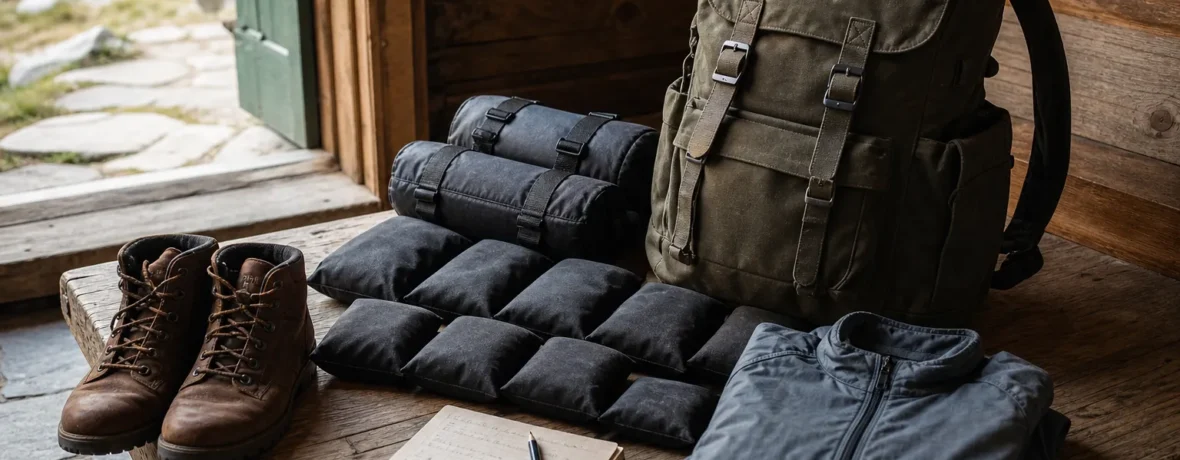
- Use weight plates, sandbags, water, or dense gear wrapped in a towel.
- Place the heaviest item between your shoulder blades, close to your spine.
- Tighten the shoulder straps until the pack does not bounce.
- Use the sternum strap if your pack has one.
- Use a hip belt for hiking-style loads, especially over 25 lb [11 kg].
- Do not let hard objects jab your back.
What weight should you use for hiking training?
Train with the pack weight you expect to carry, then build a small buffer.
If your backpacking kit weighs 28 lb [13 kg] with food and water, work toward comfortable rucks at 28-35 lb [13-16 kg]. You do not need 50 lb [23 kg] rucks to prepare for a 30 lb [14 kg] trip. You need repeatable walking, durable feet, and steady legs.
For day hiking, 15-25 lb [7-11 kg] usually covers water, layers, food, and safety gear. For overnight backpacking, your real pack weight depends on season, water carries, food days, and shelter setup. Train honestly. A fake-light training pack will not help much when the trailhead scale tells the truth.
When to see a doctor
See a doctor if pain, numbness, weakness, or heat symptoms do not resolve quickly.
Stop rucking and get medical advice if you have back pain with numbness, tingling, or weakness in one or both legs, or if back pain does not improve with self-care. Mayo Clinic gives similar red flags in its back pain guidance.
Heat changes the risk fast. If someone has confusion, fainting, very high body temperature, or symptoms of heat stroke, call emergency services. For hot-weather training, read the Wilderness Medical Society heat illness guidance, and do not let pride overrule shade, cooling, and stopping.
Related reading
- Is Rucking Good for Weight Loss?
- What Is Rucking? A Beginner's Guide
- How Much Cardio Per Week Do You Need?
- How Much Zone 2 Cardio Per Week?
FAQ
Can you ruck every day?
No, most people should not ruck heavy every day. Start with 1-2 rucks per week, then use normal walking, strength training, and mobility work on other days.
Is rucking better than running?
Rucking is not better; it is different. It is lower impact than running for many people, but the pack adds stress to feet, knees, hips, shoulders, and back.
Should I ruck with a weighted vest or backpack?
Use a backpack if your goal is hiking or backpacking. A weighted vest can work for fitness, but it does not train pack fit, strap pressure, or the way a real load rides on trail.
How fast should I ruck?
Use a pace you can hold while speaking in short sentences. For fitness, many hikers land between 17-22 minutes per mile on easy ground, but hills, heat, and pack weight matter more than chasing a number.
What should I do if my shoulders hurt while rucking?
Stop and adjust the pack first. Move weight higher and closer to your back, tighten loose straps, use a sternum strap, and lower the load if pain returns.
How heavy is too heavy for rucking?
For most recreational training, over 30% of body weight is too heavy unless you have a specific reason and a careful progression. If your stride shortens badly, your posture folds, or pain changes your gait, the pack is too heavy.