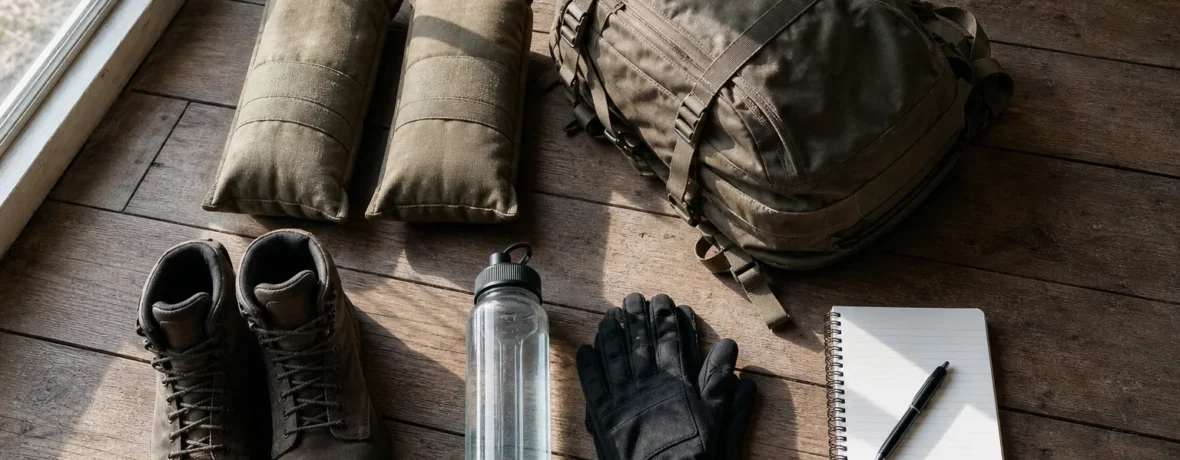
To start rucking, load 10 to 20 lb [4.5 to 9 kg] in a snug backpack, walk 1 to 2 miles [1.6 to 3.2 km] on flat ground, and repeat 1 to 2 times weekly. Add weight or distance only after two pain-free outings at the same load.
What is rucking?
Rucking is walking with weight on your back.
That is the whole engine. No fancy movement pattern. No gym membership. No need to run until your lungs rattle. You put load in a pack, tighten the straps, and walk with purpose.
For hikers, rucking makes immediate sense. It trains your legs, trunk, shoulders, feet, and pacing under a loaded pack. It also teaches the small skills that matter on trail: how your shoes feel under load, where your pack rubs, how fast you can climb without blowing up, and how your body reacts when walking stops being casual.
The trick is not making the first session heroic. A ruck should feel like training, not punishment. Start light. Stay flat. Keep your pace controlled. Build from there.
How do you start rucking without overdoing it?
Start with a short, flat walk and a light pack.
Your first goal is not fitness. It is information. You are learning how your feet, knees, hips, back, and shoulders respond to load. If the first ruck leaves you limping for three days, the load was too heavy, the distance was too long, the pace was too hot, or all three.
- Pick a flat route. Use a sidewalk, gravel path, park loop, or mellow trail with steady footing.
- Load 10 to 20 lb [4.5 to 9 kg]. Use less if you are new to walking workouts, returning from a break, or carrying extra body weight already stresses your joints.
- Walk 1 to 2 miles [1.6 to 3.2 km]. Stop while you still feel good.
- Keep the effort conversational. You should be able to speak in full sentences.
- Check your body the next day. Mild muscle soreness is normal. Sharp pain, joint pain, numbness, or limping is not a green light.
- Repeat before you progress. Do the same load and distance twice before adding anything.
Think boring first. Boring builds. Spicy workouts can come later.
How much weight should beginners use for rucking?
Most beginners should start with 10 to 20 lb [4.5 to 9 kg].
A good starting load is heavy enough that you notice it, but light enough that your stride still looks like walking. If you hunch forward, slap your feet, shorten your stride badly, or feel pressure in your low back within the first mile [1.6 km], lighten the pack.
| Current walking base | Starting weight | Best first distance |
|---|---|---|
| New to regular walks | 5 to 10 lb [2.3 to 4.5 kg] | 1 mile [1.6 km] |
| Walks 2 to 3 miles [3.2 to 4.8 km] | 10 to 15 lb [4.5 to 6.8 kg] | 1 to 2 miles [1.6 to 3.2 km] |
| Regular hiker with daypack | 15 to 20 lb [6.8 to 9 kg] | 2 miles [3.2 km] |
| Fit and already strength training | 20 to 25 lb [9 to 11.3 kg] | 2 miles [3.2 km] |
Do not start with 40 lb [18.1 kg] just because someone online does it. That load may be fine later. On day one, it is a fast way to turn a simple walk into a foot, knee, or back complaint.
How far should your first ruck be?
Your first ruck should be 1 to 2 miles [1.6 to 3.2 km].
That distance gives you enough time to feel how the pack rides without creating a huge recovery bill. Flat ground matters. A 2-mile [3.2 km] hilly route with uneven footing can feel harder than a 4-mile [6.4 km] road walk with no load.
If you already hike every weekend, 2 miles [3.2 km] may feel tiny. Good. Leave room. Training works best when you can repeat it. A session that wrecks your calves, arches, or knees is not better because it was longer.
Use this rule: add distance before you add big weight. Walking farther with moderate load usually transfers better to hiking than staggering under a pack that changes your gait.
How fast should you walk while rucking?
Walk at a brisk but controlled pace.
For many beginners, that lands near 17 to 20 minutes per mile [10:34 to 12:25 per km] on flat ground. Taller, fitter, and more experienced walkers may move faster. Shorter legs, hills, heat, trails, and heavier packs slow the pace. Let them.
Use the talk test. If you can speak in full sentences, your effort is controlled. If you can only spit out single words, back off. Rucking is loaded endurance, not a suffer-fest every time.
The CDC adult physical activity guidelines describe moderate-intensity activity as part of a healthy weekly movement target. Rucking can fit that lane when the pace is steady and the load is sensible.
What gear do you need for rucking?
You need a comfortable pack, stable weight, and shoes that match the surface.
You do not need a tactical ruck to begin. A daypack can work if it carries the load snugly and does not bounce. The weight should sit high and close to your back, not sag against your low spine.
- Backpack: Use padded shoulder straps and a sternum strap if you have one.
- Weight: Try a wrapped dumbbell, weight plate, sandbag, books, or water bottles.
- Padding: Wrap hard weight in a towel so it does not jab your back.
- Shoes: Use walking shoes, trail runners, or light hiking shoes with enough structure for the load.
- Socks: Choose snug synthetic or wool socks that manage sweat.
- Water: Carry enough for the route, heat, and your sweat rate.
- Visibility: Use bright clothing or a light if you walk near roads.
Pack fit beats pack price. If the pack shifts every step, fix that before adding weight.
What form prevents sore knees, hips, and back?
Stand tall and keep the load close.
Good rucking form looks like strong walking. Not marching with locked knees. Not leaning so far forward that your low back does the work. Keep your ribs stacked over your hips, eyes ahead, and steps quick enough that you do not overstride.
- Keep your head up and look 10 to 20 ft [3 to 6 m] ahead.
- Pull the shoulder straps snug so the pack does not bounce.
- Use the sternum strap if it helps keep the shoulder straps in place.
- Keep your elbows relaxed and arms swinging naturally.
- Land with your foot under your body, not far out front.
- Shorten your stride on climbs and descents.
- Stop and adjust hot spots before they become blisters.
Shin pain can show up when load, pace, or mileage jumps too fast. Mayo Clinic lists sudden training increases as a common factor in shin splints and recommends gradual changes, supportive footwear, and lower-impact cross-training when needed through its shin splints guidance.
How should rucking for beginners progress over 6 weeks?
Progress one variable at a time.
That means weight, distance, pace, terrain, or frequency. Pick one. Leave the others alone. If you add 5 lb [2.3 kg], keep the same route and pace. If you add a mile [1.6 km], keep the same weight. If you move to hills, cut the distance first.
| Week | Sessions | Weight and distance | Goal |
|---|---|---|---|
| 1 | 1 to 2 | 10 lb [4.5 kg], 1 mile [1.6 km] | Learn pack fit and foot response |
| 2 | 2 | 10 lb [4.5 kg], 1.5 miles [2.4 km] | Repeat without soreness spikes |
| 3 | 2 | 15 lb [6.8 kg], 1.5 miles [2.4 km] | Add light load |
| 4 | 2 | 15 lb [6.8 kg], 2 miles [3.2 km] | Extend time under load |
| 5 | 2 | 15 to 20 lb [6.8 to 9 kg], 2 miles [3.2 km] | Build comfort and rhythm |
| 6 | 2 to 3 | 20 lb [9 kg], 2 to 3 miles [3.2 to 4.8 km] | Prepare for longer hikes |
This plan is a template, not a dare. If week 3 feels rough, repeat week 2. If your feet ache in a new way, hold the load and distance steady. Strong hikers know when to push and when to bank the easy win.
How often should you ruck each week?
Start with 1 to 2 rucks per week.
Two weekly sessions are enough for most new ruckers because the load adds stress even when the pace feels easy. Put at least 48 hours between rucks at first. Use the days between for normal walks, mobility, or strength work.
A simple week can look like this:
- Monday: Easy walk, 20 to 40 minutes
- Tuesday: Strength training
- Wednesday: Ruck, 1 to 2 miles [1.6 to 3.2 km]
- Thursday: Rest or mobility
- Friday: Easy walk
- Saturday: Ruck or hike
- Sunday: Rest
When 2 sessions feel routine for three straight weeks, add a third short session or lengthen one session. Do not add both in the same week.
What strength exercises help rucking?
Train legs, hips, calves, and trunk.
Rucking builds strength endurance, but it does not replace all strength work. A few basic exercises make the pack feel lighter and help your body tolerate descents, uneven ground, and longer time on your feet.
- Step-ups: Use a sturdy box, bench, or step 8 to 16 in [20 to 41 cm] high.
- Split squats: Build single-leg control for climbs and rocky trail.
- Glute bridges: Train hip extension without loading the spine heavily.
- Calf raises: Prepare lower legs for long walking days.
- Farmer carries: Build grip, posture, and trunk stiffness.
- Side planks: Help resist side-to-side collapse under a pack.
Keep strength work crisp. Two sets of 6 to 12 controlled reps per move is enough to start. If heavy leg training crushes your ruck pace for days, separate the hard sessions or reduce volume.
What mistakes should new ruckers avoid?
The biggest mistake is adding load too fast.
Heavy weight feels productive right away. That is the trap. Your heart and lungs may handle it before your feet, tendons, and joints are ready. Give the support tissues time to catch up.
- Starting too heavy: If your posture changes in the first 10 minutes, reduce weight.
- Chasing pace every session: Keep most rucks controlled and repeatable.
- Using a loose pack: Bounce wastes energy and can create hot spots.
- Ignoring feet: Stop for rubbing, sock bunching, or nail pressure.
- Jumping to hills: Add climbing only after flat rucks feel solid.
- Rucking through sharp pain: Stop, unload, and reassess.
Heat is another sneaky one. Load raises effort, and effort raises heat stress. NIH MedlinePlus explains warning signs and prevention basics in its heat illness resource. In hot weather, shorten the route, reduce weight, start early, and choose shade.
When to see a doctor
See a doctor before rucking if you have a medical condition that makes exercise risky.
Get medical guidance before starting if you have heart disease, lung disease, diabetes, uncontrolled blood pressure, recent surgery, fainting episodes, chest pain with activity, or a current injury. Do the same if you are pregnant and have not been cleared for loaded walking.
Stop exercising and seek urgent care if you have chest, jaw, neck, or arm pain; faintness; severe shortness of breath; confusion; or symptoms that feel sudden and serious. Mayo Clinic lists chest discomfort, dizziness, and faintness among exercise warning signs in its exercise safety guidance.
For less urgent issues, book an appointment if pain changes your stride, lasts longer than 7 days, returns every ruck, or comes with swelling, numbness, tingling, or weakness. Do not self-diagnose. Get eyes on the problem and adjust training from there.
Related reading
- What Is Rucking? A Beginner's Guide
- Is Rucking Good for You? Benefits and Risks
- Does Rucking Build Muscle?
- Weighted Vest vs Rucksack: Which Is Better?
FAQ
Here are quick answers.
Is rucking good for hiking training?
Yes, rucking is useful hiking training because it matches the job: walking with weight. Keep the load and terrain close to your hiking goals, then progress slowly enough that you can train week after week.
Can you ruck every day?
Most beginners should not ruck every day. Start with 1 to 2 sessions weekly, then add frequency only after your feet, joints, and back handle the work without lingering pain.
Should you ruck with boots or trail runners?
Use the footwear that feels stable and comfortable under load. Trail runners often work well for light to moderate rucks on smooth routes, while hiking shoes or boots may feel better with heavier packs, rough trails, or ankle-prone terrain.
How heavy should a ruck be for fitness?
For general fitness, 10 to 30 lb [4.5 to 13.6 kg] is plenty for many people. Heavier is not automatically better; distance, consistency, posture, and recovery matter more than turning every walk into a grind.
Does rucking build muscle?
Rucking can build strength endurance in your legs, hips, trunk, and shoulders. It is not a full replacement for strength training, so pair it with step-ups, split squats, carries, and calf work if you want better hiking power.
What should I do if my back hurts while rucking?
Stop and reduce the load first. Tighten the pack, place weight higher and closer to your spine, shorten the route, and see a clinician if pain is sharp, travels down your leg, causes numbness, or keeps returning.