It can, if your weekly calories end in a deficit. Aim for 30–45 minutes, 3–5 days weekly, at an incline that leaves you breathing hard but able to talk. Pair it with strength work and steady eating, and 1–2 lb [0.5–0.9 kg] per week is a realistic ceiling.
Does incline walking burn fat better than flat walking?
Yes, usually.
Walking uphill asks more from your calves, glutes, hamstrings, lungs, and heart than flat walking at the same speed. That higher effort can help you burn more total energy during the session, which helps fat loss when your food intake does not erase the work.
But fat loss is not magic. Your body burns a mix of fat and carbohydrate during exercise. The real lever is your weekly energy balance. The NIH NIDDK guidance on eating and physical activity frames weight management around both food and movement, not one perfect workout.
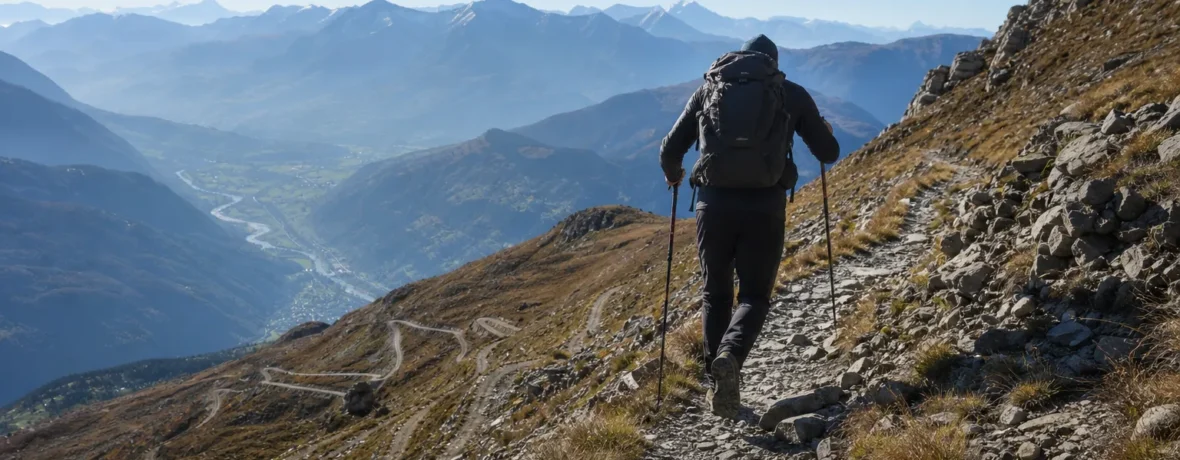
For hikers, incline walking has a second payoff: it looks like the trail. A treadmill climb will not build every skill you need outside, but it trains steady climbing legs better than a flat stroll around the block.
Is incline treadmill walking better than running for fat loss?
It depends on what you can repeat.
Running can burn energy fast. It also pounds your joints more, especially if you are returning from time off, carrying extra weight, or stacking workouts on tired legs. Incline treadmill walking gives you a hard aerobic session with less bouncing. That makes it easier for many hikers to do consistently.
If running leaves you sore for 3 days, it is not better for fat loss. If a steep walk lets you train tomorrow, next week, and next month, it wins. Boring? Maybe. Effective? Yes.
| Option | Best for | Watch out for |
|---|---|---|
| Flat walking | Recovery days, beginners, longer easy sessions | May be too easy unless you add time or speed |
| Incline walking | Fat-loss training, uphill hiking prep, lower-impact cardio | Calf and Achilles tightness if you ramp too fast |
| Running | Time-efficient cardio, trained runners | Higher impact and more recovery demand |
What incline should you use to burn fat?
Use the lowest grade that makes you work.
Start with 3–6% incline at 2.5–3.5 mph [4.0–5.6 km/h]. If you can talk in full paragraphs, raise the incline by 1–2%. If you can only gasp out single words, lower the grade or speed.
A good fat-loss pace often lands in moderate intensity. The CDC adult physical activity guidelines recommend 150 minutes of moderate-intensity aerobic activity weekly, or 75 minutes of vigorous activity, plus 2 days of muscle-strengthening work. That is a useful floor for general health and a strong base for weight management.
- Beginner: 3–5% incline, 2.5–3.0 mph [4.0–4.8 km/h], 20–30 minutes.
- Steady hiker: 6–10% incline, 2.8–3.4 mph [4.5–5.5 km/h], 30–45 minutes.
- Hard climb day: 10–15% incline, slower pace, short intervals.
Do not cling to the rails. If you need the handrails to survive the grade, the grade is too high for that workout. Use your arms the way you would on trail, relaxed and driving lightly.
How long should you walk on an incline to lose fat?
Start with 90–150 minutes per week.
That could be three 30-minute sessions or five shorter sessions. Once your legs adapt, build toward 150–300 minutes of weekly moderate cardio if fat loss is the goal and your body handles it well.
Here is a simple 4-week ramp:
- Week 1: Walk 25 minutes, 3 days, at 3–5% incline.
- Week 2: Walk 30 minutes, 3 days, at 4–6% incline.
- Week 3: Walk 35 minutes, 4 days, mixing 5–8% incline.
- Week 4: Walk 40 minutes, 4 days, with one short 10–12% climb session.
Keep one rule close: add time before you add steepness. Your lungs may adapt fast. Tendons are slower and less forgiving.
Can incline walking burn belly fat?
It can reduce belly fat, but not by targeting your belly.
No treadmill grade tells your body, “take fat from the waist first.” Fat comes off according to genetics, hormones, total weight change, sleep, stress, and consistency. The Mayo Clinic guidance on belly fat points to the same basic strategy: reduce total body fat through steady habits.
So yes, your waist can shrink while you train uphill. Just do not judge the workout by one body part after one week. Judge it by your trend over 4–8 weeks: waist measurement, scale average, trail pace, resting energy, and how your pants fit.
How do you make incline walking work for hiking?
Train like you plan to climb.
A hiking body needs more than sweat. You want uphill stamina, downhill-ready legs, hips that do not fold after 2 miles [3.2 km], and feet that tolerate time under load.
Use this weekly setup:
- 2 steady incline walks: 30–45 minutes at a sustainable grade.
- 1 interval climb: 5-minute warm-up, then 6 rounds of 2 minutes steep and 2 minutes easy.
- 2 strength sessions: squats, step-ups, lunges, calf raises, rows, and core carries.
- 1 longer outdoor walk: use hills, stairs, or uneven ground when you can.
- 1–2 easier days: flat walking, mobility, or full rest.
If you are training for backpacking, add a light pack only after your basic incline sessions feel routine. Start with 5–10 lb [2.3–4.5 kg], then build slowly. A heavy pack on a steep treadmill is not heroic if it wrecks your knees before the trip.
What mistakes stop incline walking from burning fat?
The biggest mistake is treating one sweaty workout like permission to stop paying attention.
Incline walking helps, but it cannot outwork nightly snacking, liquid calories, skipped sleep, or a weekend of “earned” overeating. You do not need perfect eating. You need a pattern that gives the walking room to matter.
- Holding the rails: It makes the workout easier than the treadmill says.
- Going too steep too soon: Tight calves and cranky Achilles tendons can shut training down.
- Skipping strength: Muscle helps you hike stronger and tolerate more training.
- Only chasing sweat: A hot room is not the same as productive effort.
- Trusting calorie displays: Treadmill numbers are estimates, not receipts.
The CDC says people who lose weight steadily, 1–2 lb [0.5–0.9 kg] per week, are more likely to keep it off than people who lose weight faster; see the CDC steps for losing weight. That pace may sound slow. On trail, slow and steady still gets you to the pass.
When to see a doctor
Talk with a health care professional if hard walking feels unsafe or unusual.
Stop exercising and get medical help right away if you have chest pain or pressure, fainting, severe shortness of breath, or pain spreading to the arm, jaw, neck, or back. If you have heart disease, diabetes, arthritis, a disability, a chronic condition, or you have been inactive and plan to start vigorous exercise, the CDC guidance for chronic conditions and physical activity recommends asking a health care professional what types and amounts are right for you.
This article cannot diagnose pain, breathing problems, dizziness, or fatigue. Use it for training direction, not medical clearance.
Related reading
- How Many Calories Does Walking Burn vs Hiking?
- Does Incline Walking Build Glutes?
- What Is Incline Walking and Why Hikers Use It
- Incline Walking vs Running
FAQ
Does incline walking burn fat if I do it every day?
Yes, it can, if your total week creates a calorie deficit. Daily incline walking is fine for some people, but mix hard and easy days so your calves, feet, and knees get recovery.
What speed is best for incline walking?
The best speed is usually 2.5–3.5 mph [4.0–5.6 km/h]. Pick a pace where you breathe hard, can talk in short sentences, and do not need the handrails.
Is 12-3-30 good for fat loss?
Yes, 12% incline, 3 mph [4.8 km/h], 30 minutes can be a strong workout. It is too steep for many beginners, so start lower if your calves or Achilles tendons complain.
How soon will I see fat loss from incline walking?
You may see scale or waist changes in 2–4 weeks if your eating, sleep, and training line up. A better judging window is 4–8 weeks because water weight can hide early fat loss.
Does incline walking build muscle?
It can build some endurance and firmness in your calves, glutes, and hamstrings. For real strength, add step-ups, squats, lunges, hip hinges, and calf raises 2 days per week.