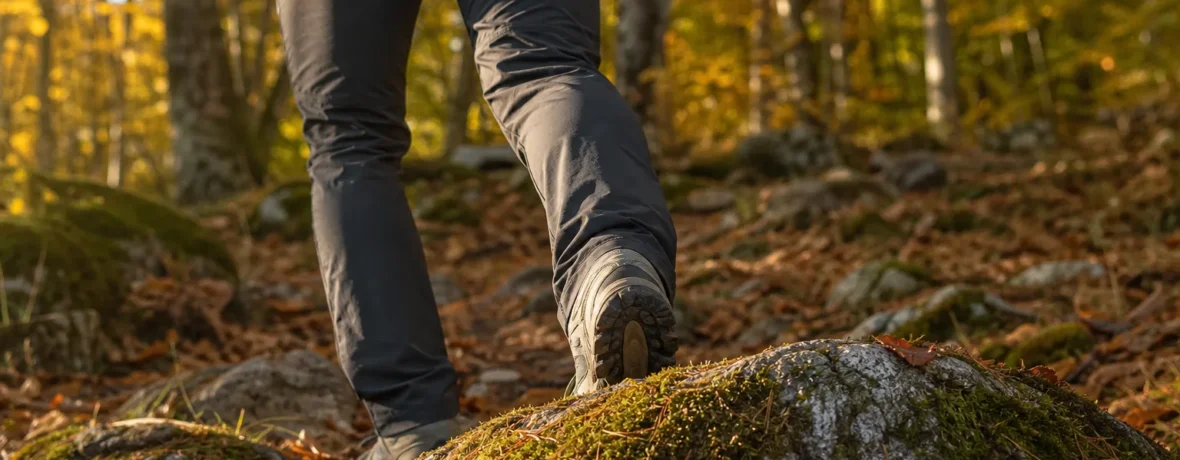
Yes. Walking can build modest muscle in beginners, returning hikers, and anyone adding hills, speed, stairs, or pack weight. On flat ground, it mostly improves endurance and helps maintain muscle. For bigger strength gains, add resistance work 2 days per week.
Does walking build muscle or just tone your legs?
Walking can build some muscle, but it is better at building muscular endurance.
Your calves, quads, hamstrings, glutes, hip flexors, and the smaller stabilizing muscles around your ankles all work when you walk. On a flat sidewalk, the load is light and repetitive. That is why you may feel firmer legs without seeing dramatic size changes.
Muscle grows when your body gets a clear reason to adapt. In training language, that reason is progressive overload: more challenge than your muscles are used to handling. Walking can provide that if you are new to exercise, coming back after time off, climbing hills, hiking uneven trails, or carrying a loaded daypack.
If you already hike hard every weekend and squat your body weight in the gym, a flat 30-minute walk will not add much new muscle. It still helps. It keeps blood moving, adds aerobic fitness, and can speed recovery between tougher sessions.
What muscles does walking work?
Walking works your lower body first, then your core as the trail gets rougher.
| Muscle area | What it does when you walk | How to challenge it more |
|---|---|---|
| Calves | Push you off with each step | Walk uphill or climb stairs |
| Quads | Straighten and stabilize the knee | Use steeper grades and longer strides |
| Hamstrings and glutes | Drive the hip back and help power climbs | Add hills, sand, or a weighted pack |
| Core and hips | Keep you balanced over uneven ground | Walk trails, rocks, roots, and off-camber paths |
Trail walking beats treadmill-flat walking for total-body demand. Your feet land at different angles. Your hips adjust. Your trunk stiffens and relaxes with every step. That does not turn walking into heavy lifting, but it does make the whole system work harder.
Can walking uphill build muscle?
Yes, uphill walking is one of the best ways to make walking more strength-focused.
Climbing forces your glutes, calves, and quads to produce more force than they do on level ground. A 10% grade feels very different from a flat path because each step includes a small bodyweight lift. That is why hikers who train on hills usually feel stronger on climbs than hikers who only chase step counts.
Use hills like strength intervals:
- Warm up with 10 minutes of easy walking.
- Climb for 1 to 3 minutes at a pace that makes talking choppy.
- Walk easy downhill or on flat ground for 2 to 3 minutes.
- Repeat 4 to 8 times.
- Cool down for 5 to 10 minutes.
Keep your steps short on steep grades. Drive through the whole foot. If your calves burn out first, slow down instead of bouncing on your toes.
Does walking with a backpack build muscle?
Walking with a backpack can build trail-specific strength when the load is added gradually.
A pack increases the work for your legs, hips, core, upper back, and feet. That makes it useful for hikers training for longer days, backpacking trips, or steep descents. Start light. A pack that feels fine for 20 minutes can punish your knees and shoulders after 2 hours.
Try this progression:
- Week 1: carry water, snacks, layers, and safety basics only.
- Week 2: add 5 lb [2.3 kg] if your feet, knees, hips, and back feel good.
- Week 3: add hills before adding more weight.
- Week 4: increase time on feet by 15 to 30 minutes.
Do not make every walk a loaded walk. Your joints need easier days. Use pack walks 1 to 2 times per week, then keep other walks light and brisk.
Is walking enough strength training for hikers?
No, walking is not enough strength training for most hikers.
Walking is excellent aerobic work. The CDC adult activity guidelines recommend 150 minutes of moderate-intensity aerobic activity per week and muscle-strengthening activity on 2 days per week. Brisk walking can help cover the aerobic side. It does not fully cover the strength side for your glutes, hamstrings, quads, calves, core, and upper body.
The gap shows up on the trail. You may cruise the flats but wobble on descents, tire on step-ups, or feel your knees complain after repeated downhill miles. Strength training plugs those leaks.
Good hiker strength moves include:
- Step-ups
- Split squats
- Squats
- Glute bridges
- Calf raises
- Dead bugs
- Side planks
- Rows or band pulls
Two short sessions per week can be enough. Think 25 to 40 minutes, not a bodybuilding marathon.
How long should you walk to build stronger legs?
Walk 30 to 60 minutes per session, 3 to 5 days per week, then add challenge.
Time alone is not the whole answer. A slow, flat stroll for 60 minutes trains a different body than a brisk 45-minute walk with hills. The Mayo Clinic’s walking guidance points to walking faster, farther, and more often for greater benefits. For muscle, add “steeper” and “heavier” to that list.
A simple hiker week might look like this:
- Monday: 30-minute easy walk
- Tuesday: strength training
- Wednesday: 45-minute brisk walk with hills
- Thursday: rest or gentle mobility
- Friday: strength training
- Saturday: 60- to 120-minute trail walk or hike
- Sunday: easy walk or rest
How do you make walking build more muscle?
Make walking harder in one way at a time.
Your body adapts fast. Once your regular loop feels easy, change the stimulus. Do not change everything at once. That is how shins, knees, and feet get cranky.
- Increase pace. Walk briskly enough that you can talk, but not sing.
- Add hills. One hilly route per week can change your legs fast.
- Use stairs. Stadium steps and park stairs are blunt, honest training.
- Add pack weight. Start with 5 lb [2.3 kg], then build slowly.
- Walk uneven terrain. Trails make your ankles, hips, and core work harder.
- Add short strength breaks. During a walk, stop for 10 step-ups per leg or 12 calf raises.
If your goal is visible muscle size, walking alone will hit a ceiling. Add progressive strength work and enough protein and calories to support growth.
Can walking help prevent muscle loss?
Yes, walking can help maintain function, but strength training matters more for preserving muscle.
As years stack up, hikers need both endurance and strength. Walking helps you keep moving, supports heart health, and keeps your legs used to daily work. The NIH’s NIDDK guidance on starting physical activity includes both aerobic activity and strengthening as part of a regular routine.
For aging hikers, the sweet spot is simple: walk often, climb hills, practice balance, and lift something heavier than trekking poles twice a week.
When to see a doctor
See a doctor if walking causes chest pain, dizziness, fainting, or unusual shortness of breath.
Do not try to “train through” warning signs. The NIH National Heart, Lung, and Blood Institute advises talking with a doctor if symptoms such as chest pain or dizziness happen during physical activity. If symptoms are severe, sudden, or do not settle with rest, seek urgent medical care.
Also check with a clinician before ramping up hard if you have heart disease, diabetes, lung disease, recent surgery, unexplained pain, or a long break from exercise. This is not about being timid. It is about staying on the trail for years.
Related reading
- Does Incline Walking Build Glutes?
- Does Rucking Build Muscle?
- Does Hiking Build Muscle? Legs, Glutes and Core
- How Many Calories Does Walking Burn vs Hiking?
FAQ
Does walking build glutes?
Yes, walking can build glute endurance, especially uphill. For stronger glutes, add steep climbs, step-ups, split squats, and loaded carries.
Does walking build calf muscle?
Yes, walking works your calves with every push-off. Hills, stairs, and faster walking challenge them more than flat ground.
Can you gain muscle by walking every day?
You can gain some muscle if you are new to training or make your walks progressively harder. If every daily walk is the same easy route, gains will slow once your body adapts.
Is walking better than squats for leg muscle?
No, squats are better for building leg muscle. Walking is better for aerobic fitness, trail endurance, and recovery between strength sessions.
How soon will my legs feel stronger from walking?
Many people feel better endurance within 2 to 4 weeks of consistent walking. Visible muscle changes usually take longer and need hills, resistance, strength training, and steady recovery.