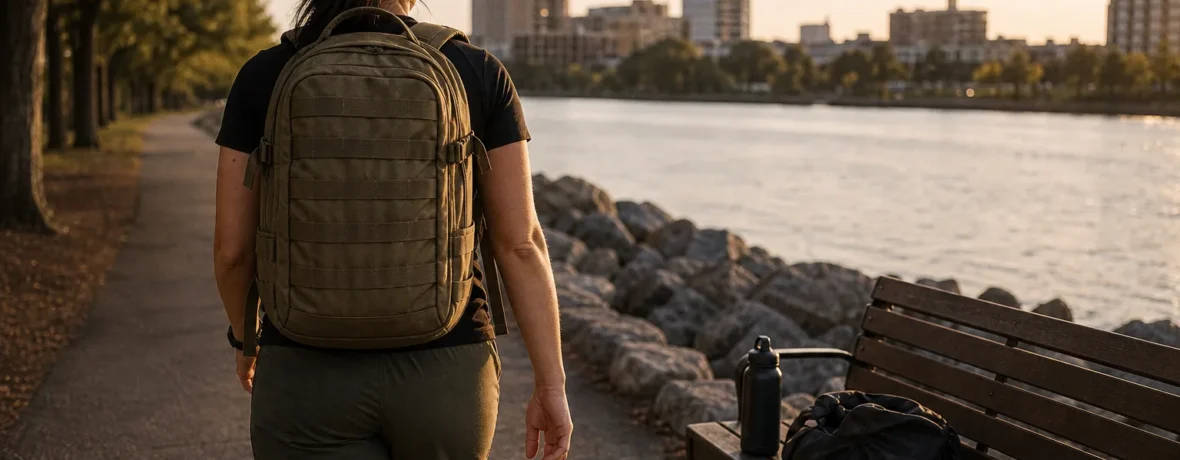
What is rucking? Rucking is walking with weight in a backpack, usually 10-30 lb [4.5-13.6 kg] for beginners. It turns a normal walk into cardio plus loaded carry training. Yes, it counts as exercise if you keep the load manageable, walk with good form, and build up gradually.
What is rucking, exactly?
Rucking is loaded walking.
You put weight in a backpack, tighten the straps, and walk at a steady pace. That can mean a sidewalk loop before work, a dirt road, a park path, or an easy hiking trail. The word comes from “rucksack,” the military term for a backpack, and the U.S. Army uses terms such as ruck marches, road marches, and loaded marches for foot travel with carried weight.
The big difference between rucking and hiking is intent. Hiking may involve a pack because you need water, layers, food, and safety gear. Rucking uses the pack itself as part of the workout. The load is not just along for the ride. It is the point.
What does rucking mean for hikers?
It means training your trail engine with weight on your back.
For hikers, rucking is one of the simplest ways to prepare for longer days, steeper climbs, and overnight packs. You do not need a gym. You do not need fancy movements. You walk. The weight teaches your feet, calves, hips, back, shoulders, and lungs to handle the thing hikers ask of them all the time: moving forward while carrying gear.
That said, more weight is not always better. A sloppy 50 lb [22.7 kg] ruck can grind down your knees, rub your shoulders raw, and teach bad posture. A crisp 15 lb [6.8 kg] ruck done consistently is the smarter starting line for most beginners.
What is rucking exercise good for?
Rucking builds aerobic fitness and load-carrying strength at the same time.
Because you are walking, rucking can fit into the same general bucket as brisk walking. Because you are carrying weight, it also asks more from your trunk, hips, glutes, legs, and upper back. The CDC says adults need 150 minutes of moderate-intensity aerobic activity each week, plus 2 days of muscle-strengthening activity; rucking can support that weekly movement goal when the intensity is appropriate for you. See the CDC adult physical activity guidelines.
For trail people, the payoff is practical:
- Better comfort carrying a daypack or overnight pack.
- Stronger feet, ankles, calves, glutes, and hips.
- More steady breathing on rolling terrain.
- Better posture under load.
- A low-tech workout you can do from your front door.
Is rucking the same as hiking, walking, or backpacking?
No, but they overlap.
Think of rucking as the training bridge between walking and hiking with a loaded pack. It keeps the movement simple, while adding enough resistance to make your body work harder than it would on an unloaded walk.
| Activity | Typical load | Main goal |
|---|---|---|
| Walking | None or very light | General movement and aerobic fitness |
| Rucking | 10-30 lb [4.5-13.6 kg] for many beginners | Fitness through loaded walking |
| Day hiking | Water, layers, food, safety gear | Trail travel and outdoor time |
| Backpacking | Overnight gear, food, and shelter | Multi-day travel and camping |
How much weight should a beginner ruck with?
Start with 10-15 lb [4.5-6.8 kg].
That is enough to feel different without turning your first outing into a suffer-fest. If you already walk often and have no current pain, you might start near 15-20 lb [6.8-9.1 kg]. If you are returning from time off, start lighter. Your connective tissue needs time to adapt, even when your lungs feel ready.
A useful beginner ceiling is 30 lb [13.6 kg]. You do not need to rush past it. In military settings, heavier loads are common, but military load carriage also comes with higher injury concerns. The Defense Centers for Public Health notes that foot marching and load carriage can be associated with blisters, stress fractures, knee pain, back pain, and nerve compression from straps. Read their overview of foot marching and load-carriage injuries.
How do you start rucking safely?
Start light, short, and flat.
- Pick a simple route. Use a flat 1-2 mile [1.6-3.2 km] loop where you can bail out easily if your feet, knees, or back complain.
- Load 10-15 lb [4.5-6.8 kg]. Use water bottles, sandbags, weight plates, or tightly packed gear. Keep hard objects wrapped so they do not jab your spine.
- Place weight high and close. The load should sit between your shoulder blades, not sag near your low back.
- Tighten the pack. Use both shoulder straps. If your pack has a hip belt and sternum strap, snug them without crushing your breathing.
- Walk, don’t shuffle-run. Keep steps quick and smooth. Running with a loaded pack adds impact and is not needed for beginner rucking.
- Stop before form falls apart. If you are leaning hard, limping, or shrugging your shoulders to hold the pack, you are done for the day.
- Add one variable at a time. Increase distance, weight, speed, or hills. Not all four in the same week.
What gear do you need for rucking?
You need a comfortable pack, stable shoes, and weight that will not shift.
You can start with hiking gear you already own. A daypack with padded shoulder straps is fine for light loads. Once you carry more weight, a hip belt becomes more useful because it transfers some load away from your shoulders.
- Backpack: Use a pack that holds weight high and close to your back.
- Weight: Water bladders, wrapped dumbbells, sandbags, or purpose-built ruck plates can work.
- Shoes: Wear walking shoes, trail runners, or light hiking shoes that already fit well.
- Socks: Use hiking socks that manage moisture and reduce friction.
- Water: Carry enough for the temperature, route, and your sweat rate.
- Reflective gear: Use lights or reflective pieces if you ruck near traffic or in low light.
What should good rucking form look like?
Good rucking form looks like tall, steady walking.
Keep your ribs stacked over your hips. Look ahead, not at your toes. Let your arms swing naturally. Take shorter steps than you might on an unloaded walk, especially on hills. Your feet should land under you, not way out in front like brakes.
If your low back arches hard, your pack may be too heavy or too low. If your neck and shoulders burn early, loosen the death grip on your straps and adjust the load closer to your body. If your knees feel beaten up after every downhill, shorten your stride and reduce weight before adding more miles.
How often should beginners ruck?
Ruck 1-2 times per week at first.
That leaves room for recovery, regular walks, strength work, and hikes. A simple first month can look like this: one 20-minute ruck during the week and one 30-45 minute ruck or easy hike on the weekend. Keep the weight the same for 2 weeks before adding more.
A clean progression is 10 percent or less at a time. Add 1-2 lb [0.5-0.9 kg], or add 5-10 minutes, or add a mild hill. Small bumps stack up. Big jumps usually show up later as sore knees, hot spots, cranky shins, or a back that wants a meeting.
What are the common rucking mistakes?
The most common mistake is going too heavy too soon.
- Overloading the pack: Your ego does not need training. Your body does.
- Letting weight bounce: A loose load wastes energy and rubs your skin.
- Skipping foot care: Hot spots become blisters fast under load.
- Rucking hard every day: Loaded walking still creates stress. Recovery matters.
- Ignoring heat: Weight raises effort, and hot weather raises risk.
Heat deserves extra respect. The CDC warns that people exercising on hot days are more likely to become dehydrated and develop heat-related illness. The Wilderness Medical Society recommends rest in a cool area and replenishing basic fluids and nutrients for a first minor heat illness episode, with urgent care for severe signs. Review CDC guidance for exercise in heat and the Wilderness Medical Society heat illness guidelines.
When to see a doctor
See a doctor if pain is severe, persistent, or linked with warning signs.
Do not try to ruck through chest pain, fainting, shortness of breath that feels unusual for you, confusion, slurred speech, or heat illness symptoms that do not improve quickly with cooling and rest. Stop and get medical help.
For back pain, Mayo Clinic advises medical care sooner when back pain follows a fall or injury, causes new bowel or bladder problems, comes with fever, or is paired with unexplained weight loss, cancer history, or other concerning symptoms. Read Mayo Clinic’s guidance on when to see a doctor for back pain.
If you have heart disease, uncontrolled high blood pressure, diabetes, osteoporosis, balance problems, recent surgery, pregnancy, or a history of stress fractures, ask a clinician before adding weighted walking.
Related reading
- Is Rucking Good for You? Benefits and Risks
- Does Rucking Build Muscle?
- How to Start Rucking: Weight, Distance and Progression
- Weighted Vest vs Rucksack: Which Is Better?
FAQ
Is rucking good for beginners?
Yes, if you start light and progress slowly. Begin with 10-15 lb [4.5-6.8 kg], walk on flat ground, and stop if pain changes your gait.
Does rucking burn more calories than walking?
Yes, rucking usually requires more energy than walking the same route without weight. The exact amount depends on your body weight, pack weight, pace, terrain, and heat.
Can I ruck with a normal backpack?
Yes, for light beginner loads. Use a pack with padded straps, keep the weight high and tight, and avoid hard objects pressing into your back.
Should I ruck in boots or trail runners?
Wear the footwear that fits best and feels stable under load. Trail runners work well for many people on easy routes, while boots may feel better with heavier packs or rougher trails.
How fast should I walk while rucking?
Walk at a pace where you can speak in short sentences without gasping. For beginners, steady form matters more than speed.
Can rucking replace hiking training?
It can cover part of your hiking training, especially pack comfort and loaded walking strength. You still need trail time if your goal involves rocks, roots, climbs, descents, altitude, or long days outdoors.