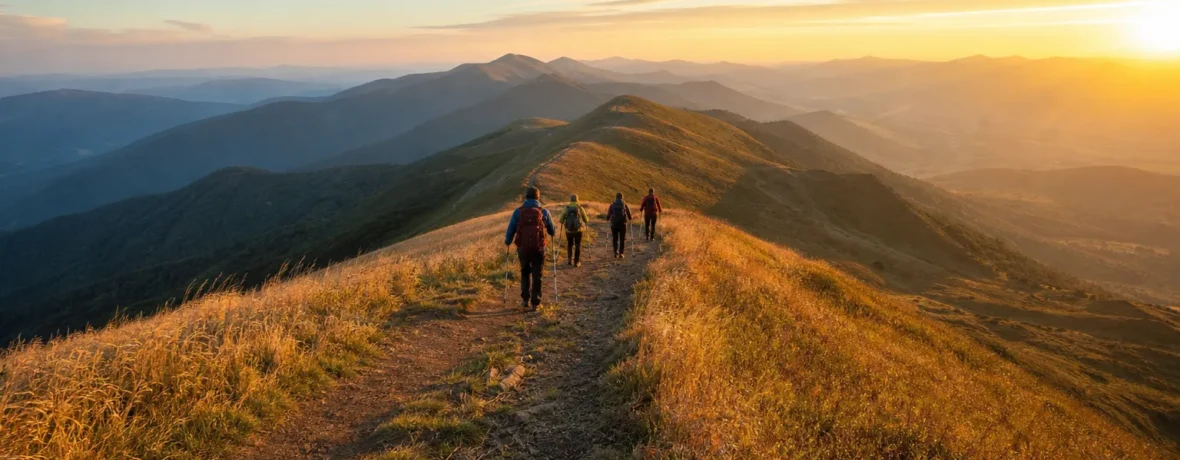
To increase stamina for long hikes, train 3-5 days per week for 8-12 weeks: walk briskly, add hills, build one longer hike each week, strength train twice weekly, and practice pacing with your loaded pack. Increase weekly time or distance by 10-15% when your body feels ready.
How to increase stamina for a long hike?
Build your engine first, then teach it to climb with weight.
Long-hike stamina is not one thing. It is your lungs, legs, feet, core, fueling, hydration, pacing, and patience all working together. If one piece fails, the whole day gets harder. The good news: you do not need heroic workouts. You need consistent, specific training.
Use this 8-week structure if you can already walk 30-45 minutes without pain:
- Walk 3 days per week. Keep most walks at a pace where you can talk in short sentences.
- Add hills once per week. Use trail climbs, stairs, a treadmill incline, or a parking garage.
- Do one long hike or long walk weekly. Start at 60-90 minutes and build gradually.
- Strength train twice weekly. Focus on legs, glutes, calves, core, and balance.
- Train with your pack. Start light, then work toward the weight you will carry on trail.
- Recover hard. Sleep, eat, and take easy days seriously.
For general health, the CDC recommends at least 150 minutes of moderate-intensity aerobic activity per week plus 2 days of muscle-strengthening activity. For hikers, that is the floor, not the ceiling. A big mountain day often asks for more than basic fitness.
How do you build hiking stamina without getting injured?
Increase slowly and keep most training easy.
Your joints, tendons, feet, and calves adapt slower than your lungs. That is why a new hiker can feel strong on mile 4 and still limp by mile 9. Do not let fresh motivation write checks your knees cannot cash.
Use the 10-15% rule as a guardrail. If you hiked 6 miles [9.7 km] last weekend, aim for 6.5-7 miles [10.5-11.3 km] next weekend, not 12 miles [19.3 km]. If you add distance, keep pack weight the same. If you add pack weight, keep distance the same. Do not stack every stressor in one week.
| Training lever | Best way to add it | Watch for |
|---|---|---|
| Distance | Add 10-15% on long days | Foot hot spots, knee ache, deep fatigue |
| Elevation | Add one hill session weekly | Calf tightness, Achilles irritation |
| Pack weight | Add 2-5 lb [0.9-2.3 kg] at a time | Shoulder pain, low-back strain |
| Speed | Use short intervals, not every hike | Breathlessness that ruins form |
Keep easy days easy. A relaxed 45-minute walk after work may look too simple, but that is where your aerobic base grows. Save grit for hills, long hikes, and strength work.
How to increase endurance for steep climbs?
Train uphill, strengthen your legs, and stop attacking every climb like a race.
Climbing burns matches fast. The slope forces your glutes, quads, calves, and lungs to work harder with every step. If you always train on flat sidewalks, a 1,500 ft [457 m] climb will feel rude.
Use one hill workout per week:
- Warm up with 10 minutes of easy walking.
- Climb for 2-4 minutes at a steady effort.
- Walk back down slowly or continue on flat ground for recovery.
- Repeat 4-8 times.
- Cool down for 10 minutes.
Keep your steps short on steep grades. Long lunging steps fry your quads and raise your heart rate. Short steps let you keep moving without redlining. If you use trekking poles, plant them slightly behind your lead foot and push down, not far forward like ski poles.
Strength helps too. Add step-ups, split squats, calf raises, dead bugs, side planks, and hip hinges. You do not need a crowded gym. A bench, stairs, dumbbells, or a loaded backpack can do the job.
What should a weekly long-hike training plan look like?
A good week has easy aerobic work, one hard hill day, two strength sessions, and one longer hike.
Here is a simple template you can repeat. Move days around to fit your schedule, but avoid placing your hardest workouts back-to-back.
| Day | Workout | Goal |
|---|---|---|
| Monday | Rest or 20-30 minute easy walk | Recovery |
| Tuesday | 45-60 minute brisk walk | Aerobic base |
| Wednesday | Strength training, 30-45 minutes | Legs, core, balance |
| Thursday | Hill repeats or stairs, 40-60 minutes total | Climbing power |
| Friday | Rest or mobility | Fresh legs |
| Saturday | Long hike or long walk, 90 minutes to 5 hours | Trail-specific endurance |
| Sunday | Strength training or easy walk | Durability |
Every fourth week, cut your long hike and hill volume by 25-40%. That lighter week gives your body room to absorb the work. You are not losing fitness. You are cashing it in.
How can beginners build stamina for hiking?
Start with time on feet before chasing miles.
If you are new, your first win is consistency. Walk 20-40 minutes, 3-4 days per week, for 2 weeks. Then extend one walk into a longer weekend hike. Keep the pace comfortable. You should finish feeling like you could have done a little more.
Beginner checklist:
- Walk in the shoes or boots you plan to hike in.
- Carry a small pack with water and a light layer.
- Add gentle hills before steep climbs.
- Practice eating during walks longer than 90 minutes.
- Stop and fix hot spots before they become blisters.
- Track time, distance, elevation, pack weight, and how you felt.
For your first bigger day, choose a trail with bail-out options, reliable footing, and a distance you can finish before dark without rushing. A mellow 7-mile [11.3 km] loop teaches more than a miserable sufferfest that scares you off training for 3 weeks.
What strength exercises help long hikes the most?
The best hiking strength work trains single-leg control, hips, calves, core, and downhill braking.
Hiking is not a smooth gym movement. You step over roots, brace on rocks, descend loose dirt, and carry weight while tired. Train for that messiness.
Do 2-4 sets of 6-12 controlled reps for each move:
- Step-ups: Use a box, bench, or sturdy stair. Drive through the whole foot.
- Reverse lunges: Build single-leg strength with less knee stress than forward lunges for many people.
- Romanian deadlifts: Train hamstrings, glutes, and hip hinge strength.
- Calf raises: Use straight-knee and bent-knee versions for uphill and downhill resilience.
- Side planks: Build lateral core strength for uneven trail.
- Farmer carries: Carry dumbbells, kettlebells, or water jugs to train grip, posture, and trunk stiffness.
Move slowly on the lowering phase. Downhill hiking punishes your quads because they act like brakes. Step-downs and controlled lunges teach your legs to handle that braking before the trail does it for you.
How should you pace yourself on a long hike?
Start slower than you think you need to.
The first hour sets the price for the last hour. If you charge out of the trailhead, pass everyone, and hit the first climb breathing hard, you are borrowing energy with interest. A steady hiker often beats a fast starter by lunch.
Use these pacing rules:
- Use the talk test. On normal terrain, you should be able to speak in short sentences.
- Shorten your stride uphill. Keep cadence smooth instead of muscling up each step.
- Take planned breaks. Try 5 minutes every 60-90 minutes instead of collapsing for 25 minutes after you blow up.
- Eat before you feel empty. Waiting until you bonk is too late.
- Back off when heat rises. Heat, sun, humidity, and altitude all raise effort.
On group hikes, do not let ego set your pace. If the group is too fast, say so early. A good hiking partner would rather adjust at mile 2 than manage a meltdown at mile 11 [17.7 km].
What should you eat and drink to hike longer?
Eat early, drink regularly, and replace salt when you sweat for hours.
Long hikes run on carbohydrates, fluids, and steady intake. You do not need a perfect sports-science plan, but you do need to practice. Foods that sit well on a 60-minute walk may revolt during a hot 6-hour climb.
For hikes longer than 90 minutes, pack easy calories you will actually eat:
- Trail mix
- Nut butter packets
- Tortillas or bagels
- Energy bars
- Dried fruit
- Jerky
- Electrolyte drink mix or salty snacks
Dehydration, heat exhaustion, and heat stroke are serious trail risks. NIH MedlinePlus lists dizziness, nausea, confusion, rapid pulse, and hot or dry skin among heat illness warning signs. The Wilderness Medical Society heat illness guidelines stress that suspected heat stroke requires rapid cooling and urgent care; drinking water should not delay cooling.
Your pee does not need to be crystal clear all day. Pale yellow is a useful sign. If you stop urinating for many hours, feel confused, stop sweating in hot conditions, or cannot keep fluids down, treat that as a serious problem.
How do you train with a loaded pack?
Add pack weight after your walking routine is steady.
A loaded pack changes your posture, foot strike, shoulders, hips, and breathing. Train with it before your big hike, not on the day you need it.
Start with 10 lb [4.5 kg] or less for easy walks. Add 2-5 lb [0.9-2.3 kg] every 1-2 weeks until you reach your expected trail weight. Keep the pack snug, with heavier items close to your spine and mid-back. If your shoulders ache, adjust the hip belt, sternum strap, and load lifters instead of just gritting your teeth.
Do not run with a heavy pack unless you are specifically trained for that. For hiking, fast walking, hills, and step-ups are usually enough. Your goal is durable movement, not punishment.
How long does it take to build hiking stamina?
Most hikers feel clear improvement in 4-6 weeks and stronger trail endurance in 8-12 weeks.
The exact timeline depends on your starting point, age, sleep, stress, injury history, and how specific your training is. A fit runner may have lungs for days but still need time to toughen feet and quads for descents. A strong lifter may crush step-ups but need more easy aerobic volume.
Track progress with simple markers:
- Your usual hill feels easier at the same pace.
- You recover faster after long hikes.
- Your feet stay comfortable farther into the day.
- You need fewer long breaks.
- You can carry your pack without shoulder or low-back pain.
If you miss a week, do not restart with a revenge workout. Repeat the last successful week. Fitness comes back faster when you avoid setbacks.
When to see a doctor
See a doctor before hard training if you have symptoms, known medical conditions, or a long break from exercise.
Training for long hikes is still exercise stress. If you have chest pain, fainting, unexplained shortness of breath, irregular heartbeat, severe joint pain, or swelling that does not settle, get medical guidance before pushing harder. The Mayo Clinic recommends checking with a health care professional before starting exercise if you have symptoms or conditions that may affect safe activity.
Also talk with a clinician if you take medications that affect heat tolerance, fluid balance, heart rate, blood pressure, or alertness. Do not self-diagnose trail symptoms. If something feels wrong in a way that is new, intense, or getting worse, stop training and get help.
Related reading
- How Many Steps in a Mile (Walking vs Hiking)?
- What Is the Best Cardio for Hikers?
- What Is VO2 Max and Why It Matters for Hikers
- Calf Stretches for Hikers
FAQ
Can walking increase stamina for hiking?
Yes, walking is the base layer of hiking fitness. Make it more trail-specific by adding hills, longer sessions, uneven surfaces, and a light pack once your routine is steady.
How many days a week should I train for a long hike?
Train 3-5 days per week. A strong setup is 2-3 walks, 1 hill session, 1 long hike, and 2 short strength sessions, with overlap allowed on easier days.
Should I run to get better at hiking?
Running can help your cardio, but it is not required. If running bothers your knees, shins, or feet, brisk walking, incline treadmill work, cycling, stairs, and hiking-specific strength work can build plenty of endurance.
Why do I get tired so fast when hiking uphill?
Uphill hiking demands more from your calves, glutes, quads, lungs, and heart. Slow down, shorten your stride, train hills weekly, and avoid starting climbs at a pace you cannot hold for 20 minutes.
How heavy should my training pack be?
Train up to the weight you expect to carry on your hike. Start light, then add 2-5 lb [0.9-2.3 kg] at a time while keeping distance and elevation manageable.
What is the fastest way to improve stamina for hiking?
The fastest safe route is consistent training: 3-5 weekly aerobic sessions, hills once weekly, strength twice weekly, and one longer hike. Push hard every day and you may get tired, not fitter.