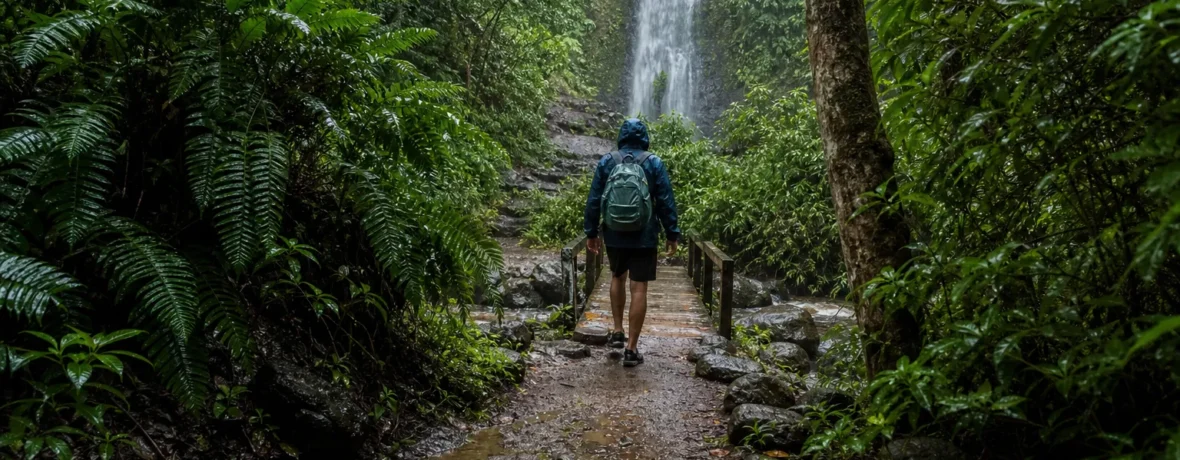
How long is Manoa Falls hike? The Manoa Falls Trail is 0.8 miles [1.3 km] one way, or 1.6 miles [2.6 km] round trip, according to the Hawaiʻi DLNR Honolulu Mauka Trail System map. Most hikers take 60 to 90 minutes total, longer if the trail is slick, crowded, or you stop often for photos.
How long is Manoa Falls hike?
The Manoa Falls hike is 1.6 miles [2.6 km] round trip.
The official Hawaiʻi DLNR Honolulu Mauka Trail System map lists Manoa Falls Trail as 0.8 miles [1.3 km] one way. That sounds tiny on paper. On the ground, it feels like a real rainforest walk because the surface can be wet, rooty, and slow underfoot.
Plan on 30 to 45 minutes uphill to the waterfall and 25 to 40 minutes back down. If the trail is dry by Manoa standards, you may move faster. If it rained hard the night before, expect careful foot placement, muddy steps, and bottlenecks near narrow sections.
This is an out-and-back hike. You walk in, reach the viewing area near the falls, then return the same way. Do not keep pushing past barriers toward the pool or up the falls. DLNR’s trail description says the waterfall and pool area are closed and hikers should stay behind the cable or marked safe viewing area.
| Manoa Falls Trail detail | What to expect | Why it matters |
|---|---|---|
| Distance | 1.6 miles [2.6 km] round trip | Short enough for a half-day plan |
| Trail type | Out and back | No loop; return the same route |
| Surface | Mud, gravel, roots, steps, wet rock | Shoes matter more than mileage |
| Best pace | 60 to 90 minutes total | Allows time for mud and photos |
Is Manoa Falls Trail hard?
Manoa Falls Trail is easy to moderate, not hard, if you wear proper shoes and stay on the maintained route.
The distance is beginner-friendly. The rainforest surface is the catch. Mud can turn a simple grade into a slow shuffle, especially on the way down. You do not need scrambling skills for the main trail, but you do need balance and patience.
DLNR calls it a good trail for novice hikers in its Honolulu Mauka Trail System description. That fits. The path is obvious, popular, and maintained, with a clear payoff at the end. Still, this is not a paved garden stroll. Expect puddles, slick stones, exposed roots, and sections where hikers bunch up because everyone is trying to step on the same dry-looking rock.
If you hike often, you will probably call it short and muddy. If you rarely hike, you may call it a proper adventure. Both can be true.
How muddy is Manoa Falls Trail?
Manoa Falls Trail is often muddy, even when Waikiki is sunny.
Manoa Valley is lush for a reason. It catches moisture. The trail sits in a rainforest pocket at the back of the valley, and shade keeps wet spots wet. You can leave a dry beach neighborhood and still find a slick, brown trail under the canopy.
Mud is usually worst after steady rain, during winter storm patterns, and anywhere the trail narrows near roots or steps. The 2026 DLNR maintenance notice for Manoa Falls pointed to heavy foot traffic, wet climate, erosion, vegetation growth, recent storms, and slippery conditions as reasons the trail needed work.
Bring footwear you do not mind dirtying. White sneakers are a bold choice. Flip-flops are worse. A closed-toe hiking shoe, trail runner, or grippy sandal with toe protection gives you a much better shot at staying upright.
- Wear shoes with real tread, not smooth soles.
- Bring a plastic bag or spare tote for muddy shoes afterward.
- Pack a light rain shell; umbrellas are clumsy on crowded trail sections.
- Use insect repellent in the valley.
- Keep a small towel in the car or daypack.
- Cover cuts before you hike, especially if the trail is wet.
Where do you park for Manoa Falls?
Most visitors park near the end of Manoa Road by Paradise Park, then walk up to the trailhead.
The official DLNR trail description sends hikers up Manoa Road into Paradise Park at the back of Manoa Valley, then along the fire lane toward Lyon Arboretum and the trailhead kiosk. It also says no parking on the fire lane or at Lyon Arboretum. That part matters. Do not block access roads. Do not gamble with “just for a minute” parking near gates.
Parking details can change because the main lot is not a national park-style entrance station. As of November 2026, verify the posted parking rate and payment method when you arrive, or check current local sources before driving up. If you use street parking lower in the neighborhood, read signs carefully and be respectful. This is a residential valley, not a theme park lot.
Arrive early if you want less hassle. Mid-morning can feel busy, especially on weekends, holidays, and after a stretch of clear weather. Late afternoon can be calmer, but do not start so late that you are coming down in the dark.
Do you need a permit for Manoa Falls?
Most day hikers do not need a special hiking permit for the standard Manoa Falls Trail, but you should check current DLNR access before you go.
Manoa Falls is part of the state’s Nā Ala Hele trail system, and DLNR publishes it in the Honolulu Mauka Trail System materials. The nearby Lulumahu Falls route is a different situation and is identified by DLNR as needing a permit. Do not mix the two up. Manoa Falls is the short, maintained waterfall trail at the back of Manoa Valley.
Closures do happen. Heavy rain, fallen trees, rockfall concerns, and trail work can all change access. Before you spend part of your Oahu day driving into the valley, check the Hawaiʻi DLNR Division of Forestry and Wildlife and the official Nā Ala Hele channels for current trail status.
Can you swim at Manoa Falls?
No, you should not swim at Manoa Falls.
There are two separate reasons. First, the official DLNR trail description says the waterfall and pool are closed and tells hikers not to go beyond the cable or marked safe viewing area. Rockfall is a real hazard around steep waterfall amphitheaters, and the safe viewpoint exists for a reason.
Second, freshwater in Hawaiʻi can carry leptospirosis risk. The Hawaiʻi Department of Health advises people not to swim or wade in freshwater streams or ponds in Hawaiʻi, especially with open cuts or sores. The CDC also lists hiking and contact with contaminated water or soil as exposure risks for leptospirosis, especially after heavy rainfall.
Take your photos from the viewing area. Enjoy the sound and the spray. Then turn around.
What should you wear on the Manoa Falls hike?
Wear grippy, closed-toe shoes and light clothes that can handle rain and mud.
The best outfit is simple: breathable shirt, shorts or hiking pants, rain layer, and footwear with traction. You do not need heavy boots for most conditions, but slick fashion sneakers are asking for trouble. The downhill is where people slip. Mud hides roots. Wet rocks look more secure than they are.
Skip long cotton pants if rain is in the forecast. They get heavy and stay wet. Bring a dry shirt for afterward if you are heading to lunch, a museum, or back into a rental car with clean seats.
- Best footwear: trail runners, light hiking shoes, or grippy hiking sandals with toe protection.
- Okay in dry conditions: older sneakers with good tread.
- Bad idea: flip-flops, smooth-soled sandals, heels, white vacation shoes.
- Useful extra: trekking pole or collapsible walking stick if your knees dislike slick descents.
When is the best time to hike Manoa Falls?
Morning is usually the best time to hike Manoa Falls.
Go early for easier parking, cooler air, and fewer people at the waterfall viewpoint. The trail is popular because it is close to Honolulu, short enough for families, and dramatic enough to feel like a full rainforest escape. Crowds build when the day gets rolling.
Weather beats the clock, though. If the forecast calls for heavy rain, thunderstorms, or flash flooding, pick another plan. The National Weather Service describes flash flooding as rapid high water or a rapid stream rise, and steep Hawaiian valleys can change fast during intense rain. Waterfall hikes are not the place to test your luck in a storm.
After rain, the falls can look stronger, but the trail gets slicker. During drier spells, the walk is easier, but the waterfall may be thinner. Choose the safer day, not the most dramatic Instagram day.
How do you hike Manoa Falls without making rookie mistakes?
Start early, wear traction, stay on the trail, and turn around at the viewing area.
Here is the clean plan:
- Check current trail status through DLNR or Nā Ala Hele before leaving your hotel or rental.
- Look at the weather for Manoa Valley, not only Waikiki.
- Drive or ride to the end of Manoa Road and park only where allowed.
- Use the restroom before starting if facilities are available near the parking area.
- Walk toward the trailhead kiosk near the Lyon Arboretum area, following posted signs.
- Take your time on muddy sections and let faster hikers pass where the trail widens.
- Stay behind barriers at the falls; do not enter the pool area.
- Return the same way before dusk.
- Change or bag muddy shoes before getting back into the car.
That is it. No secret route needed. No climbing above the falls. No hopping fences. The main trail gives you the rainforest, the giant trees, the mud, the birdsong, and the waterfall without adding unnecessary risk.
Is Manoa Falls good for kids, seniors, and beginners?
Yes, Manoa Falls can be good for kids, active seniors, and beginners when the trail is not stormy or extremely slick.
The short mileage helps. The steady foot traffic helps. The obvious route helps. But the mud changes the equation for anyone with balance issues, recent injuries, or limited mobility.
For kids, the trail is fun if they can handle mud and listen near drop-offs, bridges, and barriers. For seniors, trekking poles and shoes with grip can make the difference between enjoyable and stressful. For toddlers, a carrier works better than a stroller. A stroller is a poor match for roots, mud, steps, and puddles.
If your group includes someone who hates getting dirty, struggles on uneven ground, or needs a paved surface, choose a different Oahu walk. Makapuʻu Point Lighthouse Trail, for example, is a paved coastal option, though it has sun exposure instead of rainforest shade.
When to see a doctor
See a doctor right away if you develop flu-like symptoms after contact with freshwater, mud, wet soil, or stream water in Hawaiʻi.
Leptospirosis symptoms can include fever, chills, headache, muscle aches, vomiting, diarrhea, red eyes, rash, fatigue, and yellowing of the skin or eyes. The CDC says illness can develop 2 to 30 days after contact with the bacteria, and Hawaiʻi Department of Health says a healthcare provider may run a blood test when symptoms follow possible exposure.
Also get medical care for a wound that becomes red, swollen, warm, increasingly painful, drains fluid, or comes with fever. This guide cannot diagnose you. If you fell, hit your head, cannot bear weight, or have severe pain after a slip on the trail, get checked.
Related reading
- How to Get to Havasu Falls (With and Without Hiking)
- Is Great Falls a National Park? Park Units Explained
- Is Niagara Falls a National Park?
- How Long Is the Appalachian Trail? Miles, States and Time
FAQ
How long does Manoa Falls take?
Manoa Falls usually takes 60 to 90 minutes round trip. Fast hikers may finish sooner, but mud, crowds, photos, and slippery footing can easily stretch the hike past an hour.
Is Manoa Falls Trail free?
The standard hike does not function like a ticketed attraction, but parking may cost money depending on where you park. As of November 2026, check posted signs and current lot information before relying on any specific parking fee.
Can you hike Manoa Falls in sneakers?
Yes, you can hike it in sneakers if they have good tread. Do not wear smooth soles or flip-flops; the trail is often muddy and the descent can be slick.
Is Manoa Falls worth it?
Yes, Manoa Falls is worth it if you want a short rainforest hike near Honolulu. It gives you a big waterfall payoff without a long drive or a full-day backcountry route.
Can you go to Manoa Falls after rain?
Yes, but only if conditions are safe and there are no closures or flood concerns. After rain, expect more mud, slick rocks, stronger stream flow, and a higher chance of slipping.
Is Manoa Falls the same as Lulumahu Falls?
No, Manoa Falls and Lulumahu Falls are different hikes. Manoa Falls is the short maintained trail in Manoa Valley; Lulumahu is a separate route and DLNR identifies it as requiring a permit.