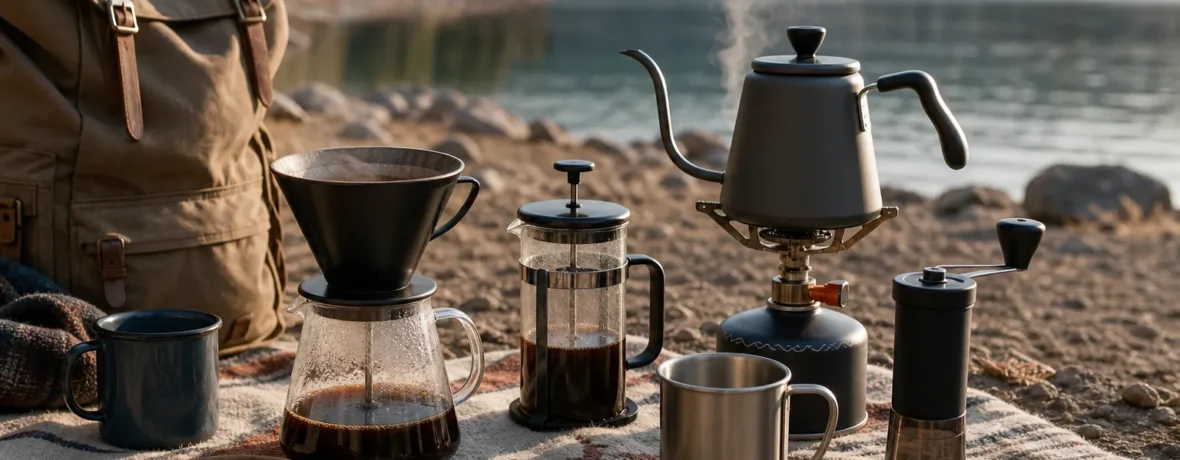
To make coffee while camping, use clean water, 1 to 2 tablespoons of ground coffee per 6 ounces [177 ml] of water, and a method that matches your trip: instant, pour-over, French press, AeroPress, percolator, or cowboy coffee. Pack out grounds and keep cleanup 200 feet [61 m] from water.
Bad coffee can sour a cold morning fast. Good coffee? That buys you five quiet minutes before the stove roar, boot laces, damp socks, and the day’s climb. You do not need a full kitchen setup. You need the right grind, enough fuel to heat water, a cup that will not tip over in pine needles, and a cleanup plan that does not leave coffee sludge in camp.
This guide keeps it practical. Six methods. Real pros and cons. No precious camp-barista routine unless you want one.
What is the best camping coffee method for your trip?
The best method is the one that fits your weight limit, group size, patience, and cleanup situation.
If you are backpacking, instant coffee or an AeroPress-style setup keeps weight and mess low. If you are car camping, a French press or percolator makes more sense because you can carry bulkier gear and more water. If you forgot every gadget except a pot, cowboy coffee still gets caffeine in your cup.
| Method | Best for | Main tradeoff | Gear needed |
|---|---|---|---|
| Instant coffee | Backpacking, fast mornings | Less fresh flavor | Cup, hot water, packet |
| Pour-over | Solo campers who like clean coffee | Needs careful pouring | Dripper, filter, cup |
| French press | Car camping, groups | Messy grounds | Press, coarse grounds |
| AeroPress | Strong coffee, low mess | One cup at a time | Press, filter, sturdy mug |
| Percolator | Base camp, big pots | Easy to over-extract | Percolator, stove or fire |
| Cowboy coffee | Minimal gear | Sediment in the cup | Pot, grounds, water |
How to make coffee while camping in 6 steps
Start with water, heat, measured grounds, and a cleanup plan.
- Choose your method before you pack. Match the coffee setup to the trip. A glass French press is a bad idea in a backpack. Instant coffee is brilliant at 20°F [-7°C] when your hands are stiff.
- Pack the coffee in a sealed bag or small canister. Pre-grind it at home unless you are car camping and truly want to bring a hand grinder. Keep it away from stove fuel and scented toiletries.
- Use a steady ratio. Start with 1 to 2 tablespoons of ground coffee per 6 ounces [177 ml] of water. Use less for a mellow cup and more for a strong one.
- Heat water just off boiling. Bring water to a boil, then let it sit for 30 to 60 seconds before brewing. Boiling water can make coffee taste sharp, especially with darker roasts.
- Brew, then separate the grounds. Use a filter, plunger, press, or careful pour. The longer grounds sit in hot water, the more bitter the cup gets.
- Clean up without trashing camp. Strain grounds, pack them out, and wash dishes away from streams and lakes. Leave No Trace recommends carrying wash water 200 feet [61 m] from water sources and scattering strained wastewater; read their waste disposal guidance before your trip.
How do you make instant coffee at camp?
Add instant coffee to hot water, stir, and drink.
That is the whole charm. Instant coffee is not fancy, but it is light, fast, and almost impossible to mess up. For a 10-ounce [296 ml] mug, use one standard packet or 1 to 2 teaspoons of crystals. Stir well and wait 20 seconds so the powder fully dissolves.
This is the best method when you are moving early, camping in cold weather, or counting every ounce. It also wins when water is limited because there are no grounds to rinse from a filter or press.
- Best grind: none; use packets or crystals
- Water amount: 8 to 12 ounces [237 to 355 ml] per serving
- Brew time: under 1 minute
- Cleanup: pack out the packet
Tip: If you hate thin instant coffee, mix it with a little cold water first to make a paste, then add hot water. It smooths out clumps and gives the cup a better texture.
How do you make pour-over coffee while camping?
Place a filter in a dripper, add grounds, pour hot water slowly, and let it drain into your mug.
Pour-over gives you a clean, bright cup without heavy gear. Collapsible silicone drippers, plastic cone drippers, and ultralight metal stands all work. Paper filters are easy because you can pack them out with the grounds inside, but they do create trash. A reusable cloth or mesh filter cuts waste, though it needs more cleaning.
Use a medium grind. Too fine, and the coffee drains slowly and tastes harsh. Too coarse, and it runs through weak. For one mug, start with 2 tablespoons of grounds and 10 to 12 ounces [296 to 355 ml] of hot water.
- Set the dripper on a stable mug.
- Add the filter and grounds.
- Pour a splash of hot water over the grounds and wait 30 seconds.
- Pour the rest slowly in small circles.
- Let it finish dripping, then remove the filter.
Do not balance the dripper on a narrow titanium cup in loose dirt. That is how breakfast becomes a brown stain in the duff.
How do you make French press coffee outdoors?
Add coarse grounds and hot water to the press, steep for 4 minutes, then plunge slowly.
A French press makes a rich cup and scales well for two to four people. It is better for car camping than backpacking unless you carry a light, trail-specific press. Glass presses break. Metal and plastic presses are safer around picnic tables, rocks, dogs, kids, and sleepy adults.
Use coarse grounds. Fine grounds slip through the mesh and turn the bottom of the mug gritty. For a 32-ounce [946 ml] press, start with 8 to 10 tablespoons of coffee, depending on how strong you like it.
- Warm the press with a splash of hot water if the morning is cold.
- Dump that water, then add coarse grounds.
- Pour in hot water and stir once.
- Put the lid on with the plunger raised.
- Wait 4 minutes.
- Press down slowly and pour all the coffee into mugs.
Do not leave coffee sitting on the grounds after plunging. It keeps extracting and gets bitter. If you made extra, pour it into an insulated bottle.
Cleanup takes care. Scoop wet grounds into a trash bag or dedicated waste container. Do not fling them around camp. Coffee grounds are food waste, and food smells can attract animals. The National Park Service gives practical reminders for storing food and scented items in bear country in its food storage guidance.
Can you use an AeroPress or travel press at a campsite?
Yes, a compact press is one of the cleanest ways to brew strong camp coffee.
A press-style brewer works well because it is durable, fast, and forgiving. It uses small paper or metal filters, makes a concentrated cup, and knocks out a tidy puck of grounds. That puck is much easier to pack out than a soggy French press full of sludge.
Use a medium-fine grind. For one strong cup, add 1 rounded scoop or 2 tablespoons of coffee, pour in hot water, stir, wait 60 to 90 seconds, then press into a sturdy mug. If the coffee tastes too strong, add hot water after pressing.
- Best for: solo campers, couples, van campers, and coffee drinkers who like control
- Not ideal for: big groups, unless everyone likes waiting in line
- Pack tip: store filters in a small zip bag so they stay dry
- Cleanup tip: eject the grounds into your trash bag, then wipe the plunger
Bring a mug with a wide, stable base. Pressing down on a flimsy cup is asking for a spill.
How do you make percolator coffee over a camp stove or fire?
Fill the percolator with water, add coarse grounds to the basket, heat it until it perks, then simmer gently for 5 to 8 minutes.
The percolator is old-school for a reason. It makes a full pot, handles camp life well, and looks right at home on a picnic table. It also punishes neglect. If you let it boil hard for too long, you will get dark, bitter coffee that tastes like the inside of a chimney.
Use coarse grounds and moderate heat. Watch the clear knob on top. When coffee starts bubbling into it, lower the flame or move the pot to a cooler edge of the fire. You want steady perking, not a rolling boil.
- Add cold water to the lower chamber.
- Place coarse grounds in the basket.
- Assemble the stem and basket inside the pot.
- Heat until coffee begins perking.
- Keep it perking gently for 5 to 8 minutes.
- Remove from heat and let grounds settle for 1 minute before pouring.
For car camping, this is a dependable group method. For backpacking, it is usually too bulky and heavy.
How do you make cowboy coffee without special gear?
Boil water, add coarse grounds, steep, settle the grounds, and pour slowly.
Cowboy coffee is the backup plan that never asks for a filter. It can taste surprisingly good if you avoid two mistakes: boiling the grounds hard and pouring too fast. The goal is steeped coffee, not coffee soup.
For two mugs, heat 24 ounces [710 ml] of water in a pot. Remove it from direct heat, add 4 tablespoons of coarse grounds, stir, and steep for 4 minutes. Add a small splash of cold water to help grounds sink. Wait 30 seconds, then pour slowly into mugs and stop before the sludge reaches the lip of the pot.
You will get some sediment. That is part of the deal. If grit drives you mad, carry filters.
What gear do you need to make coffee at camp?
You need coffee, water, heat, a cup, and one brewing tool if you are not using instant or cowboy coffee.
Keep the kit simple. The more parts you bring, the more parts you can lose in the dark. Build a small coffee bag and leave it packed between trips, minus the fresh grounds.
- Ground coffee, instant packets, or whole beans
- Stove and fuel, or a safe fire setup where fires are allowed
- Pot or kettle for heating water
- Mug with a stable base
- Brewer: dripper, press, percolator, or filter holder
- Filters, if your method uses them
- Spoon or small stir stick
- Insulated bottle for extra coffee
- Trash bag for grounds, filters, and packets
- Small scraper, bandana, or sponge for cleanup
If you use milk, cream, or other perishable add-ins, pack them like food, not like dry goods. The USDA warns campers not to depend on untreated lake or stream water for drinking, meal prep, or cleaning, and gives more outdoor food guidance in its food safety advice for outdoor activities.
What is the best coffee grind for camping?
The best grind depends on your brewing method.
Pre-grind at home if you want speed. Bring whole beans and a hand grinder if fresh flavor matters more than weight and time. For most campers, pre-ground coffee in a sealed bag is the cleanest call.
| Method | Best grind | Why it works |
|---|---|---|
| Instant | No grind needed | Dissolves in water |
| Pour-over | Medium | Drains evenly through a filter |
| French press | Coarse | Stays mostly behind the mesh |
| AeroPress-style press | Medium-fine | Extracts fast under pressure |
| Percolator | Coarse | Reduces bitterness and sediment |
| Cowboy coffee | Coarse | Sinks better and pours cleaner |
Do not grind coffee into powder unless your brewer calls for it. Fine grounds clog filters, sneak through press screens, and make cleanup worse.
How much coffee should you pack for camping?
Pack 1 to 2 tablespoons of coffee per 6 ounces [177 ml] of water, then multiply by cups and mornings.
Here is a simple way to plan. One normal camp mug often holds 10 to 12 ounces [296 to 355 ml]. For that mug, 2 to 4 tablespoons of ground coffee is the working range. If you drink one mug each morning for three mornings, pack three servings plus one backup serving. Someone always wants “just a little more.”
- Solo overnight: 2 to 4 tablespoons, plus one spare serving
- Two people, two mornings: 8 to 16 tablespoons, depending on mug size and strength
- Group car camp: pack by pot size and label the bag by morning
For backpacking, pre-portion coffee into daily bags. It saves fumbling and keeps you from carrying a mystery brick of grounds back to the trailhead.
How do you clean up coffee grounds while camping?
Pack out coffee grounds, filters, packets, and any flavored creamer trash.
Coffee grounds are not harmless confetti. They are food waste. Animals investigate food smells, and nobody wants to pitch a tent on yesterday’s wet grounds. Use a wide-mouth trash bag, an empty screw-top jar, or a used freeze-dried meal pouch to hold damp grounds.
- Let grounds cool.
- Strain extra liquid through your filter, mesh, or a bandana.
- Put grounds and filters in your trash bag.
- Wipe gear before washing so you use less water.
- Wash dishes at least 200 feet [61 m] from lakes, streams, and campsites when local guidance calls for it.
- Scatter strained wastewater broadly, never in one puddle beside camp.
Check local rules before your trip. Some campgrounds have dishwashing stations, bear-proof dumpsters, or specific gray-water instructions. Follow the posted system.
Can you drink too much coffee on a hike?
Yes, too much caffeine can make a hard day feel worse.
Coffee can be a nice boost before climbing, but it is not a substitute for breakfast, water, or sleep. The FDA says 400 milligrams of caffeine per day is not generally associated with dangerous effects for most adults, but sensitivity varies; read the FDA’s caffeine guidance if you rely on several cups, energy drinks, or caffeine powders.
If coffee gives you jitters at home, it will not become magic trail fuel at 8,000 feet [2,438 m]. Start with a smaller cup, drink water with breakfast, and avoid trying a new high-caffeine product on a remote trip.
When to see a doctor
Get medical help if caffeine or dehydration symptoms feel severe, unusual, or do not improve with rest and fluids.
Do not diagnose yourself in the backcountry. If you have chest pain, fainting, confusion, repeated vomiting, severe weakness, or a racing heartbeat that does not settle, seek urgent care or emergency help. If you are pregnant, have a heart condition, take medications, or have been told to limit caffeine, ask your clinician what is safe before the trip.
For general caffeine safety, MedlinePlus from the National Library of Medicine explains common effects and cautions in its caffeine overview.
Related reading
- How to Plan a Camping Trip
- How to Start Camping: A Beginner's Guide
- Dispersed Camping in Colorado: Best Areas and Rules
- Camping Checklist: What to Bring
FAQ
What is the easiest way to make coffee while camping?
Instant coffee is the easiest way. You only need hot water, a mug, and a packet, and cleanup is limited to packing out the wrapper.
Can you make coffee camping without a coffee maker?
Yes, use cowboy coffee. Heat water in a pot, stir in coarse grounds, steep for 4 minutes, settle the grounds with a splash of cold water, and pour slowly.
Should I bring whole beans or ground coffee camping?
Bring ground coffee for most trips. Whole beans taste fresher, but they require a grinder and extra time, which makes more sense for car camping than backpacking.
What coffee method is best for backpacking?
Instant coffee is best for the lightest kit, while a compact press is best if you want stronger flavor with manageable cleanup. Avoid bulky glass brewers and heavy percolators on backpacking trips.
Can I dump coffee grounds in the woods?
No, pack out coffee grounds. They count as food waste, can attract animals, and leave a mess for the next camper.
How do I keep coffee hot at camp?
Use an insulated mug or pour extra coffee into an insulated bottle right after brewing. Pre-warming the mug with hot water also helps on cold mornings.