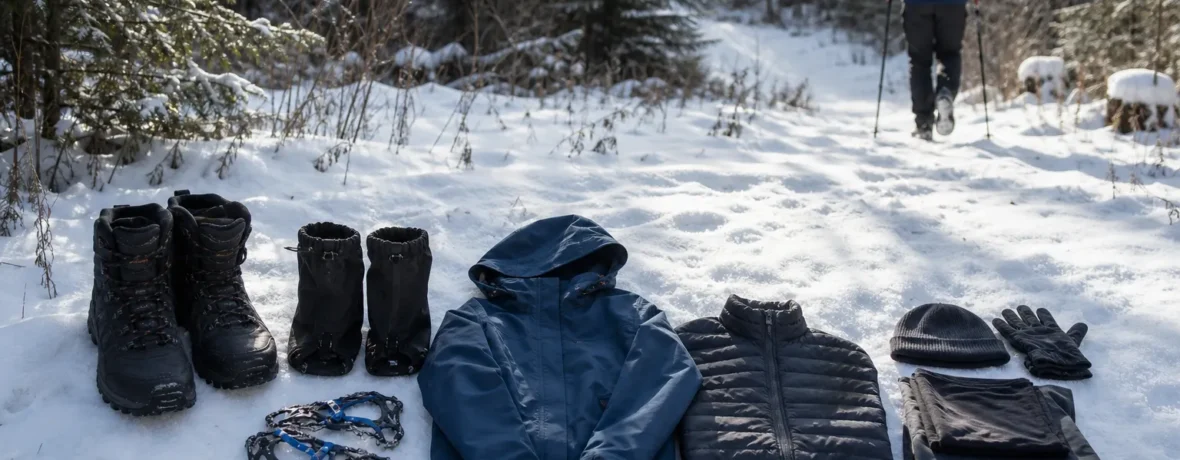
What to wear hiking in winter: dress in 3 adjustable layers—a moisture-wicking base, warm midlayer, and windproof/waterproof shell—plus wool socks, insulated or waterproof boots, gloves or mittens, a warm hat, and traction when trails are icy. Pack dry backup layers every time.
What is the best winter hiking clothing system?
Use a layered system you can vent, remove, and rebuild all day.
Winter hiking clothing has one job: keep you warm without trapping so much heat that you sweat through your clothes. Sweat is the sneaky problem. You can feel perfect on the climb, then freeze fast when you stop for lunch, photos, or a map check.
The National Park Service recommends layers for cold-weather adventures, including an insulating outer layer with a hood, gloves or mittens, wool socks, waterproof boots, and extra dry clothing in a sealed bag. National Park Service winter readiness guidance also calls out traction, sunglasses, and emergency gear for snowy hikes. (nps.gov)
| Layer | What it does | Good choices |
|---|---|---|
| Base layer | Moves sweat off your skin | Merino wool or synthetic long underwear |
| Midlayer | Traps warm air | Fleece, wool sweater, synthetic jacket, light down jacket |
| Shell | Blocks wind, rain, sleet, and snow | Waterproof/breathable rain jacket or hard shell |
| Accessories | Protects heat-loss and frostbite-prone spots | Hat, neck gaiter, gloves, mittens, wool socks |
Skip cotton for your main hiking clothes. Cotton soaks up sweat and dries slowly, which can leave you chilled once you stop moving. Choose merino wool or synthetic fabrics next to skin, then add insulation based on the forecast, wind, shade, elevation, and how hard you hike.
What to wear hiking in winter from head to toe?
Wear moisture-wicking layers, warm insulation, weather protection, and covered skin from scalp to socks.
Start with your head. A fleece or wool beanie works for cold starts and windy ridges. If you run hot, carry a thinner cap too. Add a neck gaiter or buff that can cover your chin, cheeks, and nose when wind picks up. Sunglasses matter on snow because glare can be brutal, even on cloudy days.
For your torso, wear a fitted base layer that touches the skin without squeezing. A lightweight base works for high-output climbs in 25–40°F [-4–4°C]. A midweight base works better for slower hikes, colder starts, or long breaks. Over that, add a fleece or active-insulation jacket. Carry a puffy jacket in your pack for stops. Down is warm and light, but synthetic insulation handles damp conditions better.
Your shell should block wind first and wet snow second. A breathable rain jacket can work on many winter day hikes. For exposed alpine trails, stormy forests, or wet snow, a tougher hard shell earns its space.
For legs, most hikers do well with long underwear under soft-shell hiking pants. If it is dry, windy, and below freezing, soft-shell pants feel better than rain pants because they stretch and breathe. If sleet, wet brush, or deep snow is on the menu, carry waterproof rain pants or winter shell pants.
For hands, pack two systems: thin liner gloves for movement and warmer mittens for breaks. Mittens are warmer than gloves because your fingers share heat. If the forecast is cold, windy, or wet, bring a waterproof over-mitt or insulated mitten.
For feet, wear one pair of warm wool or synthetic socks. Do not stack thick socks if they make your boots tight. Tight boots restrict circulation and make feet colder. If your feet run cold, use warmer boots, not sock stuffing.
What to wear for cold weather hiking when temps change fast?
Dress cool at the trailhead, then adjust before sweat builds.
The first 10 minutes of a winter hike can trick you. If you feel perfectly cozy while standing at the car, you may be overdressed once the trail tilts uphill. Start slightly cool, walk for 5–10 minutes, then fine-tune.
- Check the full forecast. Look at temperature, wind, precipitation, sunset, and elevation. A calm 28°F [-2°C] forest hike feels nothing like a windy 28°F ridge.
- Start with your base layer and hiking layer. Wear the pieces you expect to move in, not the pieces you expect to stand around in.
- Vent early. Open pit zips, unzip your chest, remove your hat, or switch to thin gloves before sweat soaks your base layer.
- Add insulation before breaks. Put on your puffy jacket the moment you stop, not after you are already shivering.
- Keep dry backups sealed. Pack extra socks, gloves, and a warm layer in a dry bag or zip-top bag.
This simple rhythm keeps you comfortable: hike a little cool, rest warm, and protect dry layers like they are emergency gear. Because they are.
Are leggings or hiking pants better for winter hiking?
Hiking pants are usually better for winter, but warm leggings can work in dry, mild conditions.
Leggings feel great on steep climbs because they stretch and breathe. The downside is exposure. Many leggings cut wind poorly, soak through against wet snow, and offer little protection from ice-crusted brush or sitting on frozen logs.
For mellow trails above freezing, fleece-lined leggings can be fine with tall socks and a long shell or insulated skirt. For colder hikes, wear merino or synthetic long underwear under soft-shell hiking pants. That combo gives you warmth, wind resistance, and better durability.
| Bottoms | Best for | Weak spot |
|---|---|---|
| Fleece-lined leggings | Dry trails, mild winter days, fast hiking | Wind and wet snow |
| Soft-shell pants | Most winter hikes | Heavy rain or very wet snow |
| Rain pants over base layer | Wet snow, sleet, stormy weather | Breathability on climbs |
| Insulated snow pants | Very cold, slow hiking, snow play | Overheating during climbs |
What kind of jacket should you wear winter hiking?
Wear a breathable hiking layer while moving and carry a warmer puffy for stops.
A common mistake is hiking uphill in a big parka. You roast, sweat, unzip, then get cold when the wind hits damp clothing. For active hiking, a fleece plus wind shell often beats one heavy coat.
Carry these jacket pieces for most winter day hikes:
- Fleece or active midlayer: your main hiking warmth.
- Windproof or waterproof shell: your protection from wind, snow, and rain.
- Puffy jacket: your stop layer for breaks, summit time, emergencies, and slow descents.
If temperatures are near freezing and wet, synthetic insulation is safer than down because it keeps more warmth when damp. If the air is dry and cold, down gives excellent warmth for its weight. Either way, the puffy should fit over your base layer and midlayer without crushing them flat.
What boots and socks should you wear for winter hiking?
Wear waterproof or water-resistant boots with warm wool socks and enough room to wiggle your toes.
Footwear depends on snow depth, temperature, and trail surface. For packed snowy trails, waterproof hiking boots with warm socks may be enough. For colder days or long hikes through snow, insulated winter hiking boots are the better call. If the trail is icy, add microspikes or other over-the-shoe traction.
The National Park Service suggests over-the-shoe traction devices for winter hiking where slipping is a concern. It also recommends wool socks and waterproof boots for cold-weather outings. (nps.gov)
Your socks should be warm, cushioned, and dry. Merino wool is the classic pick because it insulates well and manages moisture. Synthetic winter socks also work. Pack a spare pair in a sealed bag; changing into dry socks can turn a miserable descent into a manageable one.
Avoid tight boot fits. Winter feet need space for socks, toe movement, and warm air. If your toes press against the boot or go numb shortly after starting, the setup is too tight, too cold, or both.
What gloves, hats, and face coverings do you need?
Bring more hand warmth than you think you will need.
Hands are hard to rewarm once they go numb. A smart winter glove system uses layers, just like your torso. Wear thin liner gloves for photos, snacks, zippers, and trekking poles. Add insulated gloves or mittens when wind rises or pace slows. Carry waterproof shells if snow is wet or you may touch snow often.
For your head and face, pack:
- A warm beanie that covers your ears
- A neck gaiter or balaclava for wind
- Sunglasses or goggles for blowing snow and glare
- Lip balm with sun protection
- A spare dry hat for the hike out
Cold injuries often hit exposed skin first: ears, cheeks, nose, fingers, and toes. The CDC lists numbness, tingling, stinging, or pain in exposed areas as early signs of frostbite and says to seek medical care immediately if symptoms appear. CDC cold-weather travel guidance explains the warning signs for both frostbite and hypothermia. (wwwnc.cdc.gov)
How many layers do you need for a winter day hike?
Most hikers need 3 worn layers and 1 backup warm layer in the pack.
A practical setup for a 20–35°F [-7–2°C] day hike looks like this: base layer, fleece or active-insulation midlayer, wind or waterproof shell, plus a packed puffy. Add long underwear under pants when you expect slow travel, long stops, high wind, or temperatures below 25°F [-4°C].
For colder conditions near 0–20°F [-18–-7°C], upgrade the system: warmer base layer, heavier mittens, insulated boots, thicker midlayer, and a bigger puffy. If you will be above treeline, in deep snow, or far from the car, pack as if a short break could become a long wait.
Use your pace as the thermostat. Climbing hard? Vent. Crossing an exposed ridge? Shell up. Stopping for lunch? Puffy on. Descending slowly? Add a layer before you chill.
What should you pack in case you get cold or wet?
Pack dry clothing and emergency warmth even on short winter hikes.
Winter mistakes get expensive fast. A twisted ankle, wrong turn, dead headlamp, or surprise storm can turn a 2-hour hike into a long, cold sit. Keep your backup clothing dry and easy to reach.
- Extra base layer top
- Extra wool socks
- Extra liner gloves
- Warm mittens
- Puffy jacket
- Rain shell or hard shell
- Warm hat or balaclava
- Emergency blanket or bivy
- Hand warmers and foot warmers
- Headlamp with charged batteries
- Map, compass, and downloaded offline route
- Food that will not freeze into a brick
- Water carried where it is less likely to freeze
The NPS winter gear guidance recommends extra dry clothing in a sealed bag in case you get wet. That is not overpacking. That is winter hiking.
When to see a doctor
Get medical help right away for suspected hypothermia or frostbite.
Hypothermia can occur when your core body temperature drops below 95°F [35°C], and the CDC says it can happen even near 50°F [10°C] if a person is chilled by rain, sweat, or cold water. Warning signs include shivering, exhaustion, confusion, fumbling hands, memory loss, slurred speech, and drowsiness. CDC winter weather safety guidance describes hypothermia as a medical emergency. (cdc.gov)
For frostbite concerns, do not rub the skin, keep the area protected, and get medical care. The Wilderness Medical Society’s frostbite guidance emphasizes warming numb or painful digits as soon as possible and minimizing cold exposure. Wilderness Medical Society frostbite guidelines also flag numbness, poor dexterity, and pale color as concerning signs. (journals.sagepub.com)
Call emergency services if someone is confused, unusually drowsy, unable to walk normally, has slurred speech, stops shivering while still cold, or has skin that stays numb, hard, waxy, gray, white, blue, or very painful after rewarming. This guide cannot diagnose or treat cold injuries; it can only help you spot red flags sooner.
Related reading
- What to Wear Hiking in Any Season
- What to Wear Hiking in Summer and Hot Weather
- Best Winter Hiking Gear
- What to Wear on a Hiking Date
FAQ
Can you wear jeans hiking in winter?
No, jeans are a poor choice for winter hiking. Denim holds moisture, dries slowly, and can leave you dangerously cold after snow, sweat, or rain.
Should winter hiking clothes fit tight or loose?
They should fit close enough to layer cleanly, but not so tight that they restrict movement or circulation. Your boots, socks, gloves, and cuffs need enough room for warm air and blood flow.
Is wool or synthetic better for winter hiking?
Both work well. Merino wool feels warm and resists odor, while synthetic layers usually dry faster and cost less.
Do you need snow pants for winter hiking?
Usually no. Soft-shell hiking pants over long underwear are better for most winter hikes, while snow pants make sense for very cold, slow, snowy, or stop-and-go days.
What should you wear for a short winter hike?
Wear the same core system: base layer, insulating layer, shell, warm socks, winter-appropriate boots, hat, and gloves. Still pack a puffy jacket, dry gloves, a headlamp, and traction if the trail may be icy.
How do you stop sweating while hiking in winter?
Start slightly cool, slow your pace, and vent before you feel wet. Remove your hat, unzip your shell, switch to lighter gloves, or peel off a midlayer during climbs.