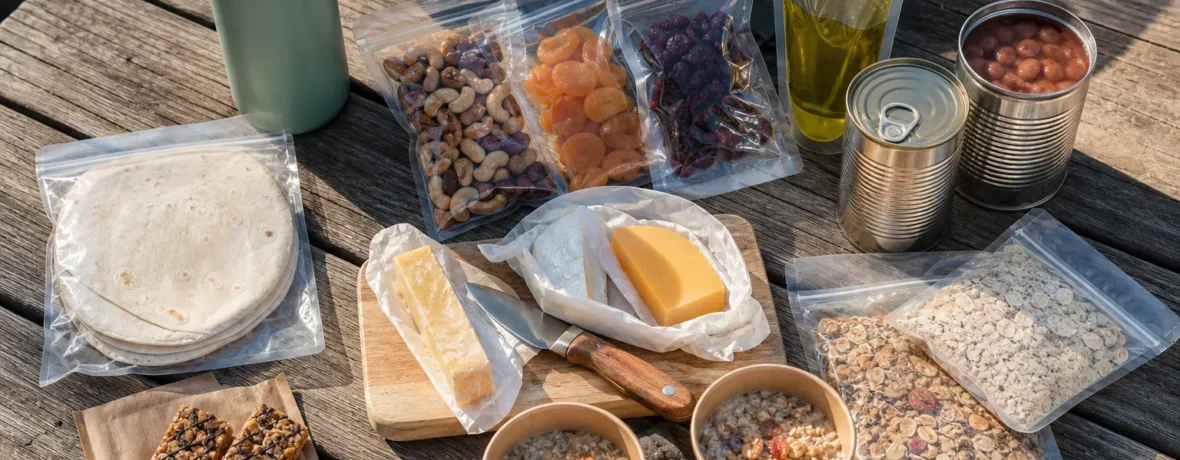
Without a fridge, pack shelf-stable meals: nut butter, tortillas, tuna packets, jerky, hard cheeses for day one, nuts, dried fruit, instant hummus, oats, bars, crackers, and dehydrated meals. Skip raw meat, mayo-heavy salads, opened dairy, and leftovers unless you can keep them below 40°F [4°C].
What food to take camping without fridge?
Take food that is sealed, shelf-stable, calorie-dense, and easy to eat with cold water or no water.
Your best camping food without a fridge does three jobs: it feeds you, packs small, and does not turn sketchy when the sun hits the picnic table. That means dry foods, retort pouches, cans for car camping, nut butters, cured or dried proteins, and sturdy produce that can handle a little trail abuse.
The USDA says shelf-stable foods are products that do not need refrigeration until opened, including jerky, canned and bottled foods, rice, pasta, flour, sugar, spices, oils, and foods in aseptic or retort packages; some canned foods are not shelf-stable, so read the label before you pack. USDA shelf-stable food guidance
- Proteins: tuna packets, salmon packets, chicken packets, jerky, meat sticks, roasted chickpeas, nuts, seeds, peanut butter, almond butter, powdered hummus, shelf-stable tofu, and single-serve bean dips if the label says no refrigeration before opening.
- Carbs: tortillas, pita, bagels, crackers, pretzels, granola, muesli, instant oats, couscous, instant rice cups, dry cereal, and rice cakes.
- Fats: olive oil packets, nut butter packets, tahini packets, coconut chips, nuts, seeds, and shelf-stable pesto packets.
- Fruit: apples, oranges, dried mango, raisins, dates, figs, banana chips, fruit leather, and applesauce pouches.
- Vegetables: carrots for day one, snap peas for day one, seaweed snacks, dehydrated veggies, sun-dried tomatoes, olives in single-serve cups, and shelf-stable pickles.
- Flavor: hot sauce packets, mustard packets, soy sauce packets, taco seasoning, everything bagel seasoning, salt, pepper, crushed red pepper, and electrolyte drink mix.
For backpacking, choose packets over cans. Cans are fine at a drive-up campsite, but they are dead weight once empty. Packets flatten, burn less space, and slide into bear canisters better.
What are the best no cook camping meals?
The best no cook camping meals are wraps, cold-soak bowls, snack plates, loaded oats, and packet-protein lunches.
Think assembly, not cooking. If you can spread, tear, stir, and roll, you can eat well without a stove. The trick is stacking texture: soft tortilla, crunchy seeds, salty tuna, sharp mustard, chewy dried fruit. Camp food gets boring when every bite is beige and sweet.
| Meal idea | What to pack | Best for |
|---|---|---|
| Peanut butter banana wrap | Tortilla, peanut butter packet, banana, honey packet | Fast breakfast or lunch |
| Tuna cracker board | Tuna packet, crackers, mustard, olives, apple | Car camping or short backpacking lunch |
| Cold-soak couscous | Couscous, olive oil, dried tomatoes, spices, water | Backpacking dinner |
| Trail hummus pita | Powdered hummus, pita, olive oil, carrots for day one | Vegetarian lunch |
Here are strong, simple meals that work without a fridge:
- Tuna crunch wraps. Spread mustard on a tortilla, add a tuna packet, crushed pretzels, and pickle chips from a single-serve pouch. Roll tight. Eat over the wrapper because tuna juice has ambitions.
- Peanut butter apple bagel. Slice or bite an apple into thin pieces, stack it on a bagel with peanut butter, then add cinnamon. Good carbs, good fat, no cleanup drama.
- Instant hummus pita. Mix powdered hummus with water and olive oil. Stuff into pita with sun-dried tomatoes, seaweed snacks, or day-one carrots.
- Cold-soak oats. Add oats, powdered milk or protein powder, chia seeds, dried fruit, and water to a jar or leakproof container. Give it 20 to 30 minutes, then eat.
- Salmon rice-cake stacks. Top rice cakes with salmon, hot sauce, and avocado on the first day if you brought one. Eat right away so the rice cakes stay crisp.
- Bean dip tortillas. Use shelf-stable refried bean pouches or dehydrated beans. Add taco seasoning, crushed corn chips, and hot sauce.
- Mediterranean snack plate. Crackers, olives, tuna or chickpeas, dried apricots, nuts, and a little hard cheese on day one. It feels civilized. It still takes 3 minutes.
- Trail ramen salad. Crush dry ramen, add the seasoning lightly, mix with peanut butter, soy sauce, and enough water to loosen it. Let it sit until chewy.
Can you camp without a cooler?
Yes, you can camp without a cooler if every meal is shelf-stable until opened.
A cooler buys comfort, not freedom. Without one, you stop managing ice and start managing packaging. That is easier on a hot weekend, easier on a backpacking route, and easier when the nearest store is 40 miles [64 km] away.
The tradeoff is clear: no cold drinks, no raw burgers, no cream cheese, no deli meat sandwiches after the first safe window. But you gain a cleaner food system. No melted ice floating around your eggs. No mystery puddle. No race to eat the chicken before it becomes a bad idea.
Use this no-fridge packing method:
- Build each meal around one anchor. Pick a tortilla, bagel, crackers, oats, couscous, or rice cakes.
- Add protein. Use tuna packets, jerky, nuts, seeds, nut butter, powdered hummus, or beans.
- Add fat. Olive oil, nut butter, tahini, nuts, seeds, or coconut chips make the meal last longer in your stomach.
- Add crunch. Pretzels, corn chips, roasted chickpeas, crackers, or sturdy produce keep meals from turning mushy.
- Add acid or heat. Mustard, hot sauce, lemon powder, pickles, or chili flakes wake everything up.
- Pack one treat per day. Chocolate in cool weather, gummy candy in heat, cookies, or a drink mix you actually like.
If you are car camping, use a lidded tote as your pantry. If you are backpacking, use odor-resistant bags inside your required food storage system. In bear country, follow the local rule for bear canisters, lockers, or hangs. Don’t guess. Food storage rules change by land manager and specific site.
What camping foods do not need refrigeration?
Foods that do not need refrigeration are unopened shelf-stable foods, dry foods, and some whole fruits and vegetables.
The USDA’s camping food guidance lists shelf-stable options for longer trips, including peanut butter, canned meats, dried noodles and soups, jerky, dehydrated foods, dried fruits and nuts, powdered milk, and powdered juices. USDA hiking and camping food suggestions
Use this list as your camp pantry:
- Breakfast: instant oats, granola, muesli, powdered milk, powdered protein, dried fruit, nut butter, tortillas, bagels, and instant coffee.
- Lunch: crackers, tortillas, tuna packets, chicken packets, salmon packets, jerky, peanut butter, honey, shelf-stable hummus powder, olives, and hard fruit.
- Dinner: couscous, instant rice, dehydrated beans, instant mashed potatoes, ramen, dehydrated soups, freeze-dried meals, and retort-pouch curries.
- Snacks: trail mix, nuts, seeds, bars, dried fruit, meat sticks, roasted chickpeas, pretzels, corn chips, cookies, and electrolyte chews.
- Drinks: instant coffee, tea bags, cocoa packets, electrolyte mix, powdered lemonade, and powdered milk.
Some foods sit in the gray zone. Aged hard cheese can ride safely for a short trip in cool weather when packed clean and eaten early, but soft cheese is a fridge food. Whole apples travel better than cut apples. A sealed tuna packet is shelf-stable; opened tuna is not. Single-serve packages are your friend because they prevent leftovers.
What foods should you avoid camping without a fridge?
Avoid perishable foods that need to stay cold, especially once opened or prepared.
As of November 2026, the FDA says perishable food should not stay in the 40°F to 140°F [4°C to 60°C] “Danger Zone” for more than 2 hours, or more than 1 hour when outdoor temperatures are above 90°F [32°C]. FDA outdoor food safety guidance
That rule hits common camping favorites hard. If you cannot keep them cold, leave them home or eat them right away from a properly packed cooler.
- Raw meat, poultry, seafood, and eggs
- Deli meat and opened hot dogs
- Mayonnaise-based salads
- Cut melon and cut fruit cups
- Soft cheeses, cream cheese, yogurt, and opened milk
- Cooked leftovers
- Opened cans or pouches of meat, fish, beans, or sauce
- Prepared sandwiches with meat, cheese, eggs, or mayo
Do not plan on sniffing your way out of trouble. Food can look and smell normal and still make you sick. The cleanest fix is prevention: pack sealed single portions, wash or sanitize hands before eating, keep utensils clean, and eat opened wet foods in one sitting.
How much food should you pack for a no-fridge camping trip?
Pack one full day of meals plus one emergency meal for short trips, then scale by appetite, weather, and mileage.
For a mellow car-camping weekend, you can plan three meals and two snacks per person per day. For backpacking, pack by calories and weight. Many hikers aim for calorie-dense foods that deliver strong energy without hauling bulky packaging. Nut butter, olive oil, nuts, tortillas, couscous, bars, and dehydrated meals earn their spot because they carry well.
A simple per-person, per-day no-fridge plan looks like this:
- Breakfast: oats with powdered milk, dried fruit, and nut butter
- Snack 1: trail mix or bar
- Lunch: tortilla with tuna, mustard, and chips
- Snack 2: jerky, dried fruit, or roasted chickpeas
- Dinner: couscous with olive oil, spices, and salmon packet
- Backup: one bar, one instant meal, or one extra nut butter tortilla
Pack more salty food than you think you want. Sweet bars are useful, but after a long, hot day they can taste like punishment. Pretzels, ramen, olives, jerky, corn chips, salted nuts, and electrolyte mix make the food bag feel balanced.
How do you pack no-fridge camping food so it stays safe and edible?
Pack dry, sealed foods by meal, protect them from heat and animals, and keep wet foods single-serve.
Bad packing wrecks good food. Crackers become dust. Oil leaks into socks. Tuna packets get stabbed by tent stakes. Build a food system before you leave the kitchen.
- Remove excess boxes. Keep cooking directions if needed. Cut them out and tape them to the bag.
- Bag each day separately. Label bags “Day 1,” “Day 2,” and “Day 3” so you do not eat tomorrow’s dinner at the first overlook.
- Double-bag leak risks. Olive oil packets, tuna, olives, and hot sauce deserve backup containment.
- Protect crushables. Use a hard-sided container for crackers, chips, and rice cakes if you are car camping. For backpacking, pack them high in the bag.
- Separate smell-heavy foods. Fish packets, jerky, and peanut butter should stay sealed inside your food storage bag or bear canister.
- Pack trash bags. Bring a zip-top bag for wrappers, tuna packets, and used condiment packets. Pack out every scrap.
Bring a small knife, spoon, and a flexible cutting mat if you are car camping. For backpacking, a long-handled spoon and a small water bottle for cold soaking can cover most meals.
What is a good 3-day no-cook camping menu?
A good 3-day menu repeats core foods but changes flavors so you do not get bored.
This menu skips the cooler and uses easy assembly. It works best when you choose single-serve packets and eat opened items immediately.
| Day | Meals | Snacks |
|---|---|---|
| Day 1 | Breakfast at home; tuna crunch wrap; hummus pita with carrots | Trail mix, apple, jerky |
| Day 2 | Cold oats; peanut butter honey bagel; couscous salmon bowl | Bar, dried mango, pretzels |
| Day 3 | Granola with powdered milk; bean tortilla; ramen peanut salad | Roasted chickpeas, fruit leather, nuts |
For the couscous bowl, add couscous, seasoning, dried tomatoes, and enough water to cover. Wait until it softens, then stir in olive oil and salmon. For the ramen peanut salad, crush noodles, add a spoonful of peanut butter, soy sauce, chili flakes, and water. Let it sit until chewy, not soupy.
When to see a doctor
See a doctor if food poisoning symptoms are severe, persistent, or tied to dehydration.
Camping stomach trouble can come from many sources: unsafe food, unwashed hands, untreated water, or a virus that came along for the ride. Do not try to self-diagnose at camp. Focus on fluids, getting help when symptoms are serious, and preventing the next person from getting sick.
The CDC says to see a doctor for severe food poisoning symptoms such as bloody diarrhea, diarrhea lasting more than 3 days, a fever higher than 102°F [39°C], frequent vomiting that prevents keeping liquids down, or signs of dehydration such as little urination, dry mouth and throat, or dizziness when standing. CDC food poisoning symptoms guidance
Get help sooner for children, older adults, pregnant people, and anyone with a weakened immune system or another health condition. The NIDDK also advises urgent care for signs of dehydration. NIDDK food poisoning symptoms and causes
Related reading
- How to Plan a Camping Trip
- How to Start Camping: A Beginner's Guide
- Dispersed Camping in Colorado: Best Areas and Rules
- How Long Does It Take to Hike the Appalachian Trail?
FAQ
Can you bring cheese camping without a fridge?
Yes, but choose carefully and eat it early. Hard, aged cheeses handle short, cool trips better than soft cheeses, while cream cheese, shredded cheese, and opened cheese dips belong in a cooler.
Is canned food good for camping without a fridge?
Yes, canned food works well for car camping without a fridge. For backpacking, pouches are usually better because cans are heavy and leave bulky trash.
Can you eat tuna packets while camping?
Yes, unopened tuna packets are a strong no-fridge protein. Eat the whole packet once opened, then pack out the wrapper in a sealed trash bag.
What breakfast foods work without a fridge?
Instant oats, granola, powdered milk, nut butter, dried fruit, bagels, tortillas, and bars all work without a fridge. For a no-cook breakfast, mix oats with water, powdered milk, chia seeds, and dried fruit.
What is the easiest dinner with no stove and no fridge?
The easiest dinner is a tortilla meal with a protein packet, sauce packet, and crunchy snack inside. Tuna with mustard and chips, beans with taco seasoning, or peanut butter with honey all take less than 5 minutes.
How do you keep food safe without a fridge?
Pack unopened shelf-stable foods, use single servings, keep food shaded, and eat wet foods right after opening. If a food needs refrigeration and you cannot keep it below 40°F [4°C], do not pack it for a no-fridge trip.