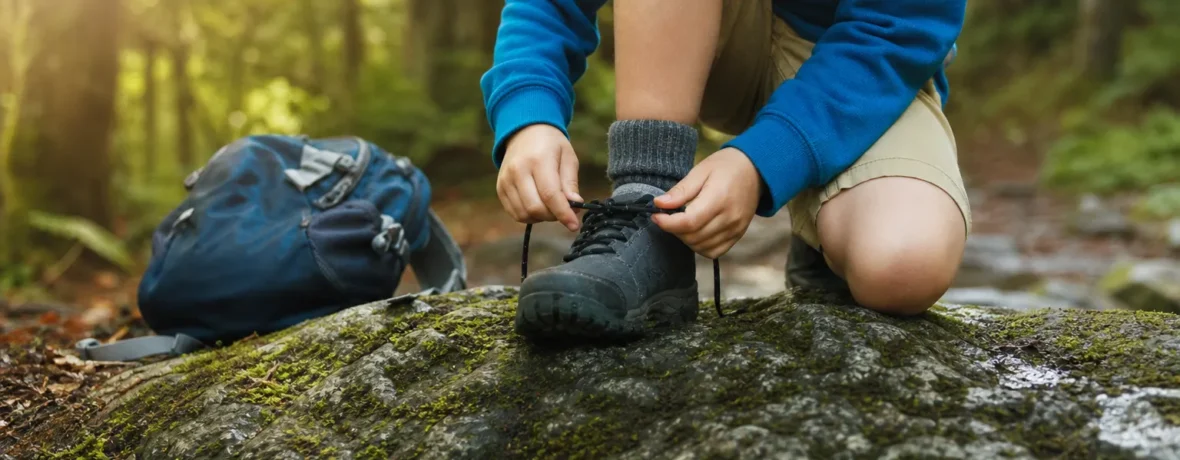
The best hiking shoes for kids are grippy, flexible, easy to fasten, and sized with one finger’s width of room at the toes. Our top overall pick is the Merrell Moab Speed 2 Low A/C Waterproof because it blends sneaker comfort, waterproof protection, real trail traction, and a simple kid-friendly closure.
We may earn a commission when you buy through links on this page.
Quick Picks
| Category | Model | Weight | Key feature |
|---|---|---|---|
| Best overall | Merrell Moab Speed 2 Low A/C Waterproof | 1 lb. 1 oz. per pair [482 g] | Waterproof hiker-sneaker with easy closure |
| Best wide toe box | KEEN Targhee IV Low Waterproof | 15 oz. per pair [425 g], little kids | Roomy forefoot and protective toe bumper |
| Best for fast kids | Salomon Speedcross | 6 oz. per shoe [180 g] | Aggressive grip and Quicklace closure |
| Best waterproof trail runner | Salomon XA Pro V8 Waterproof | 10 oz. per shoe [270 g] | Stable, waterproof, secure fit |
| Best budget pick | Columbia Redmond Waterproof | 7 oz. per shoe [198 g] | Simple waterproof hiking shoe |
| Best lightweight everyday hiker | adidas Terrex Trailmaker 2 | 6 oz. per shoe [171 g] | Sneaker feel with trail outsole |
| Best durable waterproof shoe | The North Face Fastpack Hiker Waterproof | 9.81 oz. per shoe [278 g] | Rockered midsole and DryVent membrane |
| Best classic lace-up | L.L.Bean Kids’ Trail Model Hikers | 1 lb. 11 oz. per pair [765 g] | Supportive lace-up fit and waterproof membrane |
What are the best hiking shoes for kids right now?
The best hiking shoes for kids are the Merrell Moab Speed 2 Low A/C Waterproof for most families.
It hits the sweet spot: not too stiff, not too flimsy, not hard for kids to put on, and not built like a scaled-down backpacking boot they will outgrow before the outsole wears down. The seam-sealed waterproof build helps on wet grass, shallow mud, and sloppy spring trails, while the rubber outsole gives more bite than a normal playground sneaker.
That said, your best pick depends on your kid’s foot shape and hiking style. A child with a wide forefoot may do better in the KEEN Targhee IV. A kid who runs every descent like a tiny mountain goat may prefer the Salomon Speedcross. A child who hates tying laces needs a bungee or alternative closure. Fit beats brand every time.
How we chose
We chose these shoes by comparing current product specs, materials, outsole design, closure systems, waterproofing, weight, size range, verified owner feedback, and expert retail reviews. This guide is research-based rather than a wear test.
The focus was practical: shoes kids can actually hike in, not miniature fashion boots. We prioritized models that are easy to buy in the U.S., come from established outdoor brands, and have enough structure for dirt trails without feeling like bricks on small feet.
We also weighed real kid problems: fast growth, picky fit, wet socks, untied laces, scuffed toes, and the hard truth that many young hikers spend half the day hopping on rocks instead of walking in a straight line.
Best kids hiking shoes: full reviews
Merrell Moab Speed 2 Low A/C Waterproof – Best for most kids
The Merrell Moab Speed 2 Low A/C Waterproof suits most young hikers because it feels more like a sneaker than a boot, yet still brings waterproofing, cushion, and better traction than everyday shoes.
- Price tier: mid-range
- Weight: 1 lb. 1 oz. per pair [482 g]
- Upper: synthetic and textile
- Waterproofing: seam-sealed waterproof construction
- Closure: alternative closure with hook-and-loop strap
This is the shoe to buy when you want one pair for weekend hikes, camp, muddy parks, and travel days. The alternative closure is the win here. Kids can snug it down without a trailside lace lesson, and parents can still adjust the fit quickly when socks change.
The cushioning is soft enough for all-day wear, while the outsole is grippier than a school sneaker. It is not a heavy-duty mountain boot, and that is the point. Most kids move better in flexible footwear.
- Pros: easy on and off; waterproof build; good cushioning; versatile for trail and daily wear.
- Cons: not as breathable as non-waterproof shoes; low cut offers limited ankle coverage; fit may feel average rather than roomy; hook-and-loop tabs can collect dirt.
Skip it if your child needs a very wide toe box or hikes mostly in hot, dry weather.
KEEN Targhee IV Low Waterproof – Best for wide feet
The KEEN Targhee IV Low Waterproof suits kids with wider feet because KEEN’s Original Fit leaves more room across the forefoot.
- Price tier: mid-range
- Weight: 7.51 oz. per shoe [213 g], little-kid version
- Upper: waterproof leather and performance mesh
- Waterproofing: KEEN.DRY membrane
- Closure: bungee lace with adjustable hook-and-loop strap
This is one of the safer picks when a child complains that shoes pinch the sides of their toes. The protective rubber toe bumper is also classic KEEN: chunky, useful, and ready for rock kicks.
The Targhee IV feels more protective than the lightest trail-runner-style shoes here. That makes it a strong choice for rocky paths, rooty woods, and kids who are hard on footwear. The tradeoff is bulk. Some children love that secure feel; others think it feels clunky.
- Pros: roomy forefoot; tough toe protection; waterproof membrane; stable feel on uneven ground.
- Cons: bulkier than Salomon or adidas; not ideal for narrow feet; leather needs more drying time; can feel warm in summer.
Skip it if your child has narrow heels or wants the lightest shoe possible.
Salomon Speedcross – Best for fast trail kids
The Salomon Speedcross suits kids who run, scramble, and move fast because it has deep lugs, a snug performance fit, and a quick-pull lace system.
- Price tier: mid-range
- Weight: 6 oz. per shoe [180 g]
- Upper: textile and synthetic
- Waterproofing: none in the standard model
- Closure: Quicklace
This is the lively pick. It feels more like a trail running shoe than a hiking shoe, which is perfect for active kids who hate stiff footwear. The outsole is built for grip on dirt, packed trail, and soft ground.
The Speedcross is not the best choice for pavement-heavy trips because the lugs are aggressive. It also has a more precise fit than KEEN, so wide-footed kids may feel squeezed. But for dry trails and high-energy hikers, it is hard to beat.
- Pros: very light; excellent grip; fast Quicklace closure; flexible and energetic.
- Cons: standard version is not waterproof; fit can run snug; deep lugs are less smooth on pavement; less toe protection than bulkier hikers.
Skip it if your child needs a wide fit or waterproof shoes for wet grass and mud.
Salomon XA Pro V8 Waterproof – Best waterproof trail runner
The Salomon XA Pro V8 Waterproof suits kids who need a secure, waterproof trail shoe with more stability than the Speedcross.
- Price tier: premium
- Weight: 10 oz. per shoe [270 g]
- Drop: 6 mm
- Waterproofing: Adv.DRY membrane
- Closure: Quicklace
Think of this as the more controlled Salomon. It still has a sporty feel, but it adds waterproof protection and a steadier platform for mixed terrain. The SensiFit-style upper hugs the foot, which helps on sidehill trails and uneven surfaces.
Because it is waterproof, it runs warmer than the non-waterproof Speedcross. The Quicklace system is convenient, but kids need to learn to tuck the lace away so it does not flop around.
- Pros: secure fit; waterproof membrane; grippy Contagrip outsole; good stability for a low shoe.
- Cons: premium tier; not very roomy; warmer in summer; Quicklace repair is less simple than replacing standard laces.
Skip it if your child wants soft, roomy, casual-shoe comfort over a locked-in trail feel.
Columbia Redmond Waterproof – Best budget waterproof shoe
The Columbia Redmond Waterproof suits families who want a simple, affordable waterproof hiker for occasional trail use.
- Price tier: budget
- Weight: 7 oz. per shoe [198 g], size 1
- Upper: suede, mesh, and webbing
- Waterproofing: waterproof-breathable construction
- Closure: lace-up
The Redmond is not flashy. Good. It is a straightforward hiking shoe with enough tread for park trails, nature preserves, and family day hikes. It works well for kids who do not need premium trail-runner fit or heavy boot support.
The lace-up design gives a better custom fit than many bungee systems, but younger kids may need help. It also lacks the plush, bouncy feel of the Merrell and adidas options.
- Pros: budget tier; waterproof build; light per-shoe weight; traditional lace fit.
- Cons: less cushioned than some picks; laces slow down younger kids; not as protective as KEEN; styling is more basic.
Skip it if your child refuses to tie laces or needs maximum toe protection.
adidas Terrex Trailmaker 2 – Best lightweight everyday hiker
The adidas Terrex Trailmaker 2 suits kids who want sneaker comfort with a trail-ready outsole.
- Price tier: mid-range
- Weight: 6 oz. per shoe [171 g]
- Midsole: EVA cushioning
- Outsole: Traxion rubber
- Closure: lace-up
This is a smart pick for dry trails, travel, camp, and kids who wear one pair from car to trail to pizza stop. The low weight is the headline. Less weight on small feet means less complaining when the hike stretches longer than planned.
The standard Trailmaker 2 is not the shoe for soaking-wet hikes. adidas also sells waterproof Terrex kids’ models, but the non-waterproof version is more breathable and often better for warm-weather hiking.
- Pros: very light; comfortable sneaker feel; good for everyday wear; flexible enough for active kids.
- Cons: standard version lacks waterproofing; lace-up closure takes practice; less rugged than KEEN; limited ankle coverage.
Skip it if your child regularly hikes through mud, wet grass, or cold rain.
The North Face Fastpack Hiker Waterproof – Best durable waterproof shoe
The North Face Fastpack Hiker Waterproof suits kids who need a tougher waterproof low shoe for wet trails and rougher use.
- Price tier: premium
- Weight: 9.81 oz. per shoe [278 g]
- Upper: recycled polyester mesh with PU-coated leather rand
- Waterproofing: DryVent membrane
- Closure: lace-up
The Fastpack Hiker has more structure than many sneaker-like kids’ hikers. The rand adds durability around the lower upper, and the waterproof membrane helps when the trail turns sloppy.
The slightly rockered midsole helps forward motion, which can feel smooth on longer walks. Still, this is one of the heavier low shoes here. For small or very weight-sensitive kids, the adidas or Salomon Speedcross may feel easier.
- Pros: durable rand; waterproof DryVent membrane; trail-capable rubber outsole; supportive feel.
- Cons: heavier than minimalist picks; lace-up only; premium tier; can feel warm in dry summer conditions.
Skip it if your child values light, flexible shoes above waterproof durability.
L.L.Bean Kids’ Trail Model Hikers – Best classic lace-up hiker
The L.L.Bean Kids’ Trail Model Hikers suit kids who do well in traditional lace-up hiking shoes and need a supportive, waterproof build.
- Price tier: mid-range
- Weight: 1 lb. 11 oz. per pair [765 g]
- Upper: breathable polyester mesh
- Waterproofing: TEK2.5 waterproof membrane
- Closure: lace-up
This is the old-school pick in a field full of trail sneakers. The lace-up fit works well for kids who need a snug heel and adjustable midfoot hold. It is also a good choice for families who prefer a sturdy, familiar hiking-shoe shape.
The downside is weight. At 1 lb. 11 oz. per pair [765 g], it is the heaviest shoe in this guide. For short hikes, that may not matter. For small kids or high-mileage days, it can.
- Pros: supportive lace-up fit; waterproof membrane; durable feel; good for cool, wet shoulder-season hikes.
- Cons: heaviest pair here; laces require tying; less nimble than trail-runner styles; may feel warm in summer.
Skip it if your child hates stiff or heavy shoes.
Are hiking shoes or kids hiking boots better?
Hiking shoes are better for most kids; kids hiking boots make sense for cold, wet, rocky, or longer hikes where extra coverage matters.
Low hiking shoes are lighter and easier to move in. That matters because kids rarely walk with adult efficiency. They jump, crouch, sprint, drag toes, and climb every trailside boulder. A lighter shoe usually means fewer complaints.
The best hiking boots for kids are useful when the trail is muddy, snowy, or covered in sharp rock. A mid-height boot also blocks more debris and can feel more secure with thicker socks. Just do not buy boots for “ankle support” alone. A heavy, stiff boot that fits poorly is worse than a flexible shoe that fits well.
| Choose | Best for | Tradeoff |
|---|---|---|
| Low hiking shoes | Day hikes, warm weather, dry trails, active kids | Less ankle coverage and debris protection |
| Mid hiking boots | Mud, cold weather, rocky trails, heavier socks | Heavier, warmer, slower to dry |
| Trail running shoes | Fast hikers, dry dirt, packed trail | Less protection and durability |
How do you choose hiking shoes for kids?
Start with fit, then match the shoe to the trail.
How should kids’ hiking shoes fit?
Kids’ hiking shoes should feel secure at the heel and midfoot, with one finger’s width of room in front of the longest toe.
That room matters because feet slide forward on descents. Too little space leads to jammed toes. Too much space lets the foot slam around inside the shoe, which can cause rubbing and blisters. The American Academy of Orthopaedic Surgeons shoe-fit guidance recommends matching shoes to foot shape and activity, and checking children’s shoe fit regularly as they grow.
- Have your child wear the socks they will hike in.
- Check fit late in the day, when feet are slightly larger.
- Press the toe box and look for one finger’s width of space.
- Have them walk uphill and downhill if the store has a ramp.
- Watch the heel. A little movement is normal; slipping is not.
- Ask one direct question: “Where does it feel tight?”
Should kids’ hiking shoes be waterproof?
Waterproof shoes are best for wet grass, mud, cold weather, and shoulder-season hikes.
They are not always best for summer. Waterproof membranes trap more heat, and once water gets over the collar, the shoe can dry slowly. For hot, dry trails, a breathable non-waterproof shoe can be more comfortable.
- Choose waterproof for: rain, mud, wet meadows, cool weather, camp mornings.
- Choose non-waterproof for: hot days, dry dirt, desert trails, splash-friendly creek hikes.
What outsole works best for kids?
A rubber outsole with real lugs works best for dirt, roots, and rock.
Flat sneaker soles slip sooner on loose gravel and muddy slopes. You do not need mountaineering-level tread, but you do want visible lugs, a grippy rubber compound, and some flex under the forefoot. Deep lugs, like those on the Salomon Speedcross, grip soft dirt well but feel less smooth on pavement.
Are bungee closures better than laces?
Bungee closures are better for younger kids; laces are better for fine-tuning fit.
If your child cannot tie shoes quickly and securely, pick bungee, hook-and-loop, or Quicklace. If your child has a narrow heel, high instep, or unusual foot shape, traditional laces may dial in the fit better.
How much toe protection do kids need?
Most kids need more toe protection than adults think.
Kids kick rocks, roots, curbs, camp chairs, and each other’s shoes. A rubber toe cap or rand can extend the life of the shoe and reduce stubbed-toe drama. KEEN is strongest here; Merrell and Salomon add lighter toe protection without as much bulk.
What socks should kids wear hiking?
Thin to midweight wool or synthetic socks work better than cotton.
Cotton holds moisture, which can soften skin and increase rubbing. A smooth hiking sock also helps fill tiny fit gaps without forcing you to size down. Bring a dry backup pair for wet days.
When to see a doctor
See a doctor if foot pain changes your child’s walking, if swelling follows a twist or fall, or if a blister looks infected.
Most shoe rubs are simple friction problems. Change socks, adjust fit, and stop early if hot spots appear. For blister care, follow medical guidance rather than trail myths: the Mayo Clinic blister first-aid guide says to seek medical care when signs of infection appear, including spreading redness, pus, warmth, or increasing pain.
If you notice repeated tripping, unusual shoe wear, persistent heel pain, or a gait change, ask a pediatrician or podiatrist. The American Podiatric Medical Association also advises paying close attention to fit and foot-health concerns as children grow.
How do you make kids’ hiking shoes last longer?
Clean them, dry them slowly, and stop using them when the fit is gone.
- Pull insoles after wet hikes so the inside dries faster.
- Brush off mud once it dries.
- Do not bake shoes near a heater or fire.
- Retie or reset closures before every hike.
- Check toe room every month during growth spurts.
- Retire shoes when lugs are smooth, uppers tear, or toes hit the front.
If you hike in tick country, footwear is part of the clothing system. The CDC tick-prevention guidance recommends treating boots, clothing, and gear with permethrin products and following label directions.
Comparison table
| Model | Best use | Waterproof? | Closure |
|---|---|---|---|
| Merrell Moab Speed 2 Low A/C Waterproof | Most families | Yes | Alternative closure |
| KEEN Targhee IV Low Waterproof | Wide feet and toe protection | Yes | Bungee and hook-and-loop |
| Salomon Speedcross | Fast dry-trail hiking | No | Quicklace |
| Salomon XA Pro V8 Waterproof | Waterproof trail-running feel | Yes | Quicklace |
| Columbia Redmond Waterproof | Budget waterproof hiking | Yes | Laces |
| adidas Terrex Trailmaker 2 | Lightweight everyday trail wear | No | Laces |
| The North Face Fastpack Hiker Waterproof | Durable wet-trail use | Yes | Laces |
| L.L.Bean Kids’ Trail Model Hikers | Classic supportive fit | Yes | Laces |
Related reading
- Hiking Shoes vs Hiking Boots: Which Should You Buy?
- Are Trail Running Shoes Good for Hiking? Pros, Cons and When to Switch
- Hiking Shoes vs Walking Shoes: Key Differences
- Can You Hike in Running Shoes? What Actually Changes on the Trail
FAQ
What are the best hiking shoes for kids overall?
The Merrell Moab Speed 2 Low A/C Waterproof is the best overall pick for most kids. It has waterproofing, trail traction, cushion, and an easy closure without feeling like a heavy boot.
Do kids need hiking boots or are sneakers fine?
Kids do not need boots for most short, dry day hikes. Sneakers are fine on smooth paths, but hiking shoes add better grip, toe protection, and wet-trail confidence.
How much room should kids have in hiking shoes?
Leave one finger’s width of space in front of the longest toe. That gives room for downhill movement without buying shoes so large that the foot slides around.
Are waterproof hiking shoes too hot for kids?
They can be hot in summer. Choose waterproof shoes for wet, cool, or muddy hikes; choose breathable non-waterproof shoes for hot and dry trails.
How often should you replace kids’ hiking shoes?
Replace them when your child’s toes reach the front, the heel slips badly, the outsole lugs smooth out, or the upper tears. During growth spurts, check fit monthly.
What is the best hiking shoe for kids with wide feet?
The KEEN Targhee IV Low Waterproof is the strongest pick here for wide feet. Its roomy forefoot gives toes more space than many snug trail-runner-style shoes.