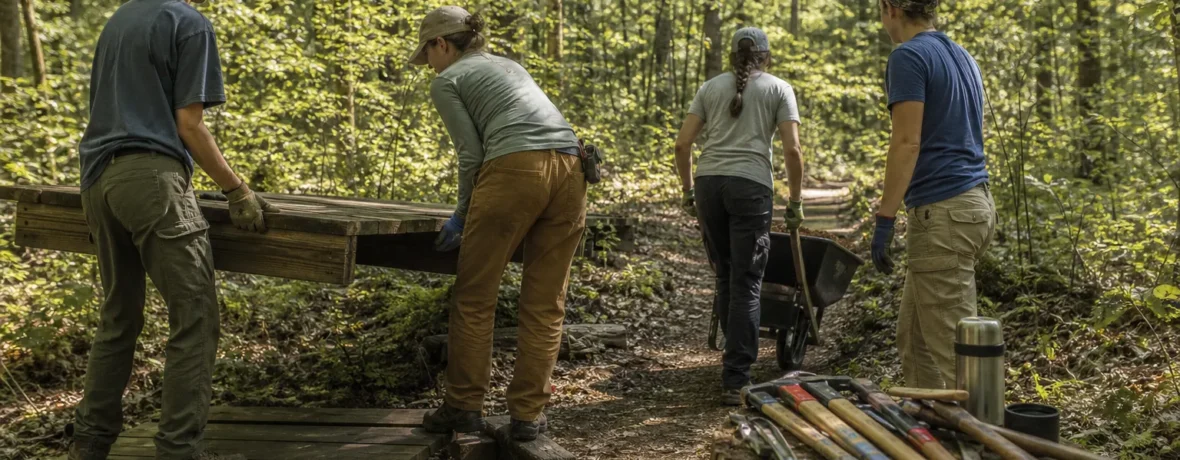
Yes, a volunteer vacation can be a real vacation if you want dirt, purpose, and sore shoulders instead of pool chairs. Expect structured trail work, shared lodging or camping, hand tools, early mornings, and free time. Choose one only if helping the place matters as much as seeing it.
What is a volunteer vacation?
A volunteer vacation is a trip where service is the point, not the side dish. In the hiking world, that usually means joining a crew to build, repair, drain, clear, or protect trails under the direction of a land manager or partner group.
That sounds less glamorous than a week of peak-bagging. Good. Glamour is overrated. Trails do not stay open because hikers love them in the abstract. They stay open because someone cuts the blowdowns, cleans the drains, hauls rock, resets tread, brushes back the corridor, and teaches water where to go before water teaches the trail a lesson.
The American Hiking Society Volunteer Vacations program describes these trips as trail building and maintenance projects, often in partnership with agencies and nonprofit hosts. The National Park Service Volunteers-In-Parks program also points hikers toward service opportunities in parks, including work that supports trails and visitor access. As of November 2026, the exact trip rules, paperwork, age limits, lodging, and physical expectations still vary by host site, so read the current listing before you commit.
Here is the column’s plain position: more hikers should take one of these trips before booking another “epic” getaway. Not every trip. Not every year. But at least once. If your boots have benefited from thousands of hours of unseen labor, spending several days paying that debt forward is not noble. It is fair.
Is a trail work vacation actually a vacation?
Yes, but it is the working-dog version of a vacation. You will sleep hard, eat hard, and find out that swinging a Pulaski for a day changes how you look at every step of trail.
A standard hiking trip lets you consume a landscape. A trail work trip asks you to participate in it. That difference matters. You stop treating the path like a product and start seeing it as a living piece of infrastructure. A rut becomes a drainage problem. A muddy braid becomes a design failure or a user-behavior problem. A rock step becomes a tiny argument with gravity.
That shift is the best souvenir you can bring home. After one day of clipping brush or shaping tread, you become harder to fool. You notice lazy switchback cuts. You understand why hikers are told to stay on trail. You see why wet shortcuts become permanent scars. You also gain some mercy for land managers, because the backlog is real in the most physical sense: dirt, stone, timber, water, weather, and human feet.
This is not a spa trip with a rake. It is still a trip. You travel somewhere interesting, meet people outside your regular circle, spend long hours outdoors, and earn the kind of tired that makes dinner taste better. The difference is that you leave the place better than you found it.
Who should sign up for volunteer trail work?
Sign up if you can follow direction, work safely, and care more about the crew than your own agenda. Trail work rewards steady people, not showboats.
You do not need to be the strongest hiker in your county. In fact, the strongest person can be the weakest crew member if they ignore instructions, rush with tools, or treat the week like a personal fitness challenge. Crews need patience. They need people who can listen to a crew leader, ask before doing something risky, and keep working after the novelty wears off.
A good fit looks like this:
- You can handle several hours outside in sun, rain, wind, bugs, or cold.
- You are willing to do repetitive tasks without sulking.
- You can camp or share basic lodging without needing luxury.
- You can respect agency rules, cultural sites, wildlife closures, and tool protocols.
- You can say, “I need a break,” before fatigue makes you careless.
A poor fit? Someone chasing free lodging, social media scenery, or bragging rights. The trail does not need your personal brand. It needs drainage.
How do you choose the right volunteer vacation?
Choose the trip by work type first, destination second. If you pick only by scenery, you may end up miserable in a beautiful place.
Use this simple process before you register:
- Read the work description twice. “Brushing,” “tread repair,” “rock work,” and “new construction” can feel very different by hour six.
- Check the lodging style. Frontcountry camping, bunkhouses, cabins, and backcountry camps each demand different gear and tolerance.
- Match the physical rating honestly. If the listing says strenuous, believe it. Pride is not a training plan.
- Confirm what is provided. Tools, helmets, gloves, meals, water, transportation, and sleeping arrangements vary by host.
- Ask one practical question before signing up. Good questions beat vague enthusiasm. Ask what a normal workday looks like, what footwear is required, or how far the crew walks to the worksite.
| Trip style | Best for | Think twice if |
|---|---|---|
| Weekend trail day | First-timers testing the waters | You want deep immersion |
| Weeklong frontcountry crew | Hikers who want structure and recovery time | You dislike shared camps or group meals |
| Backcountry trail crew | Fit hikers comfortable carrying gear | You have not camped away from facilities |
| Specialized rock, saw, or restoration work | Experienced volunteers seeking skills | You want casual, low-commitment service |
What should you pack for a trail work vacation?
Pack like a hiker who expects to get dirty, not like a tourist hoping to stay clean. The exact list comes from the host, but the mindset is simple: durable, safe, washable, and boring.
Start with boots or shoes that match the requirement. Many trail crews prefer sturdy boots because tools, rocks, roots, and uneven tread punish flimsy footwear. Bring work clothes that can be stained, torn, sweated through, and worn again. Cotton may feel fine in camp, but on wet or cold workdays, synthetic or wool layers often perform better.
A sensible checklist includes:
- Sturdy footwear approved by the trip host
- Work gloves, if not provided
- Long pants for brush, tools, sun, and ticks
- Sun hat, warm hat, and rain shell
- Daypack with water capacity for the full shift
- Lunch containers or snacks that can take abuse
- Personal first-aid basics and any personal medications
- Headlamp, camp shoes, and sleep system if camping
- Bug protection and tick-check routine
Do not bring fragile gear you love too much. Trail work has a way of finding weak seams, white fabrics, and expensive sunglasses. The best outfit is the one you can kneel in without flinching.
When to see a doctor
Get medical help fast for severe heat symptoms, concerning tick-bite symptoms, or injuries that do not behave like simple soreness. Trail work is physical labor, and pretending otherwise is how small problems become trip-ending problems.
For heat illness, follow the CDC guidance on heat-related illnesses: confusion, loss of consciousness, or signs of heat stroke call for emergency care. If heat symptoms get worse or do not ease after rest and cooling, stop working and seek medical help.
Ticks deserve the same practical respect. The CDC guidance after a tick bite says to see a doctor if a rash or fever develops in the days or weeks after removing a tick. Tell the clinician where you were, when the bite happened, and any symptoms you noticed.
For sprains and similar injuries, the Mayo Clinic guidance on sprains recommends medical care when pain, swelling, or function raises concern. On a crew, there is no medal for hiding an injury. Speak up early.
Is this better than a normal hiking trip?
For many hikers, yes, at least once. A trail work vacation gives you something a normal hiking trip rarely can: ownership without possession.
You do not own the land. You do not own the trail. But after you have spent hours clearing drains or hauling rock, you feel responsible in a cleaner way. You stop asking only, “What can this place give me?” and start asking, “What does this place need from me?”
That is the missing ingredient in too much outdoor recreation. The hiking economy sells escape, achievement, comfort, and gear. Trail work pushes back. It reminds you that access is built, maintained, negotiated, funded, permitted, staffed, and repaired. It asks you to trade a little leisure for stewardship.
And yes, you may lose some classic vacation perks. You may not sleep late. You may not hit every overlook. You may spend the prettiest afternoon moving rock instead of taking summit photos. Fine. The country has enough summit photos. It needs more people who know how to clear a drain.
The best argument for these trips is not guilt. Guilt burns out fast. The better argument is maturity. If you hike long enough, the question changes. It is no longer only where you want to go next. It is what kind of user you want to be when you get there.
Take the volunteer vacation. Not because it is virtuous content. Not because it makes you better than other hikers. Take it because trails are shared work, and at some point every serious hiker should stop being only a beneficiary.
Related reading
- How to Become a Search and Rescue Volunteer
- Volunteering With the Appalachian Trail Conservancy
- The People Who Build Trails: Inside Volunteer Path Work
- Type 2 Fun: Why Hard Hikes Feel Good Later
FAQ
Do you need trail work experience for a volunteer vacation?
No, many trips accept beginners. You do need to read the trip requirements carefully, follow the crew leader, and arrive ready to learn tool safety and trail basics.
Are volunteer vacations free?
Not always. Some programs charge registration or trip fees, while local agency volunteer days may be no-cost; as of November 2026, check the current host listing before assuming meals, lodging, tools, or transportation are included.
How hard is trail work?
Trail work can be physically hard even when the mileage is short. Swinging tools, carrying materials, bending, kneeling, and working in weather can feel tougher than a normal day hike.
Can families do trail work vacations?
Sometimes, but age rules vary by host, location, tool use, and project risk. Look for family-specific trips or ask the organizer before registering children or teens.
What is the best first volunteer trail trip?
A weekend or frontcountry project is the best first step for most hikers. You can learn the rhythm of crew work without committing to a remote backcountry week.
Will a volunteer vacation make me a better hiker?
Yes, if you pay attention. You will read tread, drainage, erosion, switchbacks, and user impact with sharper eyes after working on the trail yourself.