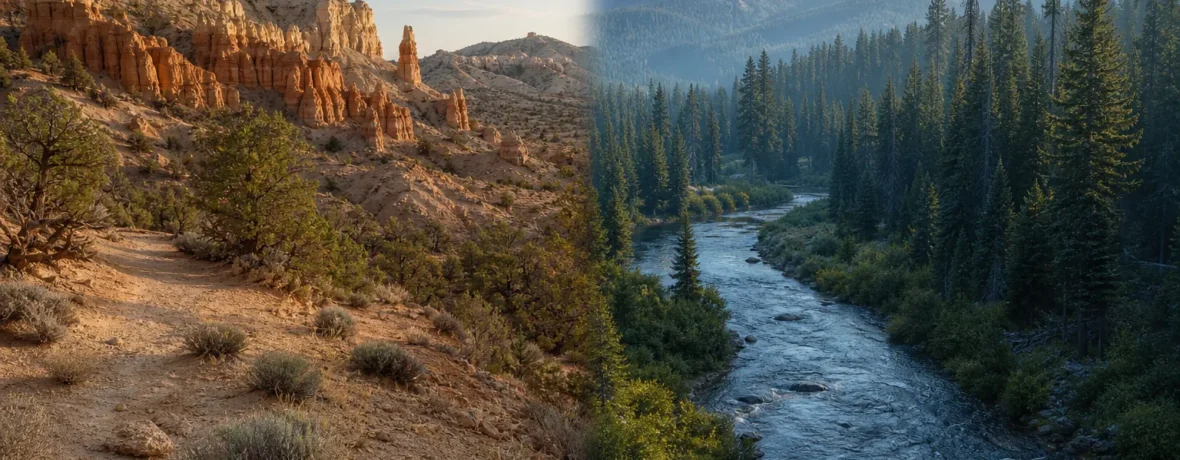
National monument vs national park: a national park is usually a larger, more varied landscape created by Congress; a national monument can protect one nationally significant feature and may be created by a president or Congress. As of November 2026, the National Park System has 434 areas, while “National Park” is only one title. (nps.gov)
What is the difference between a national monument vs national park?
The biggest difference is purpose and designation, not beauty. A national park generally protects a broad mix of natural and cultural resources across a large land or water area. A national monument usually protects at least one nationally significant resource, which might be a cliff dwelling, fossil bed, battlefield, volcanic cone, desert route, seascape, or cultural landscape. The National Park Service says a monument is usually smaller and less varied than a park, but “usually” is doing real work here. Some monuments are huge. Some parks are compact. The title gives you a clue, not the full story. The National Park Service designations guide lays out the basic criteria for parks, monuments, preserves, seashores, lakeshores, historic sites, and other names. (nps.gov)
| Question | National Park | National Monument |
|---|---|---|
| What does it usually protect? | A large, varied landscape or water area with multiple resources. | At least one nationally significant natural, cultural, historic, or scientific resource. |
| Who can create it? | Congress creates national parks by law. | A president can proclaim one on existing federal land under the Antiquities Act; Congress can also create one by law. |
| Who manages it? | Usually the National Park Service. | NPS, BLM, USFS, USFWS, NOAA, or another federal manager, depending on the monument. |
| What matters to hikers? | Often more visitor infrastructure, mapped trail systems, shuttle plans, and stricter crowd controls. | Often more varied management: from paved interpretive walks to rough desert tracks and dispersed camping. |
Who creates national parks and national monuments?
Congress creates national parks; presidents and Congress can create national monuments. That sentence does a lot of trail work. A national park needs an act of Congress. A national monument can be proclaimed by the president under the Antiquities Act of 1906 when the protected object sits on land owned or controlled by the federal government; Congress can also create monuments through legislation. NPS guidance on Antiquities Act monuments says proclamations typically describe the legal authority, establishment date, protected values, boundary, manager, and land area. (nps.gov)
That is why some places begin as monuments and later become parks. Protection can move faster through a presidential monument proclamation than through a park bill, then Congress may later change the name, boundary, or management rules. That name change does not magically add waterfalls, visitor centers, or parking spaces. It changes the legal designation. The land still has to be managed, staffed, restored, signed, and funded.
Are national monuments part of the National Park System?
Some are. Many are not. The National Park System includes national parks, national monuments, battlefields, military parks, historic sites, seashores, recreation areas, scenic rivers and trails, and more. As of November 2026, NPS says the system includes 434 areas covering more than 85 million acres [34.4 million ha] in every state, Washington, DC, and several U.S. territories. (nps.gov)
But “national monument” is not an NPS-only label. A monument can be managed by the Bureau of Land Management, U.S. Forest Service, U.S. Fish and Wildlife Service, NOAA, or multiple agencies at once. The NPS list of federal monument managers uses abbreviations such as BLM, FS, FWS, NPS, and NOAA, which tells you the practical truth: the word “monument” does not automatically tell you which rulebook you are walking into. (nps.gov)
Do national parks and national monuments have the same rules?
No, not always. If a national monument is managed by NPS, many baseline NPS rules apply. If it is managed by BLM or USFS, expect a different recreation style, different camping rules, and sometimes more room to roam. The land manager matters more than the sign at the entrance.
For NPS areas, the Code of Federal Regulations Title 36 sets system-wide rules, and each unit’s Superintendent’s Compendium adds park-specific closures, permit requirements, and use limits. That is where you find the local fine print on camping zones, bike access, pets, fires, climbing, canyoneering, commercial use, and seasonal closures. Great Basin National Park’s official laws page, for example, points visitors to Title 36 for NPS-wide rules and to the compendium for park-specific rules. (home.nps.gov)
For BLM monuments, rules often read more like public-land travel rules. At Mojave Trails National Monument, as of November 2026, BLM says dispersed camping is permitted on BLM lands within the monument except in named closed areas, with a 14-day maximum at one site before moving at least 25 miles [40 km]; campsites must also sit at least 0.25 miles [0.4 km] from wildlife water sources. That is a totally different feel from booking a marked campsite inside a busy national park. (blm.gov)
Can you hike in a national monument?
Yes, in many national monuments, hiking is one of the best reasons to go. You might get a paved path to a cliff dwelling, a signed canyon trail, a beach walk, a lava field route, or a faint desert track that demands a map, water discipline, and a sharp eye for landmarks.
Here is the catch: monument hiking can be less standardized than national park hiking. A famous national park may have trailhead signs, shuttle stops, restrooms, webcams, rangers, paper maps, and timed-entry alerts. A remote monument may have a dirt road, one kiosk, no water, and a road that turns ugly after rain. That does not make it worse. It makes it different.
Before you choose a monument hike, check:
- Managing agency: NPS, BLM, USFS, USFWS, NOAA, or joint management.
- Road access: paved, graded dirt, high-clearance, or 4WD.
- Trail type: maintained trail, route, wash, old road, beach, boardwalk, or cross-country travel.
- Water: available at the trailhead, seasonal only, or none.
- Heat and exposure: desert monuments can punish late starts.
- Cultural-site rules: stay out of closed rooms, do not touch rock imagery, and leave artifacts where they are.
- Fire rules: check the current fire restriction page for that unit or district before you light anything.
Do national monuments have entrance fees and permits?
Sometimes, but the name alone does not tell you. Some national parks charge an entrance fee. Some national monuments charge a fee. Many NPS sites are free. Some BLM monument areas have no entrance station at all but may charge for developed campgrounds, special recreation permits, river permits, guided commercial use, or reservation systems.
As of November 2026, NPS says most NPS-managed sites are free to visit, but fee-charging national parks require one pass: a standard pass, a park-specific annual pass, or an America the Beautiful pass. The resident America the Beautiful annual pass is $80, the non-resident annual pass is $250, and NPS lists senior, military, access, 4th Grade, and volunteer pass options. Check the official NPS entrance pass page before you budget a trip, because fees and reservation systems change. (home.nps.gov)
As of November 2026, NPS also lists a $100 nonresident fee at 11 named national parks for nonresidents age 16 and older, in addition to the regular entrance fee, unless admitted with the applicable annual pass. That list is park-specific and fee-specific; do not assume it applies to every monument, every park, or every federal site. (home.nps.gov)
Are dogs, drones, bikes, and camping treated differently?
Yes. Always check the specific unit page. This is where hikers get burned. You see open land on a map, pack the dog, bring the drone, roll up with a bike, and then hit a sign that says no, no, no, and also no.
- Dogs: In many NPS areas, pets are limited to roads, campgrounds, parking areas, and a short leash. NPS pet guidance says pets must be on a leash no longer than 6 feet [1.8 m] and waste must be packed out or properly trashed, but trail access varies by unit. (home.nps.gov)
- Drones: In NPS areas, recreational launching, landing, and operation of uncrewed aircraft is generally restricted unless the park allows it or issues a permit. NPS says the 2014 policy restricting drones remains in force with limited exceptions, and violations can carry a maximum penalty of six months in jail and a $5,000 fine. (nps.gov)
- Bikes: National parks may limit bikes to roads and designated trails. BLM monuments may allow bikes on many roads or trails, but wilderness areas remain off-limits to mechanized travel.
- Camping: NPS backcountry camping is often permit-based. BLM dispersed camping may be more flexible, but stay limits, water-source buffers, fire bans, and closed areas still apply.
- Campfires: Never trust last year’s rule. Fire restrictions can change during dry, windy, or high-risk periods.
Which is better for hiking: a national monument or a national park?
The better choice is the place that matches your route, season, and tolerance for logistics. National parks often win when you want classic scenery, developed trail systems, ranger info, shuttle options, and a clear planning page. National monuments often win when you want quieter trailheads, cultural depth, desert solitude, geologic weirdness, or a less packaged public-land feel.
Pick a national park if you want:
- Well-marked trail networks.
- More visitor services.
- Established campgrounds or lodging nearby.
- More predictable maps and signage.
- Big-name views with big-name crowds.
Pick a national monument if you want:
- A specific protected feature, such as ruins, fossils, lava, dunes, canyons, rock art, or historic routes.
- More self-reliant trip planning.
- Dispersed camping where allowed.
- Lower-key trailheads.
- A wilder feel close to roads, towns, or other public lands.
The smart move? Stop treating the title as a quality ranking. A “monument” is not a junior park. A “park” is not automatically harder, prettier, or more worth your gas money. Read the map. Read the rules. Then choose the hike.
How do you check the rules before you go?
Use the official unit page first, then confirm permits and closures. Search results, old blogs, and social posts can lag behind reality. For fees, permits, fires, pets, roads, and closures, work from the source.
- Find the official managing agency. Look for nps.gov, blm.gov, fs.usda.gov, fws.gov, or noaa.gov.
- Open the specific unit’s “Plan Your Visit” page. Do not rely on a national overview page for local rules.
- Check alerts and closures. Look for road washouts, wildfire closures, shuttle changes, construction, wildlife closures, and seasonal restrictions.
- Check fees and reservations. For NPS trips, start with the official NPS entrance pass page; for campgrounds and timed reservations, confirm through the unit page and Recreation.gov.
- Read the pet, drone, bike, and camping pages. These rules often decide the trip before the trail does.
- Download maps for offline use. Many monuments have weak or nonexistent cell service.
- Call the local office if anything looks vague. A five-minute call can save a five-hour mistake.
What does the designation mean for protection?
Both designations can protect land strongly, but the legal tools differ. National parks are created by Congress and managed under the laws and policies that apply to that park and the National Park System. National monuments created under the Antiquities Act protect specific “objects” of historic or scientific interest on federal land, and their proclamations or laws define what is being protected and who manages it.
Do not assume a monument is temporary or weak. Devils Tower, Muir Woods, Grand Canyon, Zion, Bryce Canyon, Petrified Forest, and other heavyweight places have monument history in their family tree. The monument tool has been used for quick protection, cultural preservation, scientific resources, and landscapes that later gained a different title. The name can change. The resource is the reason.
Bottom line for hikers
Read the sign, then read the rules. National park and national monument are legal designations, not difficulty ratings. A national park can have mellow boardwalks or brutal alpine passes. A national monument can have a 0.25-mile [0.4 km] interpretive trail or a desert route where you carry every ounce of water and make your own shade.
If you want the cleanest trip plan, start with three questions: Who manages it? What is allowed where I want to hike? What changed this season? Answer those, and the national monument vs national park debate gets simple fast.
Related reading
- National Park vs National Forest vs BLM Land
- National Park Pass Changes for 2026
- How Big Is Yellowstone National Park?
- Every Kid Outdoors: The Free 4th Grade National Park Pass
FAQ
Is a national monument lower status than a national park?
No. It is a different designation, not a lower grade. A monument may protect one nationally significant resource, while a park usually protects a larger and more varied landscape.
Can a national monument become a national park?
Yes. Congress can redesignate a monument as a national park or change its boundary, name, and management direction by law. Several well-known parks began with monument protection before receiving a park title.
Are national monuments free to enter?
Some are free, and some charge fees. The title does not decide the price. As of November 2026, NPS says most NPS sites are free, while some require entrance passes; BLM and USFS sites may have separate campground, day-use, or permit fees. (home.nps.gov)
Can I camp in a national monument?
Often, yes, but only where the managing agency allows it. Some NPS monuments require reservations or backcountry permits, while some BLM monuments allow dispersed camping with stay limits and resource buffers. Always check the monument’s official camping page before you drive in.
Are drones allowed in national monuments?
Not automatically. In NPS-managed areas, recreational drone launching, landing, and operation are generally restricted unless specifically allowed or permitted. For BLM, USFS, or other monuments, check that agency’s local rules and FAA airspace restrictions.
Which is better for a first-time visitor, a national park or national monument?
A national park is usually easier for a first-time planner. Parks often have more visitor infrastructure, clearer trail information, and more services. A national monument can be just as rewarding, but you may need stronger map skills, more self-sufficiency, and closer attention to local rules.