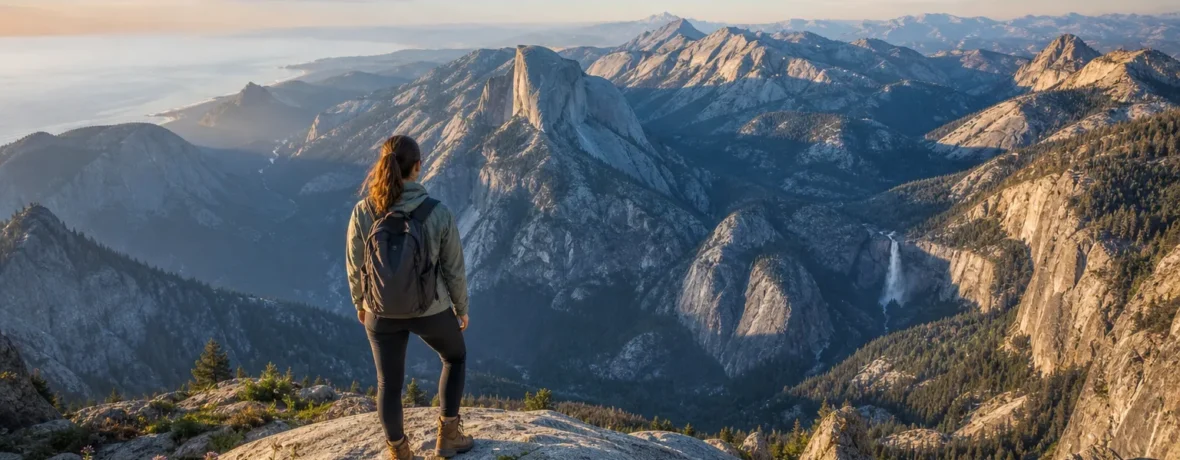
California has nine national parks: Channel Islands, Death Valley, Joshua Tree, Kings Canyon, Lassen Volcanic, Pinnacles, Redwood, Sequoia, and Yosemite. They cover ocean islands, deserts, volcanoes, redwood forests, granite valleys, and the southern Sierra’s giant Sequoia country.
Which California national parks are there?
California has nine national parks with the “National Park” designation. The National Park Service lists these parks on its official California park list, though Sequoia and Kings Canyon are managed together on one NPS site. (nps.gov)
| National park | Where it is | Best fit for hikers |
|---|---|---|
| Channel Islands | Off the Ventura coast | Boat-access island trails, cliffs, wild coastline |
| Death Valley | Eastern California and Nevada | Desert basins, Badlands, winter hiking |
| Joshua Tree | Southern California between I-10 and Highway 62 | Boulders, Joshua trees, desert sunsets |
| Kings Canyon | Southern Sierra Nevada | Deep canyon scenery, sequoias, Sierra backpacking |
| Lassen Volcanic | Northern California near Mineral | Volcanic peaks, fumaroles, lakes, summer trails |
| Pinnacles | Paicines, in California’s Central Coast range | Rock spires, talus caves, condor country |
| Redwood | Del Norte and Humboldt counties | Coast redwoods, foggy creeks, wild beaches |
| Sequoia | Southern Sierra Nevada | Giant sequoias, alpine climbs, big-tree trails |
| Yosemite | Sierra Nevada | Granite walls, waterfalls, classic day hikes |
What national park is in California for your trip style?
Pick the park by landscape first. California is too big for “just wing it” planning.
- For first-timers: Yosemite gives you the iconic granite-and-waterfall hit, but expect crowds in Yosemite Valley.
- For desert hiking: Joshua Tree is the easier weekend target from Los Angeles or San Diego; Death Valley is bigger, hotter, and more remote.
- For giant trees: Sequoia and Kings Canyon put you in the classic Sierra Sequoia groves. Redwood gives you the coastal redwood version: damp, green, and huge.
- For fewer people: Lassen Volcanic, Pinnacles, and Channel Islands usually feel less like a bucket-list stampede than Yosemite.
- For spring: Pinnacles and Joshua Tree can be excellent before serious heat hits. For summer, look higher: Yosemite high country, Lassen, Sequoia, and Kings Canyon.
How many national parks are in California, and are Sequoia and Kings Canyon separate?
There are nine, and yes, Sequoia and Kings Canyon are separate national parks. They are often discussed together because the NPS manages them jointly as Sequoia & Kings Canyon National Parks.
That matters when you are planning. One trip can easily include both parks, but don’t treat them like a single viewpoint stop. Roads are mountain roads. Trailheads are spread out. Snow can linger high in the Sierra long after the coast feels like summer.
Do California national parks require reservations, fees, or permits?
Sometimes. As of November 2026, entrance fees, passes, timed-entry rules, campground reservations, and wilderness permits vary by park and activity, so check your exact park before you drive.
For entrance passes, the NPS says the America the Beautiful resident annual pass is $80 and the non-resident annual pass is $250, as of November 2026. The same official NPS entrance passes page also says standard passes are for one park for 1–7 days, while America the Beautiful passes cover entrance fees and standard day-use fees at federal recreation sites. (nps.gov)
Yosemite is the one to watch. As of November 2026, the NPS says Yosemite will not use a timed reservation system in 2026, but the park will use traffic monitoring, parking management, and real-time visitor information on busy days; check the official Yosemite entrance reservations page before you go. (nps.gov)
Permits are a different beast. Wilderness camping, some popular hikes, cave access, boat transport, and campgrounds may need advance reservations or permits depending on the park. Treat Recreation.gov and the park’s own NPS pages as your source of truth, not a social post from last season.
What rules should you know before hiking in California national parks?
Know the food, pet, heat, and permit rules before you leave the trailhead. Rangers do not grade on vibes.
- Food storage: In Yosemite, as of November 2026, NPS rules require food and scented items to be stored properly; improper storage can lead to impoundment, a fine up to $5,000, or removal from a campsite or lodging area. Read the official Yosemite bears and food storage rules before camping or backpacking there. (nps.gov)
- Pets: As of November 2026, NPS hiking-with-pets guidance says to keep dogs on a 6 ft [1.8 m] leash and check each park for where pets can go. Many national park trails restrict pets, even when roads, campgrounds, or picnic areas allow them.
- Heat: Death Valley and Joshua Tree can turn a short walk into a serious risk fast. Start early, skip low-elevation desert hikes in extreme heat, and carry more water than you want to carry.
- Closures: Fire, snow, flooding, rockfall, road work, and storm damage can close roads and trails. Always check the park’s current conditions page the day before and the morning of your hike.
- Drones: Don’t assume you can fly one. National parks generally restrict drone use, and you should check the specific park’s current rules before packing one.
How do you plan a California national parks road trip?
Start with the season, not the map. A route that looks tidy on your phone can be miserable if it sends you into desert heat or over snowy Sierra roads.
- Pick your region. For one week, choose either the Sierra parks, the deserts, the coast/redwoods, or a Yosemite-plus-Sequoia loop. Don’t try all nine unless you have real time.
- Check each park’s current conditions. Look for road status, trail closures, weather, campground openings, and shuttle notices.
- Book sleeping first. Lodging and campgrounds near Yosemite, Sequoia, Joshua Tree, and the coast can disappear early.
- Build in slow miles. Mountain roads, ferry schedules, entrance lines, and photo stops chew up daylight.
- Pack for elevation swings. You can hit hot foothills and cold high country on the same trip. Bring layers, sun protection, traction when snow is possible, and a paper or offline map.
When to see a doctor
Call 911 right away if someone may have heat stroke, especially with confusion, slurred speech, fainting, seizure, or a very high body temperature. The CDC says heat stroke is a medical emergency, and its heat-related illness guidance also advises medical help for severe or worsening heat symptoms. (cdc.gov)
For heat exhaustion symptoms that get worse or do not improve after cooling down and drinking fluids, seek medical care. Don’t self-diagnose on the trail. Get out of the heat and get help.
Related reading
- National Park Pass Changes for 2026
- How Big Is Yellowstone National Park?
- Every Kid Outdoors: The Free 4th Grade National Park Pass
- How Big Is Yosemite National Park?
FAQ
What is the most famous national park in California?
Yosemite is the most famous California national park for many visitors. Its granite cliffs, waterfalls, giant sequoias, and long hiking history make it the park most people picture first.
What is the newest national park in California?
Pinnacles is California’s newest national park. It became a national park in 2013 after earlier protection as a national monument.
Which California national park is best for a weekend trip?
It depends on your starting point. From Los Angeles or San Diego, Joshua Tree is often the cleanest weekend play; from the Bay Area, Pinnacles or Yosemite can work if you plan around traffic and lodging.
Can you visit Sequoia and Kings Canyon in one trip?
Yes, you can visit both on one trip. They are managed together and connected by mountain roads, but give yourself enough time because viewpoints, groves, and trailheads are spread out.
Do you need a reservation for every California national park?
No, not for every park and not for every visit. As of November 2026, rules vary by park, season, road, campground, and activity, so check the official NPS page for your exact destination before you go.