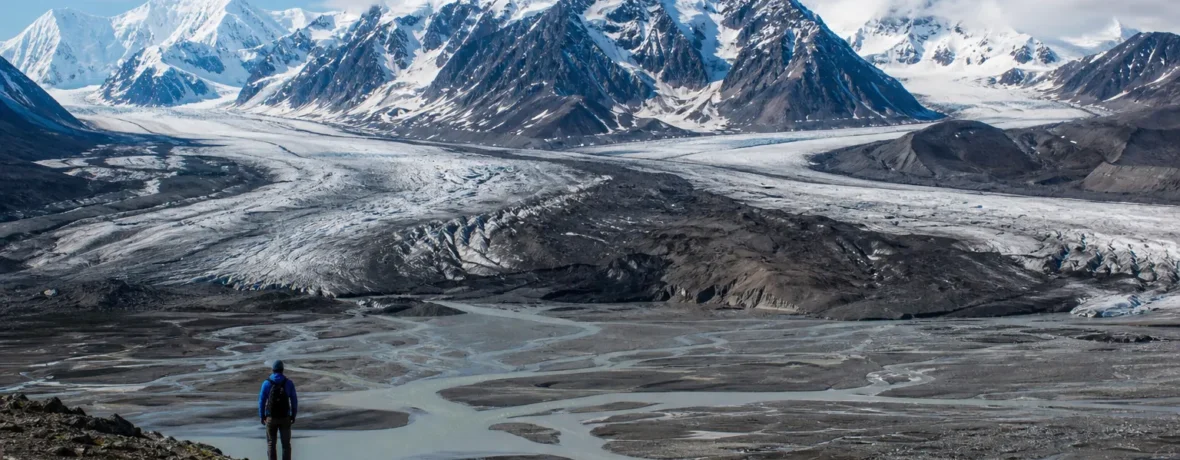
The largest is Wrangell-St. Elias National Park and Preserve in Alaska. The National Park Service lists it at 13.2 million acres (5.34 million ha). Count only the national park portion and it still ranks first: 8,323,146.48 acres (3.37 million ha), as of September 2026.
What is the largest national park by acreage?
Wrangell-St. Elias National Park and Preserve is the largest by acreage. The National Park Service FAQ names Wrangell-St. Elias in Alaska as the largest National Park Service site at 13.2 million acres (5.34 million ha), as of November 2026.
That number matters because Wrangell-St. Elias is both a national park and a national preserve. If you split the unit into its official pieces, the national park alone covers 8,323,146.48 acres (3,368,258 ha), based on the NPS Land Resources Division acreage reports, as of September 2026. That still puts it ahead of every other national park in the country.
The scale is hard to picture. The park rises from sea level on the Gulf of Alaska to 18,008 feet (5,489 m) on Mount St. Elias. NPS also says Wrangell-St. Elias has more than 3,000 glaciers covering more than 3 million acres (1.21 million ha), as of November 2026.
Is Wrangell-St. Elias the biggest national park in US rankings?
Yes. Wrangell-St. Elias is the biggest national park in US rankings whether you count the park-and-preserve unit or the national park portion by itself.
Here’s the clean comparison hikers usually want:
| Park | Size | Why it matters |
|---|---|---|
| Wrangell-St. Elias National Park and Preserve, Alaska | 13.2 million acres (5.34 million ha) | Largest NPS site and largest national park unit |
| Wrangell-St. Elias National Park only, Alaska | 8,323,146.48 acres (3,368,258 ha) | Largest national park when the preserve is not counted |
| Gates of the Arctic National Park, Alaska | 7,523,897.45 acres (3,044,816 ha) | Second-largest national park by park-only acreage |
| Death Valley National Park, California and Nevada | 3,408,374.95 acres (1,379,318 ha) | Largest national park in the Lower 48 |
Those acreages come from NPS acreage data, as of September 2026. If you’re planning a trivia-night answer, say “Wrangell-St. Elias.” If you’re writing a careful park-size comparison, say whether you mean the national park alone or the full national park and preserve.
Where is Wrangell-St. Elias National Park?
Wrangell-St. Elias is in south-central Alaska. Its main visitor center is near Copper Center on the Richardson Highway, roughly 200 miles (322 km) northeast of Anchorage and 250 miles (402 km) south of Fairbanks, according to the official NPS directions page, as of November 2026.
This is not a pull-up-to-the-rim kind of park. Services are spread out. The NPS says park services and facilities can be separated by as much as 260 miles (418 km). Two unpaved roads enter the park: Nabesna Road in the north and McCarthy Road toward the Kennecott/McCarthy area. Nabesna Road is 42 miles (68 km); McCarthy Road is 59 miles (95 km), as of November 2026.
There are no fuel options inside the park on those roads. Roll in with a full tank, a real spare tire, and a road plan that can bend when rain, snow, washboards, or stream crossings start calling the shots.
Can you drive into the largest national park?
Yes, but only into a small slice of it. You can drive the Nabesna Road or McCarthy Road, but most of Wrangell-St. Elias is backcountry, glacier, mountain, river, tundra, and wilderness.
The roads are part of the adventure, not just the commute. The NPS says both park-access roads are dirt or gravel and maintained by the State of Alaska, not by the National Park Service. Conditions can change fast after rain or snow. Rental car rules can also be a trip-killer, since many companies restrict travel on gravel roads.
If you want the simplest first visit, many travelers aim for one of these zones:
- Copper Center: Best for the main visitor center and a lower-commitment look at the park.
- Nabesna Road: Good for big scenery, roadside stops, and a wilder feel without going all the way to McCarthy.
- McCarthy and Kennecott: Best for the historic mining district, glacier views, and classic Wrangell-St. Elias trip energy.
- Yakutat coast: A different world of ocean, glaciers, and mountains, reached by air or boat rather than by road.
Do you need a permit to hike or camp in Wrangell-St. Elias?
No backcountry permit is required for ordinary hiking or backcountry camping. NPS says backcountry permits are not required to hike or camp in Wrangell-St. Elias, though restrictions apply to large groups, as of April 2025 on the park’s permits and reservations page.
Other activities can need paperwork. Commercial trips, special events, some subsistence uses, sport hunting and fishing, off-road vehicles, and certain cabin stays may involve permits, reservations, or separate rules. Don’t guess here. Check the official page before you commit money to flights, shuttles, cabins, or guides.
For a normal hiking trip, use this quick planning sequence:
- Pick one park zone: Copper Center, Nabesna, McCarthy/Kennecott, or Yakutat.
- Read the current NPS road and access notes for that zone.
- Confirm rental car rules before you book.
- Decide if you need a shuttle, air taxi, guide, or cabin reservation.
- Download offline maps and the NPS app before you lose service.
- Build extra weather days into the plan.
How much does it cost to enter Wrangell-St. Elias?
Wrangell-St. Elias does not charge an entrance fee. NPS lists it as a fee-free park, and there is no entry gate on Nabesna Road or McCarthy Road, as of May 2023 on the park’s fees and passes page.
Free entry does not mean a free trip. Parking, shuttles, ferries, air taxis, private campgrounds, private overnight parking, and some cabin reservations can still cost money. The park is also cashless for NPS transactions, as of May 2023, so bring a payment card and keep backup options ready for private businesses.
What should hikers know before visiting the largest national park?
Plan like you’re going somewhere remote, because you are. Wrangell-St. Elias is huge, lightly developed, and full of terrain that does not care about your schedule.
Your checklist should look like this:
- Paper map plus offline digital maps
- Full-size spare tire or a real tire plan
- Extra food for delays
- Rain gear and warm layers, even in summer
- Bear-aware food storage setup
- River-crossing judgment, not just strong legs
- Satellite communicator for backcountry routes
- Current road and weather checks before leaving pavement
The prize is space. Real space. Mountains, glaciers, old mining history, braided rivers, tundra, and long horizons. But the park rewards patience more than speed. Pick a region, slow down, and don’t try to “do” 13.2 million acres in one trip.
Related reading
- National Park Pass Changes for 2026
- How Big Is Yellowstone National Park?
- Every Kid Outdoors: The Free 4th Grade National Park Pass
- How Big Is Yosemite National Park?
FAQ
What is the largest national park in the United States?
Wrangell-St. Elias National Park and Preserve in Alaska is the largest national park in the United States. NPS lists it at 13.2 million acres (5.34 million ha), as of November 2026.
What is the largest national park in the Lower 48?
Death Valley National Park is the largest national park in the Lower 48. It spans California and Nevada and covers 3,408,374.95 acres (1,379,318 ha), according to NPS acreage data as of September 2026.
Is Yellowstone the largest national park?
No. Yellowstone is huge, but it is not the largest national park in the US. Wrangell-St. Elias is larger by several million acres.
Can you visit Wrangell-St. Elias without flying?
Yes, you can reach parts of Wrangell-St. Elias by road. The main road-access areas are along Nabesna Road and McCarthy Road, though the Yakutat coastal area is reached by air or boat.
Do you need reservations for Wrangell-St. Elias?
Not for standard backcountry hiking or camping. You may need reservations for certain public-use cabins, private lodging, shuttles, guided trips, or flights, so check the official NPS permit and reservation page before you go.
What is the best first stop in Wrangell-St. Elias?
The Copper Center visitor center is the easiest first stop for many travelers. It gives you current conditions, maps, ranger advice, and a reality check before you push deeper into the park.