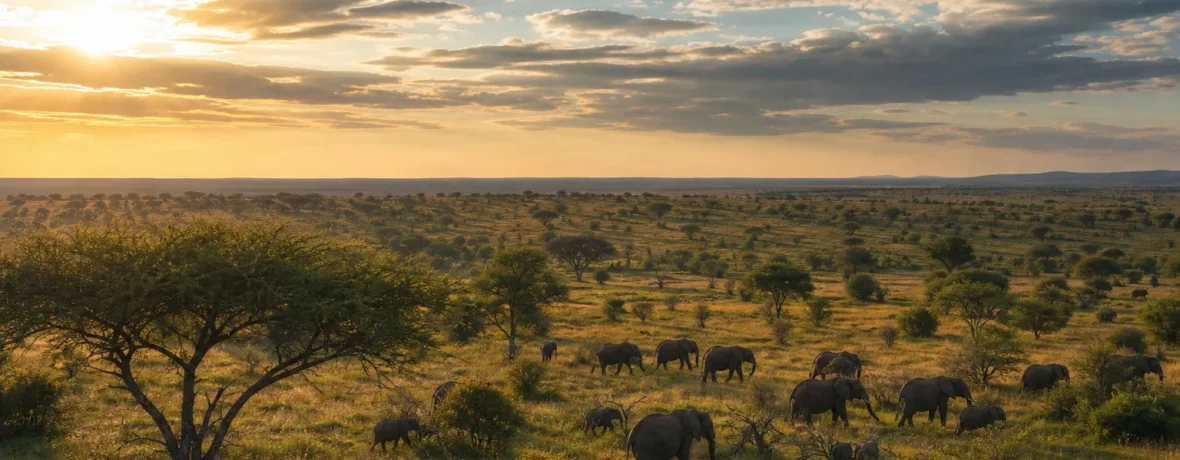
How big is Kruger National Park? The current SANParks management plan lists Kruger at 1,919,430 hectares: 4,743,015 acres, 19,194 square kilometers, or 7,411 square miles. That is not just “big.” It is a long, road-laced, wildlife-rich park that takes real planning to cross.
How big is Kruger National Park in miles, acres, and kilometers?
Kruger National Park is 7,411 square miles [19,194 square kilometers]. That figure comes from SANParks’ current 2018–2028 Kruger management plan, which lists the park’s total area as 1,919,430 hectares in the official SANParks management plan.
Here is the size broken down in plain numbers:
| Measurement | Kruger National Park size |
|---|---|
| Hectares | 1,919,430 ha |
| Acres | 4,743,015 acres |
| Square kilometers | 19,194 sq km |
| Square miles | 7,411 sq mi |
Those numbers matter because Kruger is not a compact park where you can knock off the highlights in one lazy loop. It stretches across South Africa’s northeast, bordering Mozambique to the east and Zimbabwe to the north, according to SANParks’ official park description and management documents.
On a map, Kruger looks like a long shield. On the ground, it feels even bigger. A drive that looks simple at breakfast can fill your whole day once you factor in gate times, gravel roads, animal crossings, photo stops, heat, and the hard truth that elephants do not care about your schedule.
How long and wide is Kruger National Park?
Kruger is roughly 217 miles [350 km] from north to south and averages about 37 miles [60 km] wide. SANParks describes this long, narrow shape in official Kruger conservation planning documents.
That north-south length is the number that catches first-time visitors. You do not “see Kruger” by entering one gate, driving for a few hours, and leaving. You see a slice. Maybe a very good slice. But still a slice.
The southern section around Crocodile Bridge, Malelane, Berg-en-Dal, Lower Sabie, and Skukuza is the easiest to fold into a short trip. It has more road options, more camps, and quicker access from Johannesburg-area routes. The central park opens into broad, classic savanna around Satara and Letaba. The far north, toward Punda Maria and Pafuri, feels wilder, quieter, and farther from everything.
That shape changes how you plan. If you only have two nights, stay in one region. If you have five or more, you can move camps and let the park unfold instead of spending every afternoon racing a closing gate.
Is Kruger bigger than Yellowstone?
Yes, Kruger is bigger than Yellowstone National Park by land area. Kruger covers about 4.74 million acres, while the National Park Service lists Yellowstone at 2,221,766 acres on its official park facts page.
That makes Kruger a little more than twice the size of Yellowstone. The comparison helps if you know U.S. parks: imagine a wildlife park larger than two Yellowstones, with public roads, fenced rest camps, picnic areas, fuel stops, and strict gate hours.
Here is the quick comparison:
| Park | Official area | What that means |
|---|---|---|
| Kruger National Park | 4,743,015 acres [1,919,430 ha] | Long multi-region safari park |
| Yellowstone National Park | 2,221,766 acres [899,116 ha] | Large U.S. mountain and geothermal park |
The bigger lesson: do not plan Kruger like a city attraction. Plan it like a landscape. Pick an area, slow down, and give yourself time to sit at waterholes, scan tree lines, and wait when the bush goes quiet.
How long does it take to drive across Kruger National Park?
A full north-to-south drive can take more than one long day, and most visitors should not try it in a single push. Kruger’s posted speed limits are 31 mph [50 km/h] on tar roads and 25 mph [40 km/h] on gravel roads, according to SANParks’ official visitor rules on the Kruger vital information page.
Those are maximum speeds. They are not realistic travel speeds if you stop for wildlife, dust, traffic at sightings, bathroom breaks, or lunch. A relaxed Kruger pace is slower. Much slower.
As of November 2026, SANParks also says visitors must remain in their vehicles unless they are in designated areas; must not drive off-road; must not feed or disturb animals; and must be inside camp or out of the park before gate closing times.
Use this simple planning rhythm:
- Pick your entrance gate based on your first camp, not on the shortest line from Johannesburg.
- Check the current official gate hours before you drive.
- Estimate travel time using a slow safari pace, not highway math.
- Add at least one hour for sightings and stops on short transfers.
- Plan to reach camp well before closing, not at the last minute.
The park is big enough that a “quick transfer” can become the best wildlife drive of your trip. It can also become stressful if you misjudge distance. Give yourself daylight. Kruger rewards patience.
How many gates does Kruger National Park have?
Kruger has nine entrance gates. As of November 2026, SANParks lists Crocodile Bridge, Malelane, Numbi, Orpen, Pafuri, Paul Kruger, Phabeni, Phalaborwa, and Punda Maria on the official Kruger entrance gates page.
The gate you choose shapes your whole first day. Southern gates work well for Lower Sabie, Skukuza, Berg-en-Dal, Pretoriuskop, and Crocodile Bridge. Orpen is useful for Satara and the central plains. Phalaborwa points you toward Letaba and Mopani. Punda Maria and Pafuri serve the far north.
Gate hours change by month. SANParks publishes entry and exit times and says visitors should confirm with the park before arrival because times may change. That is not a throwaway line. In a park this large, getting the gate time wrong can wreck your day.
What does Kruger’s size mean for hiking and walking?
Kruger is huge, but you cannot hike wherever you want. This is big-five country, and visitor movement is tightly controlled for safety and conservation.
For regular self-drive visitors, Kruger is mostly experienced by vehicle, from rest camps, at picnic sites, at viewpoints, and on SANParks-approved activities. Walking happens through official guided walks, wilderness trails, or designated areas—not by hopping out for a stroll beside the road.
That can feel odd if you are used to U.S. hiking trails. But Kruger is not a trail park in the usual sense. It is a protected wildlife system with lions, elephants, buffalo, rhinos, leopards, hippos, crocodiles, snakes, and a long list of animals that deserve space.
Pack like a hiker even when you are driving. Long days in Kruger still demand field sense:
- Binoculars for scanning shade, riverbanks, and distant plains
- Sun hat, sunglasses, and sunscreen
- More drinking water than you think you need
- Snacks for slow sightings and long gate-to-camp drives
- A paper map or downloaded map, not just cell service
- A headlamp or flashlight for walking inside camp after dark
- Patience—your best wildlife tool
Is Kruger part of an even bigger conservation area?
Yes, Kruger is part of the Great Limpopo Transfrontier Park system. SANParks says Great Limpopo links protected areas across South Africa, Mozambique, and Zimbabwe into a conservation area of about 35,000 square kilometers, with a broader transfrontier conservation area approaching 100,000 square kilometers on the official SANParks Great Limpopo page.
That means Kruger is not an isolated block of bush. It is the South African anchor of a much larger conservation vision, tied to Limpopo National Park in Mozambique and Gonarezhou National Park in Zimbabwe.
For visitors, the practical takeaway is simple: Kruger is big on its own, but the wildlife landscape does not stop at the fence line on a tourist map. Rivers, corridors, neighboring reserves, and transfrontier work all shape the wider ecosystem.
What should you know before visiting a park this big?
You should plan Kruger by region, gate, camp, and daylight. The park’s size is the whole trip-planning puzzle.
As of November 2026, SANParks lists daily conservation fees for Kruger on its official rates and entry fees page, with different rates for South African citizens and residents, SADC nationals, and international visitors. Fees change by tariff year, so check that official page before booking or budgeting.
Before you go, run through this quick checklist:
- Choose one Kruger region for short trips of one to three nights.
- Book camps before building your route.
- Match your entrance gate to your first camp.
- Check current gate hours for your travel month.
- Respect the speed limits and stay on marked roads.
- Keep every body part inside the vehicle outside designated areas.
- Do not feed animals. Ever.
- Build slack into every transfer day.
Kruger’s scale is the magic. It is also the trap. Try to conquer it and you will spend your trip staring at the clock. Treat it as a living landscape, and even one road between camp and a waterhole can feel enormous.
Related reading
- How Big Is Yellowstone National Park?
- How Big Is Yosemite National Park?
- Is Big Sur a National Park?
- How Big Is Glacier National Park?
FAQ
How big is Kruger National Park exactly?
Kruger National Park is listed by SANParks at 1,919,430 hectares. That converts to 4,743,015 acres, 19,194 square kilometers, or 7,411 square miles.
Can you see all of Kruger National Park in one day?
No, you cannot properly see all of Kruger in one day. The park is too long, speed limits are low, and wildlife viewing works best when you slow down rather than chase distance.
What is the best part of Kruger for a first visit?
The southern section is the easiest for many first-time visitors because it has several major gates, well-known camps, and dense road options. If you want quieter country and have more time, the central and northern sections can feel more remote.
Is Kruger bigger than some countries?
Yes, Kruger’s 7,411 square miles [19,194 sq km] make it larger than some small countries and territories. A more useful travel comparison is that it is a little more than twice the size of Yellowstone National Park.
Can you walk around Kruger National Park?
No, you cannot freely walk around Kruger. Visitors must stay in vehicles unless in designated areas, and walking is limited to approved places and guided activities under SANParks rules.
How many days do you need in Kruger?
Three nights gives you a solid first taste of one region. Five to seven nights lets you move between camps and feel the park’s scale without rushing every transfer.