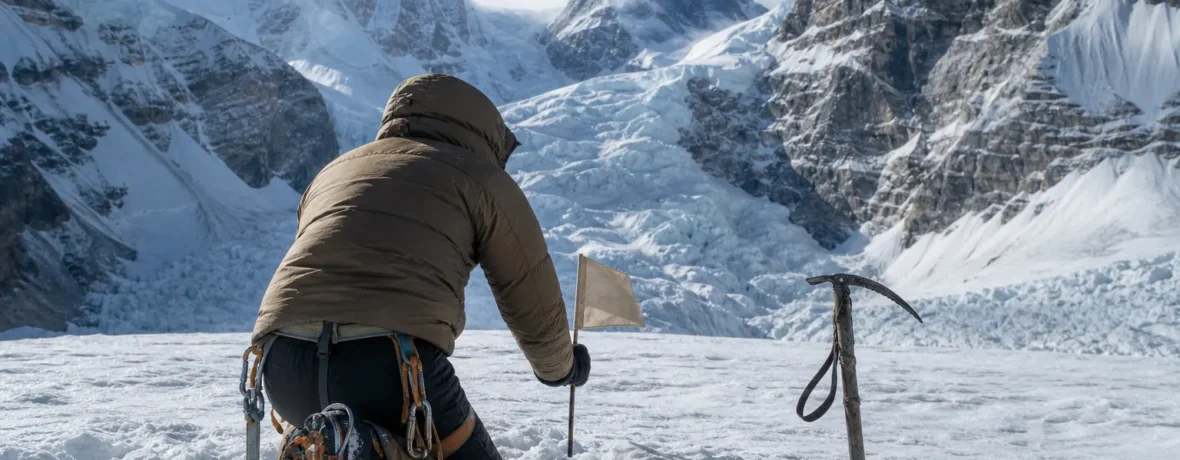
Junko Tabei was the first woman to climb Everest, reaching the summit on May 16, 1975, with Sherpa Ang Tsering. She was a 35-year-old Japanese mountaineer, a mother, and the climbing leader of a 15-member women’s expedition that survived an avalanche before pushing to 29,029 ft [8,848 m].
Who was the first woman to climb Everest?
Junko Tabei was the first woman to climb Everest. Born in Fukushima Prefecture, Japan, on September 22, 1939, she grew into a climber who refused to let custom, money, or thin air decide where she belonged.
Her first mountain experience came in fourth grade, when a teacher took her up Mount Nasu. That early spark turned into a life of serious climbing. After graduating from Showa Women’s University in 1962, Tabei joined mountain-climbing clubs, trained hard, and built the skill set that would eventually carry her into the Himalaya.
In 1969, she founded the Ladies Climbing Club: Japan. Its slogan was blunt and bold: “Let’s go on an overseas expedition by ourselves.” You can feel the punch in that line. This was Japan in the late 1960s, when many people still expected women to keep their ambitions low and close to home. Tabei aimed hers at the highest point on Earth.
Her official profile from the Junko Tabei Fund lists her as the sub-leader of the Japanese Women’s Everest Expedition and leader of its climbing party in 1975.
When did Junko Tabei summit Mount Everest?
Junko Tabei summited Mount Everest on May 16, 1975. The American Alpine Journal recorded the summit time as 12:30 p.m., with Tabei climbing alongside Sherpa Ang Tsering.
The expedition had set up Base Camp on March 16 at the foot of the Khumbu Icefall, then worked its way up the mountain through the classic South Col route. That means weeks of load carrying, fixing camps, waiting out weather, and living with the constant rumble of ice and avalanches.
According to the American Alpine Club’s expedition report, the 15-member Japanese Ladies Expedition was led by Eiko Hisano. Tabei, then 35, was also the mother of a 3-year-old child. That detail gets repeated for a reason: she was breaking more than a climbing record. She was breaking a narrow idea of what a mother, wife, and woman was “supposed” to do.
| Fact | Detail |
|---|---|
| Summit date | May 16, 1975 |
| Climbing partner | Sherpa Ang Tsering |
| Expedition | Japanese Women’s Everest Expedition |
| Route area | South Col and Southeast Ridge side of Everest |
What happened to Junko Tabei during the Everest avalanche?
An avalanche struck Camp II and nearly ended the expedition. On May 4, 1975, snow swept through camp, injuring seven Japanese climbers, including Tabei, and six Sherpas.
This is the part of the story you should carry into the hills with you. Big achievements often look clean from far away. Summit photo. Date. Record. Done. Up close, they are messy, cold, bruised, and full of decisions made when your body wants to quit.
The avalanche forced the team to scale back its summit plan. The original hope of putting three or four Japanese climbers on top had to change. Tabei recovered enough to keep climbing, and the team established Camp V on the South Col on May 13. A higher Camp VI was placed at 27,900 ft [8,504 m] the next day. Bad weather blocked a summit bid on May 15. On May 16, the window opened, and Tabei went.
How did Junko Tabei train and prepare for Everest?
She built years of mountain experience before Everest. Tabei did not appear at the foot of the Himalaya as a beginner with a lucky permit; she had climbed, organized, led, and learned how to suffer productively.
Her preparation was practical. She climbed in Japan, joined serious mountaineering groups, helped create a women’s club, and gained expedition experience before Everest. In 1970, she climbed Annapurna III in Nepal, a 24,787 ft [7,555 m] Himalayan peak listed in her mountaineering record by the Junko Tabei Fund.
If you’re looking for lessons you can use on your own hikes and climbs, don’t copy the altitude. Copy the structure.
- Start local. Tabei’s story began on a school climb, not on an 8,000-meter peak.
- Join people who take mountains seriously. Clubs gave her partners, standards, and training.
- Build skill before exposure. The higher the stakes, the less room you have for guesswork.
- Organize your own chances. When existing systems blocked women, Tabei helped build a new one.
- Keep going after setbacks. The avalanche did not become the end of her expedition.
Why does Junko Tabei’s Everest climb matter?
Her climb proved that women belonged on the sharp end of major expeditions. That sounds obvious now, but it was not obvious to many sponsors, climbers, and institutions in the 1970s.
Tabei and her teammates had to raise money, fight doubt, and push against the idea that high-altitude climbing was a man’s world. Some sponsors reportedly questioned why women would attempt Everest at all. The mountain itself was only half the battle.
Her ascent landed in 1975, the United Nations’ International Women’s Year, giving the climb a wider cultural charge. But don’t flatten her into a symbol only. She was also a skilled mountaineer who made hard calls in dangerous terrain. The record matters because the climbing mattered.
After Everest, she kept moving. Guinness World Records recognizes Tabei as the first woman to climb the Seven Summits, completing that milestone in 1992 when she reached Puncak Jaya. She also climbed the highest peaks of 76 countries by October 2016, according to her official profile.
What can hikers learn from Junko Tabei?
You can learn to think bigger without getting careless. Tabei’s life was not a poster that says “just believe.” It was a working plan built from training, partners, judgment, and grit.
For hikers, her story is useful because it cuts through the noise. You do not need Everest ambitions to learn from Everest history. You need the habit of preparing before the trail gets serious.
- Respect small beginnings. A local hill can start a lifelong mountain habit.
- Choose partners carefully. Strong teams matter when weather, fatigue, and fear show up.
- Expect setbacks. Avalanches, storms, funding problems, and social pressure all shaped Tabei’s route.
- Carry skill, not ego. Confidence without competence is dead weight.
- Leave the mountain better. Tabei later studied Himalayan waste issues and worked in mountain conservation.
How did Junko Tabei change mountaineering after Everest?
She kept climbing and kept pushing mountain culture forward. Tabei did not treat Everest as a finish line.
She wrote books, led climbs, supported environmental work, and spoke about the waste left by expeditions in the Himalaya. In 2000, she completed a master’s course at Kyushu University with research focused on garbage problems in the Himalayas. That matters. The same person who made history on Everest also cared about what climbers leave behind.
National Geographic described her as a climber who opened doors for women in the sport. That door is still being pushed wider by female alpinists, guides, Sherpa climbers, and everyday hikers who see mountains as a place where ability counts more than old expectations.
Related reading
- Tenzing Norgay and Edmund Hillary: The First Everest Summit
- The Oldest People to Climb Everest
- Can You Climb Everest Without a Sherpa?
- What Is a Wilderness First Responder?
FAQ
Who was the first woman to climb Mount Everest?
Junko Tabei of Japan was the first woman to climb Mount Everest. She reached the summit on May 16, 1975, with Sherpa Ang Tsering.
How old was Junko Tabei when she climbed Everest?
She was 35 years old when she summited Everest. She was also the mother of a 3-year-old child at the time of the expedition.
Did Junko Tabei climb the Seven Summits?
Yes. Junko Tabei became the first woman to climb the Seven Summits in 1992, with Guinness World Records recognizing her completion on Puncak Jaya on June 28, 1992.
What route did Junko Tabei climb on Everest?
She climbed from the Nepal side using the South Col route toward the Southeast Ridge. The expedition placed high camps above the Khumbu Icefall, including a camp at 27,900 ft [8,504 m].
When did Junko Tabei die?
Junko Tabei died on October 20, 2016, at age 77. Her legacy continues through her Everest record, Seven Summits achievement, books, and mountain conservation work.