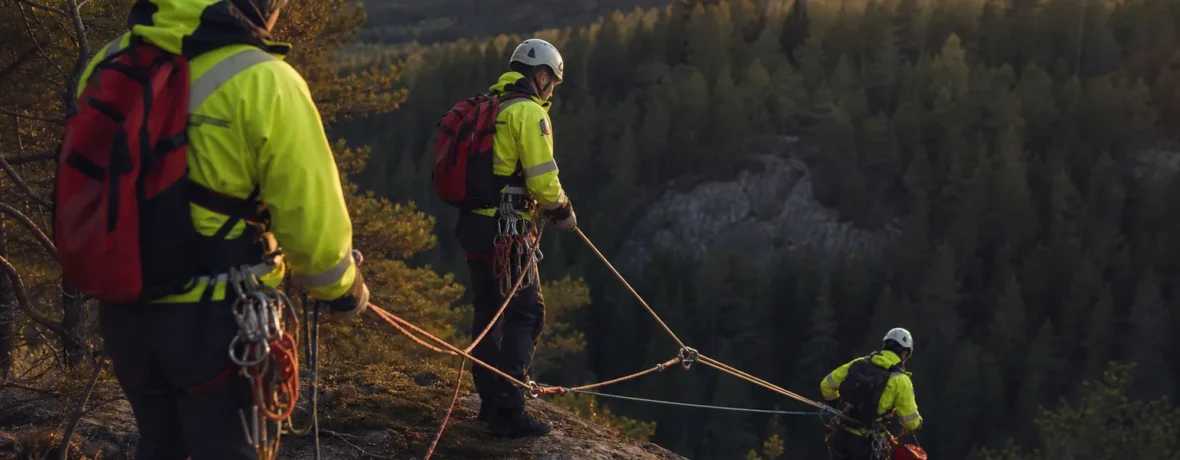
To become a search and rescue volunteer, apply to your local SAR team or sheriff’s office, pass screening, train in first aid, navigation, radio use, incident command, and field search, then respond when activated. Yes, hikers can qualify if they can commit regular training nights, carry a 24-hour pack, and work under command.
How do you become a search and rescue volunteer?
You join through a local team, not by freelancing into emergencies.
Search and rescue is organized work. The person in charge may be a sheriff’s office, police department, fire agency, emergency management office, national park, or nonprofit SAR team working under a public safety agency. Your job is to find the right doorway, show up prepared, and prove you can be trusted when a tired team is moving through rain, brush, darkness, and bad information.
- Find your local team. Search for your county name plus “search and rescue volunteer,” then check the sheriff’s office or emergency management page. If you live near public lands, look for mountain rescue, desert rescue, cave rescue, mounted SAR, K9 SAR, or urban SAR groups.
- Read the application rules. Teams may require residency in the response area, a driver’s license, background screening, regular meeting attendance, probationary membership, and a minimum age.
- Attend an orientation. This is where you learn the callout area, training calendar, expected response time, and the unglamorous jobs nobody shows on TV.
- Start with basic training. Expect map and compass work, GPS use, clue awareness, radio procedures, litter carries, patient packaging, knots, survival skills, and team movement.
- Get medical training. Wilderness First Aid is a common starting point. The American Red Cross says its Wilderness First Aid course is 16 hours and gives a 2-year certification, as of November 2026.
- Learn incident command. FEMA’s CERT introduction course is a 2-hour online course, as of November 2026, and many teams also use FEMA Incident Command System courses as part of onboarding.
- Pass the field check. You may need to show you can hike off trail with weight, stay calm, follow directions, and work safely in foul weather.
- Keep showing up. SAR teams remember reliability. The best candidate is not always the strongest hiker. It is the person who trains, listens, and returns next month.
What does a search and rescue volunteer do?
You help locate, reach, stabilize, and evacuate people who are lost, injured, missing, or stranded.
On one callout, you might walk a trail corridor looking for footprints, a dropped glove, or a candy wrapper. On another, you might carry a litter for hours over loose rock. Some searches are slow and quiet. Some are fast, cold, and messy. Many happen at night because that is when overdue hikers become overdue enough for someone to call 911.
Common SAR volunteer tasks include:
- Searching assigned trail segments, drainages, roads, campsites, and off-trail zones
- Calling out and listening for voice responses
- Using maps, GPS units, phone apps, and compass bearings
- Tracking clues and protecting evidence
- Operating radios with clear, brief messages
- Assisting with patient care under trained medical personnel
- Helping package a patient in a litter
- Carrying rescue gear, ropes, wheels, shelter, and team equipment
- Driving, staging, logistics, food, documentation, and planning support
- Teaching prevention: trip plans, Ten Essentials, heat safety, winter travel, and getting found
You are not there to be a hero. You are there to be useful. That means staying inside your assignment, reporting what you see, and not turning one rescue into two.
What qualifications do you need for search and rescue?
You need fitness, judgment, teamwork, and the right training for your team’s terrain.
You do not need to be a pro climber to start. You do need to be comfortable outside when comfort has left the building. A good hiking background helps: reading terrain, managing layers, moving on uneven ground, treating water, packing food, and staying calm when a route gets ugly. But SAR adds a hard rule hikers do not always practice: the mission comes before your personal pace, opinion, or summit fever.
| Skill area | Why it matters | How to build it |
|---|---|---|
| Backcountry fitness | You may hike for hours with a loaded pack, then help carry a patient. | Train with hills, stairs, uneven trails, and pack weight. |
| Navigation | Search assignments are built on maps, boundaries, and accurate location reports. | Practice map, compass, GPS, UTM, and route finding. |
| Medical basics | You may be first to reach an injured person. | Take CPR/AED and Wilderness First Aid, then refresh regularly. |
| Team discipline | Freelancing burns time and creates risk. | Train under command, use radios properly, and follow assignments. |
National certifications can help, but your local team decides what counts. The National Association for Search and Rescue describes its ground SAR education as using standards from DHS/FEMA, ASTM, NFPA, CSA, ANSI, ISO, and state SAR guidelines as a foundation, as of November 2026. That kind of training can strengthen your application, but it does not replace joining and training with the team that will actually call you.
How fit do you have to be for search and rescue?
You need to move safely for hours while carrying your own gear and sometimes team gear.
That does not mean every SAR member is built like an ultrarunner. Teams need field searchers, base operators, drivers, planners, radio handlers, drone pilots, fundraisers, mechanics, admin help, and public education volunteers. Still, if you want to be a field member, your body must be ready for bad footing and long waits. SAR has a strange rhythm: hurry up, stand still, hike hard, carry heavy, then sit in the cold while a plan changes.
A practical fitness target is simple: train to be useful at 2 a.m., not just strong at noon. Build toward hiking uphill with a loaded daypack, walking off trail without rushing, kneeling and standing repeatedly, and carrying awkward objects with a team. Strength matters. So do ankles, knees, lungs, patience, and snacks.
Your training should include:
- Steady hikes with a 20-30 lb [9-14 kg] pack, if your body tolerates it
- Hill repeats or stair climbs
- Leg and core strength work
- Balance on rocks, roots, sand, snow, or mud
- Cold-weather and hot-weather layering practice
- Night hiking with a headlamp
- Recovery days so you do not limp into training
Do not fake fitness. SAR has a way of finding the weak link, and sometimes the weak link is sleep, hydration, blisters, pride, or a pack that looked fine in the garage.
What gear do you need for search and rescue?
You need a dependable 24-hour pack before you need fancy rescue equipment.
Your team will tell you what is required. Follow that list. Personal systems vary by climate, but the baseline is the same: stay alive, stay locatable, protect yourself, communicate, and keep working without becoming another subject.
A starter SAR pack usually includes:
- Backpack large enough for layers, water, food, and team gear
- Map, compass, GPS or mapping app, and spare power
- Headlamp plus extra batteries
- Rain shell and insulation layer
- Gloves, warm hat, sun hat, and eye protection
- Water bottles or bladder, plus water treatment
- High-calorie food you can eat while moving
- First aid supplies approved by your team
- Emergency shelter, such as a bivy sack or tarp
- Knife or multitool
- Fire starter
- Whistle and signal mirror
- Notebook and pencil
- Bright clothing or reflective vest, if required
- Personal medications and blister care
Do not buy a rope rescue kit before you join. Do not show up with a tactical costume. Good boots, dry socks, working batteries, and the ability to find your grid boundary beat shiny gear every time.
How much time does search and rescue volunteering take?
It takes regular training time plus unpredictable callouts.
The exact load depends on the team. Some train weekly. Some train monthly. Some have probationary academies. Some require a minimum number of meetings, missions, and community events each year. Busy mountain counties may get frequent calls; rural teams may go quiet, then suddenly work several incidents close together.
The hard part is the timing. A callout may come during dinner, in the middle of a workday, right after you take your boots off, or at 11:47 p.m. in sleet. You may respond and get stood down before leaving the driveway. You may drive to base, wait two hours, and never deploy. That is still service.
Before applying, ask yourself:
- Can you attend training even when life is full?
- Can your family handle missed plans?
- Can your job tolerate occasional emergency absences?
- Can you stay patient during long staging periods?
- Can you afford basic personal gear and fuel?
- Can you take direction from someone younger, older, faster, slower, or less outdoorsy than you?
If the answer is yes, you may fit. If the answer is “only if every call is dramatic,” pick another volunteer path.
Can beginners join search and rescue?
Yes, beginners can join some teams if they are honest, trainable, and reliable.
Many teams would rather teach a humble beginner than re-train a reckless expert. Strong outdoor skills help, but attitude carries weight. You need to say, “I don’t know,” before your ignorance hurts someone. You need to ask where to stand, what to carry, and when to shut up on the radio.
If you are new, build your base before applying or while waiting for the next recruitment cycle:
- Take a map and compass class.
- Complete CPR/AED training.
- Take Wilderness First Aid.
- Learn your local trail systems, access roads, and weather patterns.
- Volunteer at races, trail work days, or outdoor stewardship events.
- Practice packing fast without forgetting essentials.
- Hike in rain, cold, wind, and darkness on safe, familiar routes.
There is one beginner mistake to avoid: self-deploying. Never head into an active search because you saw a social media post. Unassigned helpers can contaminate tracks, duplicate searched areas, block roads, and create confusion. Join the system first.
Is search and rescue volunteer work dangerous?
It can be dangerous, which is why training and command structure matter.
SAR volunteers work around cliffs, rivers, snow, heat, lightning, wildlife, traffic, unstable slopes, darkness, emotional families, and exhausted teammates. The risk is real. The answer is not bravado. The answer is planning, personal limits, proper equipment, and leaders who can say no.
Good teams use briefings, check-ins, assignments, maps, communications plans, safety officers, and debriefs. You may be told to stop at a boundary even if you think the subject is “just over there.” You may be pulled off a slope because conditions changed. You may be assigned to base when you wanted the field. That is not punishment. That is how people stay alive.
When to see a doctor
See a doctor before SAR training if you have health concerns that could affect hard exercise, heat, cold, altitude, or carrying weight.
SAR is not a place to discover that chest pain, fainting, uncontrolled asthma symptoms, severe allergies, or recurring knee instability “might be fine.” Get medical guidance before you train hard, and tell your team about limitations that affect safety. This is not weakness. It is how adults keep teammates out of trouble.
During training or a mission, seek urgent medical help for red flags. The CDC says heat stroke is a medical emergency and lists confusion, loss of consciousness, and a body temperature of 103°F [39.4°C] or higher among signs to watch for in its heat-related illness guidance. Mayo Clinic says to call 911 if you suspect hypothermia, which can involve shivering, slurred speech, weak pulse, clumsiness, drowsiness, confusion, or loss of consciousness in its hypothermia first aid guidance.
Do not diagnose yourself in the field. Stop, report symptoms, and let the team’s medical plan work.
What should you do before applying to a SAR team?
Prepare like a future teammate, not a fan.
Start local. Learn who runs SAR where you live. Read the team’s website twice. If they say applications open in spring, do not demand an exception in winter. If they require county residency, respect it. If they need admin help, consider that path. Base support can save field time, and field teams cannot function without logistics.
Before you apply, do these five things:
- Clean up your calendar. Training attendance matters.
- Build a basic outdoor kit. Reliable layers and lighting first.
- Take one medical class. CPR/AED is a clean first step; Wilderness First Aid is better for backcountry teams.
- Practice navigation without cell service. Batteries die. Screens break. Cold eats power.
- Write a plain application. Say what you can offer, where you live, when you are available, and what you are willing to learn.
If there is no SAR team near you, look at Community Emergency Response Team programs, emergency management volunteer units, amateur radio emergency service groups, trail ambassador programs, fire department auxiliaries, and park volunteer programs. FEMA states that to become a CERT volunteer, you must complete classroom training offered by a local government agency such as emergency management, fire, or police, as of November 2026.
Related reading
- How to Join Search and Rescue
- Who Pays for Search and Rescue?
- Volunteering With the Appalachian Trail Conservancy
- The People Who Build Trails: Inside Volunteer Path Work
FAQ
Do search and rescue volunteers get paid?
Most SAR volunteers are unpaid. Some agencies have paid rescue staff, but local backcountry SAR teams often rely on volunteers who donate training time, callout time, fuel, and personal gear.
Do I need medical certification to join search and rescue?
Usually you need at least basic first aid or must earn it soon after joining. Many backcountry teams prefer CPR/AED and Wilderness First Aid, while advanced medical roles may require EMT, paramedic, nurse, or physician credentials.
Can I bring my dog and join K9 search and rescue?
Only if a K9 team accepts you and your dog passes its process. K9 SAR takes years of steady training, and the handler usually learns SAR fundamentals before the dog becomes mission-ready.
What is the best age to start search and rescue?
The best age is when you can meet the team’s requirements and commit consistently. Some groups have youth or cadet programs, while others require adult members because of liability, driving, night operations, and field risk.
Can I volunteer for search and rescue if I work full time?
Yes, many SAR volunteers have full-time jobs. Be honest about your availability, because teams need people for training, night calls, weekend missions, logistics, and non-field support.
What is the fastest way to get accepted?
The fastest way is to be local, reliable, humble, fit enough for the role, and already working on first aid and navigation. Do not exaggerate your skills; teams can train gaps, but they cannot use ego.