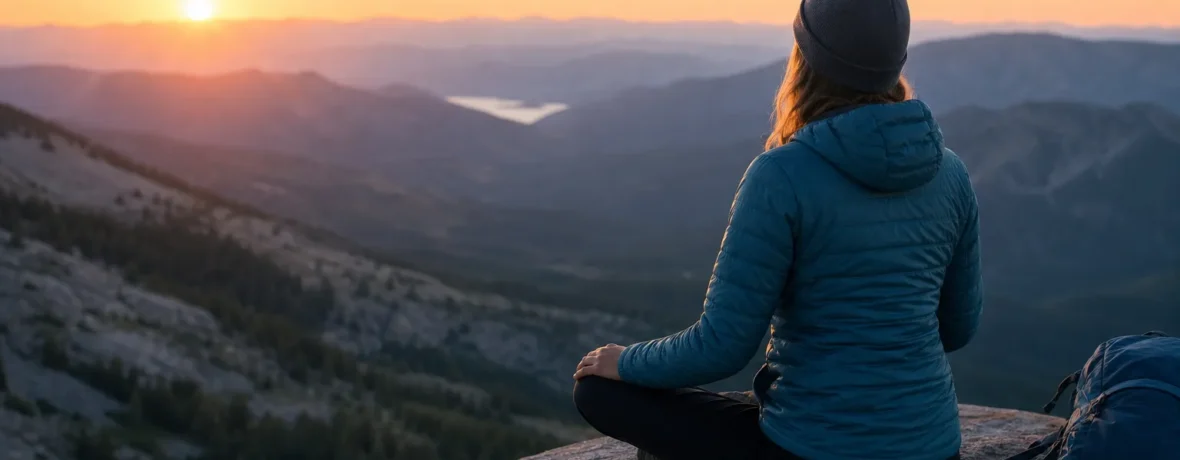
What is box breathing? It is a four-part breathing pattern: inhale for 4 seconds, hold for 4, exhale for 4, then hold for 4. Yes, it can help calm nerves and steady your pace on climbs, if you use it before hard effort or during controlled rests.
What is box breathing?
Box breathing is a slow, structured breathing drill with four equal sides.
You breathe in, pause, breathe out, and pause again for the same count. The classic version uses a 4-4-4-4 rhythm, which makes one full cycle 16 seconds. Picture tracing a square in your head: up one side on the inhale, across on the hold, down on the exhale, across on the final hold.
The NCBI Bookshelf overview of relaxation techniques describes box breathing as a stress-management breathing exercise that can be used before, during, or after stressful moments, and notes that the count can be shortened if 4 seconds feels too long.
For hikers, that flexibility matters. A mellow trailhead warm-up is not the same as grinding up a 20% grade with a loaded pack. The goal is not to win a breath-holding contest. The goal is control.
How do you do box breathing step by step?
Use a 4-count box when you are standing still, sitting, or walking easily.
- Stand or sit tall. Relax your jaw, drop your shoulders, and keep your chest open so your pack straps are not pinching your breathing.
- Inhale through your nose for 4 seconds. Let your ribs and belly expand instead of shrugging your shoulders upward.
- Hold for 4 seconds. Keep it gentle. No bracing, clenching, or face turning red.
- Exhale for 4 seconds. Use your nose or pursed lips. Make the exhale smooth, not forceful.
- Hold empty for 4 seconds. Stay relaxed through the pause.
- Repeat 3 to 5 cycles. That takes 48 to 80 seconds.
If 4 seconds feels strained, switch to 3-3-3-3 or 2-2-2-2. If you feel lightheaded, stop, breathe normally, sit down if needed, and reassess. Breathing drills should make you steadier, not woozy.
Can box breathing help on steep climbs?
Yes, but it works best during pauses, transitions, and low-intensity movement.
On a steep climb, your body needs more oxygen. If you are hiking hard enough that you can only speak one or two words, long breath holds can feel awful and may reduce your rhythm. Use box breathing before the climb starts, during a 60-second trailside reset, or while hiking a gentle approach.
Think of it as a pacing tool, not a turbo button. It helps you stop panic-breathing, loosen your grip on your trekking poles, and restart with a cleaner cadence.
| Trail moment | Best breathing choice | Why it works |
|---|---|---|
| Trailhead nerves | 4-4-4-4 box breathing | Simple rhythm settles your attention before you move. |
| Very steep uphill | Normal rhythmic breathing | Your muscles need steady airflow more than breath holds. |
| Short rest break | 3 to 5 box cycles | Helps you restart without rushing. |
| Exposed ridge anxiety | Shorter 2-2-2-2 box | Keeps the pattern manageable while you stay alert. |
When should you use box breathing on a hike?
Use it before stress spikes or during a safe stop.
Good moments include the parking lot, the base of a climb, a windy saddle, a crowded overlook, a tricky creek crossing, or the minute after you stumble and feel adrenaline hit. Step to the side of the trail first. Plant your feet. If the terrain is narrow, icy, loose, or exposed, focus on footing until you reach a safer place.
The CDC’s stress guidance includes deep breathing, stretching, meditation, time outdoors, sleep, movement, and connection with others as healthy ways to cope with stress. On trail, box breathing is one small tool in that bigger kit.
How does box breathing calm nerves?
It gives your mind a job and slows the stress spiral.
When you get rattled on trail, your breathing often gets short and high in the chest. Your thoughts speed up too. The next switchback looks impossible. The drop-off looks sharper. Your pack feels heavier. Box breathing pulls your attention into a count you can control.
That does not mean fear disappears. Good. Some fear keeps you sharp. But controlled breathing can turn the volume down enough for better decisions: eat a snack, add a layer, tighten a loose pole lock, shorten your stride, or turn around before you are cooked.
For exposed terrain, pair the count with your eyes. Look where your feet need to go. Breathe. Step. Pause if you need to. Nobody gets extra credit for rushing across a sketchy section.
What is the best breathing pattern for uphill hiking?
The best uphill pattern is the one you can keep without gasping.
For moderate climbs, try matching breath to steps. For example, inhale for 2 steps and exhale for 2 steps. On steeper grades, use 1 step in and 2 steps out, or breathe freely and focus on a longer exhale. If you are pushing so hard that every breath feels ragged, slow your feet before you try to control your lungs.
Use this quick checklist on climbs:
- Shorten your stride before your breathing falls apart.
- Keep your shoulders low, especially with a tight sternum strap.
- Exhale fully instead of stacking shallow inhales.
- Take 30- to 90-second standing breaks before you redline.
- Use box breathing only when you can do it without strain.
Can box breathing help with altitude?
Box breathing may calm anxiety at altitude, but it does not treat altitude illness.
This distinction matters. Feeling nervous on a high pass is one thing. Acute mountain sickness is another. MedlinePlus, from the National Library of Medicine, says acute mountain sickness can affect hikers, climbers, skiers, and travelers at high altitudes, usually above 8,000 feet [2,400 meters]. Symptoms can include headache, dizziness, fatigue, nausea or vomiting, rapid pulse, and shortness of breath with exertion; severe signs can include confusion, coughing blood, inability to walk straight, and shortness of breath at rest. Read the full MedlinePlus acute mountain sickness guide before high-altitude trips.
If altitude symptoms show up, do not try to “breathe through it” and keep climbing. Stop ascending. Descend when symptoms are serious, worsening, or not improving. Breathing drills are not a substitute for acclimatization, descent, oxygen, or medical care.
What mistakes should you avoid with box breathing?
Avoid forcing the holds, using it during hard effort, or treating it like medical care.
Common trail mistakes are easy to fix:
- Holding too long: If 4 seconds makes you tense, use 2 or 3 seconds.
- Doing it while scrambling: Keep your attention on handholds, footholds, and balance.
- Over-breathing first: Big dramatic inhales can make you feel lightheaded.
- Ignoring real symptoms: Chest pain, fainting, severe shortness of breath, and confusion need care, not counting.
- Waiting until panic peaks: Practice at home so the rhythm is familiar when the trail gets spicy.
How do you practice box breathing before a big hike?
Practice for 2 minutes at a time, several days before you need it.
Do not save the first attempt for a windy ledge. Train the skill when nothing is on the line: before bed, after a workout, in your car before a commute, or at the trailhead before you shoulder your pack.
Try this simple progression:
- Days 1-2: Sit still and do 5 cycles of 3-3-3-3.
- Days 3-4: Try 5 cycles of 4-4-4-4.
- Day 5: Walk slowly on flat ground while using 2-2-2-2.
- Day 6: Use 3 cycles at the base of a hill, then hike normally.
- Hike day: Use 3 to 5 cycles before stressful sections or during safe rests.
Keep it boring. Boring is good. Boring means it will be there when your nerves get loud.
When to see a doctor
Get medical help if breathing problems are severe, unusual, or tied to other warning signs.
Talk with a health care professional before demanding hikes if you have heart disease, lung disease, fainting episodes, panic attacks that limit activity, or a history of altitude illness. The NIH National Heart, Lung, and Blood Institute has patient resources on lung and heart health that can help you prepare better questions for your clinician.
On trail, seek urgent help for chest pain, blue or gray skin, confusion, coughing blood, severe breathing problems, fainting, or shortness of breath at rest. If altitude illness is possible, descend as safely as you can and call emergency services when symptoms are severe.
Related reading
- How Many Steps in a Mile (Walking vs Hiking)?
- What Is the Best Cardio for Hikers?
- What Is VO2 Max and Why It Matters for Hikers
- Calf Stretches for Hikers
FAQ
How many times should you repeat box breathing?
Repeat 3 to 5 cycles for a quick trail reset. That takes 48 to 80 seconds with a 4-count box, which is long enough to slow down without turning a break into a long stop.
Is box breathing safe while hiking?
Yes, for most people, if you use it gently and in safe places. Do not use breath holds while scrambling, crossing streams, hiking exposed edges, or pushing hard uphill.
Should you breathe through your nose or mouth?
Use your nose if it feels comfortable. If you are congested, climbing, or recovering from effort, exhaling through pursed lips or your mouth is fine.
Can box breathing stop a panic attack on trail?
It may help some people reduce panic symptoms, but it is not guaranteed treatment. If panic attacks are frequent, severe, or changing your hiking plans, talk with a qualified health professional.
What if box breathing makes me dizzy?
Stop right away and breathe normally. Sit or stand still, shorten the count next time, and skip the holds if dizziness returns.
Is box breathing better than normal deep breathing?
Not always. Box breathing is useful when you want structure, while normal slow breathing may feel better during exertion or recovery.