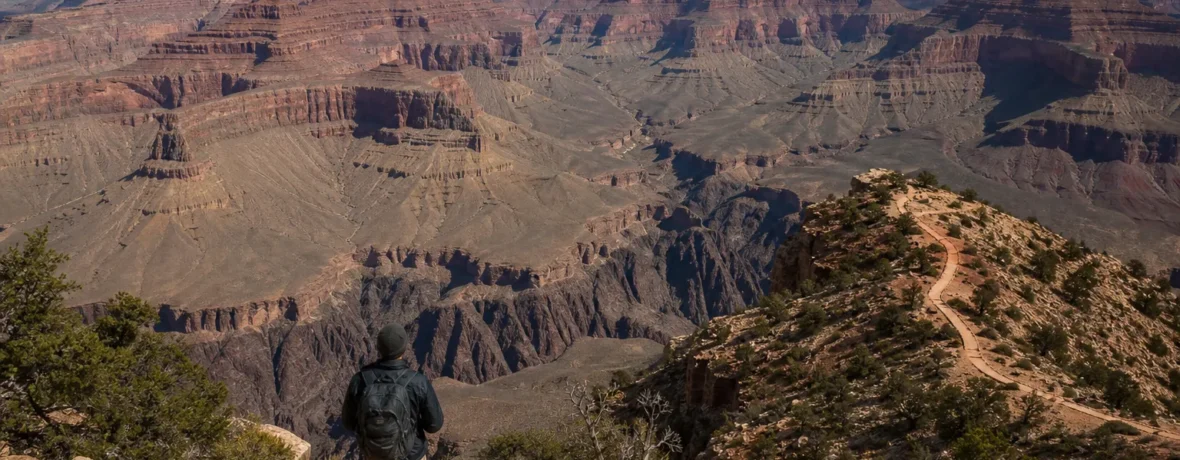
Yes. The South Rim is open 24 hours a day, 365 days a year. As of November 2026, the North Rim is open for limited day use through November 30, 2026, or until the first major snowstorm closes access.
Is the Grand Canyon Open Right Now?
Yes, but where you go matters. As of November 2026, the South Rim, including Grand Canyon Village and Desert View, is open year-round, and the National Park Service says it operates 24 hours a day, 365 days a year on its official Grand Canyon operating hours page.
The North Rim is different. It sits higher, gets harsher winter weather, and runs on a shorter season. As of November 2026, the North Rim is open for limited fall day use through November 30, 2026, or until the first major snowstorm, according to the official North Rim status page.
That does not mean every trail, lodge, campground, road, water spigot, or shuttle is running. Treat “open” as the starting line, not the whole plan.
Which Rim Should You Visit?
Most first-time visitors should choose the South Rim. It has the steadiest access, the biggest set of services, and the most reliable year-round trip options.
| Area | Best For | Season Reality |
|---|---|---|
| South Rim | First visits, viewpoints, year-round hiking, services | Open all year, 24/7, as of November 2026 |
| Desert View | Scenic drives, quieter viewpoints, east entrance access | Open year-round as part of the South Rim area |
| North Rim | Cooler temperatures, fewer crowds, high-country feel | Seasonal and weather-dependent; limited day use as of November 2026 |
If your calendar is flexible, spring and fall are the sweet spots for hiking from the South Rim. Summer brings brutal inner-canyon heat. Winter can be gorgeous, but ice on rim trails and snow on roads can change your day fast.
Are Grand Canyon Trails Open?
Some trails are open, and some major inner-canyon routes are closed. As of November 2026, NPS lists current trail access and closures on its official Key Hiking Messages page, which hikers should check before leaving the trailhead.
As of November 2026, NPS lists Bright Angel Trail from the Bright Angel Trailhead to the River Resthouse, Plateau Point Trail to Plateau Point, the River Trail between the River Resthouse and South Kaibab Trail, South Kaibab Trail from the South Kaibab Trailhead to the Black Bridge, and the Tonto Trail between the Tip-Off and Havasupai Gardens as open.
Also as of November 2026, NPS lists the North Kaibab Trail, Phantom Ranch, Bright Angel Campground, the Phantom Ranch Canteen, Phantom Ranch cabins, Black Bridge, and Silver Bridge as closed because of hazardous conditions after flash flooding.
Do not guess at closures. A closed trail is not a suggestion. In the Grand Canyon, a wrong turn can add thousands of vertical feet to your day.
Do You Need a Permit to Hike the Grand Canyon?
Not for a normal day hike. As of November 2026, NPS says a backcountry permit is not required for day hikes, including nighttime day hikes, but it is required for overnight camping outside developed campgrounds and for several other backcountry uses listed on the official Grand Canyon backcountry permit page.
That means you can day hike partway down Bright Angel Trail or South Kaibab Trail without a backcountry permit, if the trail section is open. But sleeping below the rim is a different game. You need the right permit, the right itinerary, and the legs to climb back out.
Use this simple decision path:
- If you are sightseeing from overlooks, you need park entry, not a hiking permit.
- If you are day hiking and returning the same day, check trail status and weather.
- If you are camping below the rim or outside developed campgrounds, apply for a backcountry permit.
- If your route touches tribal land, check the relevant tribal permit rules before you go.
When Is the Best Season to Visit the Grand Canyon?
Spring and fall are usually best for hiking. The rims can be cool while the inner canyon is warm, which gives you more margin than midsummer.
Summer can punish casual hikers. The rim may feel manageable, then the trail drops into a furnace. The climb out comes last, when your legs are tired and the sun is higher. Start early, turn around early, and remember that down is optional but up is mandatory.
Winter favors prepared visitors. The South Rim stays open, but snow, ice, shorter daylight, and cold wind can make rim walks and upper trail sections slick. Microspikes, warm layers, and a no-ego turnaround time belong in your pack.
What Should You Check Before You Go?
Check current conditions the same day you travel. Grand Canyon trips fail when people plan from old screenshots, old blogs, or last season’s memory.
- Current rim access and entrance status
- Trail closures and bridge closures
- Drinking water availability along your route
- Road conditions, especially for North Rim travel
- Shuttle schedules if you are hiking point-to-point
- Weather at the rim and inside the canyon
- Backcountry permit status if staying overnight
Download maps before you arrive. Cell service can be patchy, and batteries drain faster in cold weather and heat.
When to See a Doctor
Get medical help fast for severe heat symptoms, confusion, fainting, chest pain, trouble breathing, or symptoms that do not improve after cooling down and resting. The CDC’s heat and health guidance warns that heat illness can become dangerous quickly, especially during strenuous activity.
Do not try to “tough out” serious symptoms below the rim. Stop, get shade, cool the person, and call for help if symptoms are severe or worsening. The canyon is remote, and rescue can take time.
What Is the Smartest Way to Plan a Grand Canyon Hiking Day?
Build the day around the climb out. The Grand Canyon reverses normal mountain logic: you descend first, then earn every foot back to the rim.
- Pick the rim first: South Rim for reliability, North Rim only if current access and services fit your plan.
- Check the official NPS trail status page before choosing a route.
- Choose a turnaround point, not just a destination.
- Carry more water than you think you need, plus salty snacks.
- Start early and avoid climbing during peak heat.
- Turn around before you feel tired. That is not weakness. That is canyon sense.
Related reading
- Grand Canyon Entrance Fee and Passes
- Grand Canyon Backcountry Permits Explained
- Is Yosemite Open? Roads, Passes and Closures
- Is Yellowstone Open? Seasonal Roads and Entrances
FAQ
Is the South Rim of the Grand Canyon open all year?
Yes. As of November 2026, the South Rim is open 24 hours a day, 365 days a year, according to NPS. Some services may change by season, so check hours before you drive in.
Is the North Rim open in winter?
Usually no for standard visitor services. As of November 2026, the North Rim has limited fall day-use access through November 30, 2026, or until the first major snowstorm, but services are limited and weather can close access sooner.
Can you hike to Phantom Ranch right now?
No, not as of November 2026. NPS lists Phantom Ranch, Bright Angel Campground, the North Kaibab Trail, Black Bridge, and Silver Bridge as closed after flash flooding.
Do I need a permit for a Grand Canyon day hike?
No. As of November 2026, NPS says day hikes do not require a backcountry permit. Overnight backcountry camping does require one.
Can dogs hike in the Grand Canyon?
Not below the rim. Pets are generally limited to developed areas and above-rim trails where allowed, and they must be leashed; check current NPS pet rules before planning a hike with a dog.