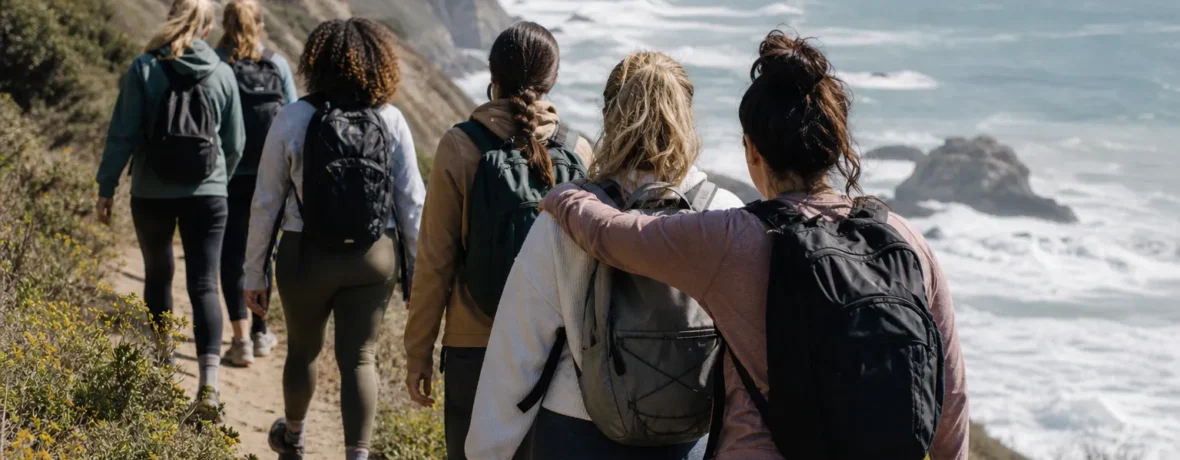
Women who hike need trail-tested gear, a safety plan, and people who make the outdoors easier to enter. Yes—start with a fitted pack, broken-in footwear, 2–3 liters [2–3 L] of water, the Ten Essentials, and a route you can finish before dark; add partners, classes, or local groups when confidence is still growing.
What gear do women hiking need first?
Start with fit, weather protection, water, food, and a way to handle the unexpected.
Gear does not need to be pink, tiny, or sold as “women’s” to work for you. It needs to fit your body, carry weight without rubbing raw spots, keep you warm when you stop moving, and help you make good decisions when the trail gets messy.
For most day hikes, build from the National Park Service Ten Essentials: navigation, sun protection, insulation, light, first aid, fire, repair supplies, nutrition, hydration, and emergency shelter. Then adjust for your route, season, and personal needs.
- Footwear: Choose trail runners, hiking shoes, or boots based on terrain and ankle comfort. Your toes should not slam the front on descents.
- Socks: Wear wool or synthetic socks. Cotton holds moisture and can turn a small rub into a blister.
- Pack: A 15–30 liter daypack works for many hikes. Look for hip belt comfort, shoulder strap shape, and enough room for layers.
- Layers: Pack a base layer, insulating layer, and rain shell when weather can shift. Cold wind at a viewpoint can surprise you fast.
- Water: Carry 2–3 liters [2–3 L] for a moderate day hike, more for heat, desert, altitude, or long climbs.
- Food: Bring salty snacks, quick carbs, and one extra item you would still want to eat when tired.
- Emergency basics: Headlamp, small first-aid kit, whistle, lighter, repair tape, and an emergency blanket belong in your pack.
Sports bras deserve their own line. A supportive bra that dries quickly can change the whole feel of a hike. Test it on stairs or a short walk before a long trail day. If seams bite during 20 minutes, they will not become friendly at mile 7 [11 km].
What should women wear hiking?
Wear clothes that move, dry fast, and protect your skin from sun, brush, cold, and bugs.
Skip the idea that there is one correct hiking outfit. Desert switchbacks, muddy Appalachian roots, alpine wind, and humid forest all ask for different clothes. The formula is simple: comfort while moving, protection while stopped, and no fabric that stays wet for hours.
| Condition | Best choice | Why it works |
|---|---|---|
| Hot sun | UPF shirt, brimmed hat, sunglasses | Reduces sun exposure without relying only on sunscreen |
| Cool or windy ridge | Fleece or light puffy plus rain shell | Traps heat and blocks wind during breaks |
| Wet trail | Rain shell, synthetic pants, wool socks | Dries faster and helps reduce chills |
| Buggy brush | Long sleeves, long pants, gaiters | Cuts down bites, scratches, and tick exposure |
Leggings can work beautifully on dry trails. For rough rock, thorns, or cool wind, hiking pants often win. Shorts are fine when the trail is clear, but carry a layer if the forecast swings or the route gains elevation.
For underwear, choose breathable synthetic or wool. Avoid thick seams under hip belts. If you menstruate, pack your preferred products plus a sealable bag for used items. Leave no trace means packing out everything, even products labeled biodegradable.
How can hiking women stay safe on the trail?
Use a route plan, stay aware, and make turnaround decisions early.
Safety is not fear. It is structure. When you know your route, your timing, your exit points, and your personal limits, you move with more freedom. That is true solo, with friends, or in a guided group.
- Pick the right trail. Check distance, elevation gain, surface, exposure, water crossings, and daylight. A 6-mile [9.7 km] hike with 2,000 feet [610 m] of gain is not the same as a flat 6-mile path.
- Tell one reliable person. Share the trailhead, route, start time, expected finish time, vehicle description, and when to call for help.
- Download offline maps. Bring a paper map or screenshot backup. Cell service is a bonus, not a plan.
- Check weather twice. Look the night before and again before leaving. Wind, lightning, heat, and flash flood risk matter as much as rain.
- Start earlier than feels necessary. Morning starts give you cooler temperatures, more daylight, and a bigger buffer for wrong turns.
- Set a turnaround time. Decide before you are tired. If you are not at the key point by that time, turn back.
- Trust discomfort. If a person, animal, storm, creek crossing, or slope feels wrong, change the plan. You do not owe the summit anything.
Solo hiking can be safe when your planning is tight and your route matches your skill. Choose popular trails first, carry communication tools where service is poor, and avoid posting your live location publicly. If someone asks too many questions, you can be vague. “My group is just ahead” is a complete sentence.
What should women carry for hygiene, periods, and bathroom breaks?
Carry a small hygiene kit that keeps you comfortable and keeps the trail clean.
Bathroom needs should never be the thing that keeps you home. A simple kit handles most day hikes: hand sanitizer, toilet paper or wipes, a sealable waste bag, a small trowel where digging cat holes is allowed, and menstrual products if needed.
- Pee cloth: A reusable antimicrobial pee cloth can reduce paper waste. Clip it outside your pack to dry.
- Period products: Tampons, pads, cups, discs, and period underwear can all work. Test at home before a big hike.
- Waste bags: Pack out used paper, wipes, and menstrual products. Double-bag if that makes you more comfortable.
- Hand hygiene: Use sanitizer after bathroom breaks and before eating.
- Privacy: Step well off trail, away from water, and behind cover when possible.
If you use a menstrual cup or disc, bring enough clean water for rinsing your hands, not just the product. If water is limited, wipes plus sanitizer can bridge the gap until you are back at the trailhead. Pack one extra product even if your timing seems predictable. Bodies love plot twists.
How do women handle health risks while hiking?
Prevent the common problems first: heat illness, cold stress, ticks, blisters, and altitude trouble.
Hot weather deserves respect. The CDC guidance for exercise in heat recommends limiting activity during the hottest part of the day when possible and paying attention to dehydration and heat-related illness. For hikers, that means starting early, slowing down, drinking regularly, eating salty snacks, and turning around before dizziness or confusion enters the picture.
Ticks are another small problem with serious potential. The CDC tick prevention guidance recommends using repellent, treating clothing and gear when appropriate, avoiding brushy edges, showering after being outdoors when possible, and doing a full tick check. On trail, walk near the center when vegetation crowds the path.
Cold can sneak in during rain, wind, injury, or a long stop. The Mayo Clinic hypothermia first-aid guidance says to handle a cold person gently, move them out of cold conditions, remove wet clothing, and warm the center of the body first while seeking medical care for concerning symptoms.
Altitude adds another layer. The CDC Yellow Book altitude guidance points to gradual ascent and extra caution for people with underlying medical conditions. If a hike climbs high enough that headache, nausea, unusual fatigue, or poor coordination appear, stop ascending and take symptoms seriously.
When to see a doctor
Get medical help when symptoms are severe, unusual, worsening, or linked to heat, cold, altitude, injury, or a bite.
This guide cannot diagnose you. Use it to spot red flags and make faster decisions. If someone has confusion, fainting, chest pain, trouble breathing, severe allergic symptoms, a head injury, signs of heat stroke, severe cold exposure, or symptoms that do not improve after rest and shelter, seek urgent medical care.
After a hike, contact a clinician if a tick bite is followed by fever, rash, joint pain, severe headache, or flu-like symptoms. Do the same for blisters that look infected, sprains that cannot bear weight, belly pain that persists, or menstrual symptoms that feel outside your normal pattern. If you have asthma, diabetes, heart disease, seizure history, severe allergies, pregnancy, or another medical condition, ask your clinician what to carry and when to turn around before your trip.
How do women find hiking groups and community?
Look for groups with clear plans, beginner-friendly pacing, and leaders who take safety seriously.
Community changes the trail. It gives you shared rides, borrowed knowledge, route ideas, accountability, and people who understand why you want to spend Saturday walking uphill with snacks. The best groups do not make you prove yourself. They tell you the pace, distance, elevation, required gear, meeting place, and bailout options before you show up.
- Local outdoor stores with event boards or group hikes
- County park programs and nature centers
- Meetup-style hiking groups with recent activity and clear rules
- Women-led outdoor clubs and affinity groups
- Trail maintenance days with land trusts or conservation groups
- Beginner backpacking clinics, map classes, and first-aid courses
Read the tone of the group before joining. Are beginners treated with patience? Are slower hikers given a sweep or buddy? Does the organizer cancel when weather turns dangerous? Are photos posted only with permission? Those details show the culture.
If you are nervous, message the leader before the hike. Ask the pace, expected finish time, bathroom situation, and what happens if someone needs to turn around. A solid leader will answer plainly. A dismissive answer is useful too—it tells you to pick another group.
What skills help beginner women hikers feel confident?
Learn pacing, map reading, layering, foot care, and decision-making before chasing harder trails.
Confidence grows through small wins. Choose a trail you can finish with energy left, then repeat with one new challenge: more distance, more elevation, colder weather, a simple creek crossing, or a solo morning on a familiar route.
- Pacing: Start slower than your excitement wants. If you can speak in short sentences, you are likely in a sustainable rhythm.
- Map checks: Stop at junctions, bends, creek crossings, and viewpoints. Match what you see to the map.
- Layering: Adjust before you are soaked in sweat or shivering. Small changes early work better than big fixes late.
- Foot care: Treat hot spots when they start. Tape, blister pads, and dry socks can save the day.
- Food timing: Eat before you feel empty. A steady trickle of calories beats a desperate snack binge at the overlook.
- Turning around: Practice it. A smart turnaround is not failure; it is trail judgment.
Hiking women often hear advice that centers fear. Better advice centers skill. Learn the basics, carry what you need, choose people who respect your pace, and keep expanding the edge of your comfort zone one trail at a time.
Related reading
- Hiking Essentials for Women
- Hiking Alone as a Woman: Practical Safety Tips
- Best Hiking Shoes for Women
- Best Hiking Boots for Women
FAQ
Is hiking alone safe for women?
Yes, solo hiking can be safe when the route, timing, gear, and communication plan match your skill. Start with familiar, well-used trails, share your plan with someone reliable, and avoid posting your live location.
What size pack is best for a women’s day hike?
A 15–30 liter pack fits many day hikes. Choose by comfort first: the hip belt should carry weight without bruising, and the shoulder straps should not cut into your neck or chest.
Are women’s hiking boots necessary?
No, women-specific boots are not required. Buy the footwear that fits your heel, arch, toe box, and terrain; some women fit men’s or unisex shoes better.
How much water should women carry hiking?
Carry 2–3 liters [2–3 L] for many moderate day hikes, then adjust for heat, altitude, effort, and water sources. In hot or dry places, carry more and plan where you can refill safely.
What is the best way to meet other women hikers?
Join beginner-friendly local hikes, outdoor classes, trail work days, and women-led groups with clear trip details. Choose groups that publish pace, mileage, elevation gain, gear needs, and safety expectations before the hike.