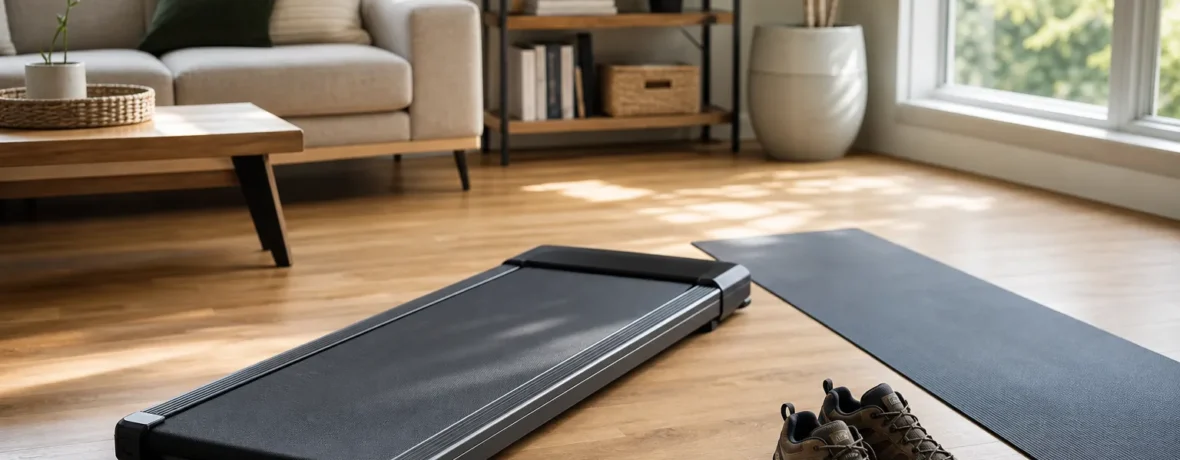
What is a walking pad? It’s a compact, low-profile treadmill built mainly for walking at home or under a standing desk, usually at slower speeds than a full treadmill. Yes, it can help hiking fitness if you use it consistently, add incline alternatives, strength work, and real trail time.
What is a walking pad?
A walking pad is a small treadmill designed for walking, not hard running.
Most models are slim enough to slide under a bed, couch, or desk. Some have folding rails. Some have no rails at all. The basic idea is simple: you can walk indoors while working, watching a show, listening to a podcast, or getting steps in when the weather is foul.
For hikers, that convenience is the point. A walking pad won’t turn your living room into the Grand Canyon. It won’t teach your ankles how to handle loose talus, roots, mud, sidehill trail, or creek crossings. But it can help you stack steady walking time during weeks when daylight, work, weather, or family life squeeze your trail schedule.
Think of it as a consistency tool. Not a mountain substitute.
Can a walking pad help hiking fitness?
Yes, a walking pad can help hiking fitness by improving your weekly walking volume.
Hiking fitness is not one magic trait. It’s a mix of aerobic endurance, leg strength, balance, joint tolerance, pack-carrying ability, and downhill durability. A walking pad mostly helps the first piece: time on feet.
The CDC recommends adults get at least 150 minutes of moderate-intensity aerobic activity each week, plus 2 days of muscle-strengthening activity. A walking pad can make those aerobic minutes easier to collect, especially if your alternative is sitting for hours.
Research on treadmill desks also supports the common-sense idea that slow walking beats sitting. A systematic review in BMC Public Health, available through NIH’s PubMed Central, found treadmill desk walking increased energy expenditure and reduced sitting time compared with conventional seated work.
For hiking, that can mean:
- Better comfort on long approach miles.
- Less shock when you jump from weekday inactivity to a Saturday hike.
- More low-intensity aerobic work without beating up your legs.
- An easier way to rebuild after a lazy stretch, travel week, or winter slump.
But flat walking is still flat walking. If your goal is a steep 10-mile [16 km] hike with 3,000 feet [914 m] of gain, you need hill work, stairs, step-ups, loaded carries, or incline treadmill sessions somewhere in the plan.
Is a walking pad worth it for hikers?
Is a walking pad worth it if it helps you walk more days per week.
That’s the clean answer. The best training tool is the one you use. A walking pad is worth considering if bad weather, long workdays, unsafe roads, childcare, or dark winter evenings regularly cut into your movement.
It is less useful if you already hike, walk, climb stairs, and strength train consistently. In that case, a walking pad may be nice, but not necessary.
| Training option | Best for | Hiking limit |
|---|---|---|
| Walking pad | Daily steps, easy aerobic work, desk walking | Usually flat, little balance challenge |
| Outdoor walk | Fresh air, varied surfaces, natural stride | Weather and daylight dependent |
| Stairs or step-ups | Climbing strength, lungs, uphill legs | Can get repetitive and tough on knees |
| Real hiking | Terrain skill, pack practice, downhill conditioning | Requires time, travel, and trail access |
The hikers who get the most from a walking pad are usually the ones who use it for easy, boring work. Thirty minutes here. Forty minutes there. A few short sessions on busy days. Those minutes add up without turning every workout into a production.
How do you use a walking pad for hiking training?
Use it for steady walking first, then build duration before chasing speed.
Start easier than your ego wants. A walking pad session should feel controlled. You should be able to speak in full sentences during most easy walks. The CDC says moderate-intensity activity counts toward weekly aerobic activity, and brisk walking is one common way to get there.
Here’s a simple way to build:
- Start with 15 to 20 minutes. Use a relaxed pace and focus on standing tall, landing softly, and keeping your stride natural.
- Add 5 minutes per session. Build until you can walk 40 to 60 minutes without hot spots, calf tightness, or cranky joints.
- Use short breaks. Two 20-minute walks can work just as well for consistency as one 40-minute block.
- Add hiking-specific strength. Pair walking pad days with step-ups, squats, lunges, calf raises, dead bugs, and side planks.
- Practice with a pack off the pad. Do loaded walks outdoors or on a regular treadmill with handrails nearby. A narrow walking pad plus a pack can feel awkward.
- Get outside weekly. Trails teach balance, foot placement, pacing, and downhill control in a way a belt cannot.
A sample hiking week could look like this:
- Monday: 30-minute easy walking pad session.
- Tuesday: Lower-body strength, 30 to 40 minutes.
- Wednesday: 45-minute walking pad session while listening to a podcast.
- Thursday: Step-ups or stairs, plus core work.
- Friday: 20-minute easy walk or rest.
- Saturday: Outdoor hike with hills, uneven terrain, and your usual daypack.
- Sunday: Gentle walk, mobility, or rest.
What muscles does a walking pad work?
A walking pad mostly works your calves, quads, hamstrings, glutes, hip stabilizers, and core at low intensity.
That sounds great. And it is useful. But the muscle demand is much lighter than climbing a rocky trail with a loaded pack. On flat ground, your glutes and calves do some work, but they do not get the same challenge they get from sustained uphill hiking.
Downhill hiking is another missing piece. Descents ask your quads to brake your body weight over and over. That eccentric load is why your legs can feel cooked after a big descent, even if your lungs felt fine on the climb. A walking pad does not prepare you well for that by itself.
To fill the gaps, add:
- Step-downs for downhill control.
- Step-ups for climbing strength.
- Calf raises for lower-leg endurance.
- Single-leg balance work for ankles and hips.
- Farmer carries or pack carries for trail-ready posture.
What are the downsides of a walking pad?
The main downsides are limited terrain, limited incline, smaller belts, and less stability than full treadmills.
Many walking pads are built for casual indoor use. That means shorter decks, lower max speeds, smaller motors, and fewer safety features than a gym treadmill. Some are quiet enough for apartment life; others are not. Some feel smooth; others feel cramped if you have a long stride.
Watch for these issues before buying:
- Belt size: A narrow or short belt can change your stride.
- Weight capacity: Choose a model rated for your body weight with margin.
- Speed range: Desk walking may be slow, but fitness walking needs enough speed to feel brisk.
- Noise: Motor hum and footfall matter in apartments and shared spaces.
- Storage: Measure your under-bed, closet, or couch clearance before ordering.
- Safety: No handrails can be risky if you’re distracted, tired, or new to treadmill walking.
Also, do not stare at your laptop the whole time and then blame the pad when your neck complains. Keep your screen high, shoulders relaxed, and hands light if you type while walking.
Can you lose weight with a walking pad?
A walking pad can support weight loss, but it does not cause weight loss by itself.
Body weight changes depend on total energy intake, total activity, sleep, stress, medical factors, and consistency. Walking can help because it adds movement without the recovery cost of hard workouts. That makes it easier to repeat.
Mayo Clinic describes walking as a low-impact activity with broad health benefits, including support for weight management and cardiovascular health. For hikers, the better target may be performance first: walking longer, climbing steadier, recovering faster, and feeling better after big days outside.
If weight loss is one of your goals, treat the walking pad as one tool. Pair it with meals that support your training, enough protein, strength work, and sleep that does not fall apart every week.
When to see a doctor
See a doctor before starting if you have a heart condition, chest pain, fainting, severe shortness of breath, a recent injury, or a chronic condition that affects exercise.
Walking is low impact, but “low impact” does not mean “zero risk.” Mayo Clinic advises checking with a healthcare professional before starting a walking program if you have a long-term condition or recent injury. That advice fits hiking training too, because trail goals can tempt you to ramp up too fast.
Stop exercising and get medical help if you develop chest pressure, unusual shortness of breath, dizziness, fainting, or pain that changes your gait. For joint pain, persistent swelling, numbness, or symptoms that keep returning, get evaluated rather than pushing through.
This article is training information, not a diagnosis or treatment plan.
How should you choose a walking pad for hiking fitness?
Choose a walking pad that fits your stride, space, body weight, and real training habits.
Do not buy only for the smallest footprint. Tiny is nice until your feet keep drifting to the side rails. For hiking fitness, comfort and repeat use matter more than flashy app features.
Use this checklist:
- The belt is long enough for your natural walking stride.
- The motor is designed for the session length you plan to use.
- The weight rating gives you a safety margin.
- The controls are easy to reach.
- The deck feels stable at brisk walking speed.
- The unit stores where you actually planned to store it.
- The return policy gives you time to test it indoors.
If possible, try walking on a similar belt size before buying. Your stride will tell you more in 2 minutes than a product page will tell you in 20.
Related reading
- How Many Calories Does Walking Burn vs Hiking?
- Is Walking Cardio? How Much Counts
- Does Walking Build Muscle?
- Does Incline Walking Burn Fat?
FAQ
Is a walking pad the same as a treadmill?
No, a walking pad is usually smaller, lighter, slower, and simpler than a full treadmill. A treadmill is often better for running, incline training, and longer hard workouts.
Can you train for a hike only on a walking pad?
No, not well. A walking pad can build walking consistency, but you still need hills, strength work, uneven terrain, and pack practice for real hiking fitness.
How fast should you walk on a walking pad?
Walk at a pace you can control without shortening your stride or drifting on the belt. For desk work, slower is usually better; for fitness walking, use a brisk pace that still lets you speak in sentences.
Should you wear hiking shoes on a walking pad?
Usually, clean athletic shoes are better indoors. Hiking shoes can be stiff, dirty, and loud, though wearing your trail shoes for short, clean sessions may help you check fit or break-in comfort.
Can a walking pad replace hill training?
No, a flat walking pad cannot replace hill training. Add stairs, step-ups, outdoor climbs, or an incline treadmill if your hiking goal includes serious elevation gain.
How often should hikers use a walking pad?
Use it 2 to 5 days per week if it helps you reach your weekly walking goals without soreness. Keep most sessions easy, then save harder work for hills, strength training, or actual trails.