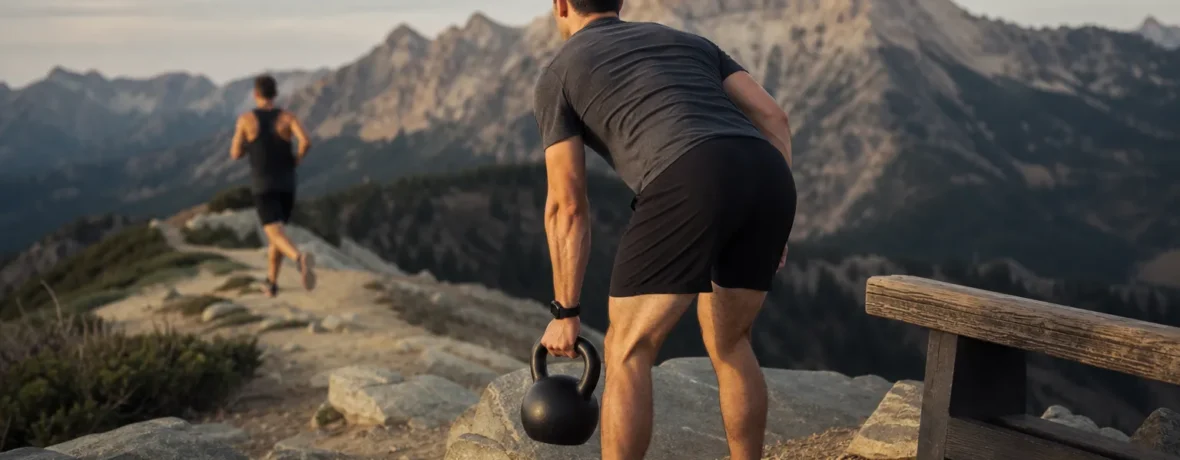
No, not if you plan it well. Smart cardio—20 to 45 minutes, 2 to 4 days per week—does not erase muscle. Gains suffer when cardio crushes recovery, replaces lifting, or leaves you underfed after hard climbs, runs, or weighted hikes.
Does cardio kill gains?
No, cardio only gets in the way when the dose is wrong.
If your goal is stronger legs, a steadier engine, and better climbing power, cardio belongs in the plan. Hiking is cardio with a backpack, uneven ground, heat, cold, stairs, mud, and ego checks. You need lungs and legs. You also need muscle.
The problem starts when every session turns into a sufferfest. Hard intervals on Monday, heavy squats on Tuesday, a fast 8-mile [12.9-km] hike on Wednesday, then deadlifts on Thursday? That is not grit. That is recovery debt.
The CDC adult activity guidelines call for at least 150 minutes of moderate-intensity aerobic activity per week plus 2 days of muscle-strengthening work. For hikers who want muscle, that is a floor, not a command to jog daily until your legs feel like rope.
Does cardio burn muscle?
No, not when you lift, eat enough, and recover.
Your body does not look at a 30-minute Zone 2 walk and say, “Great, let’s chew up the quads.” Muscle loss is more likely when several things stack up: low calories, low protein, poor sleep, skipped strength work, and too much hard endurance work piled on top.
Think of muscle like a trail crew. Strength training tells the crew what to build. Food delivers lumber. Sleep gives them time to work. Cardio is the access road. Useful. Necessary. But if you keep sending storms through the job site, the crew falls behind.
For hiking, low-to-moderate cardio is your friend. Brisk walking, incline treadmill work, cycling, rucking with a light pack, and steady uphill hiking build aerobic capacity without beating up your joints the way daily all-out running can.
What type of cardio is best for keeping muscle?
Low-impact, steady cardio is the safest bet.
Pick cardio that builds your trail engine without trashing your lifting sessions. The best choice is usually the one that leaves your legs ready to train again within 24 hours.
| Cardio type | Muscle gain risk | Best use for hikers |
|---|---|---|
| Incline walking | Low | Climbing endurance and calves |
| Cycling | Low | Aerobic work with less joint pounding |
| Easy running | Medium | General fitness if your joints tolerate it |
| Hard intervals | Higher | Short blocks before demanding trips |
If you are training for steep trails, use the incline. A treadmill at 8 to 15 percent, stairs, hill repeats, or a steady climb with trekking poles gives you trail-specific cardio without turning every workout into a race.
How much cardio can you do without losing gains?
Start with 2 to 4 cardio sessions per week.
For most hikers trying to build or keep muscle, a good weekly range is 90 to 180 minutes of easy-to-moderate cardio plus 2 to 4 strength sessions. If you are training for a long backpacking trip, you may need more trail time, but increase it in steps.
Use this simple rule: if your lifting numbers drop for 2 straight weeks, your legs ache before warmups, or your appetite and sleep go sideways, pull back. Cut the hardest cardio first. Keep easy walking.
The NIH MedlinePlus exercise guide separates aerobic exercise, strength training, balance, and flexibility. Hikers need all four, but not all at max effort in the same week.
Should you do cardio before or after weights?
Lift first if muscle gain is the priority.
Heavy strength work takes coordination, tension, and focus. Do it while fresh. Then add easy cardio after, or move cardio to a separate day. If your main goal is a faster uphill pace for a specific trip, cardio can take the front seat for that training block.
Here is a clean setup:
- Warm up for 5 to 10 minutes. Walk, cycle, or move through light step-ups.
- Lift your main strength work first. Squats, deadlifts, lunges, step-ups, rows, presses.
- Add 15 to 30 minutes of easy cardio. Keep it conversational.
- Save intervals for separate days. Give hard cardio its own space.
- Take at least 1 true easy day weekly. Walking is fine. Punishment is not.
How should hikers combine cardio and strength training?
Build the week around your hardest leg day and your longest hike.
Do not scatter hard workouts like loose gear in a bear can. Place them with intent. A simple 4-day plan works well for many hikers:
- Day 1: Lower-body strength plus short easy cardio
- Day 2: Zone 2 cardio, 30 to 45 minutes
- Day 3: Upper body, core, mobility
- Day 4: Hike, hill session, or weighted walk
Add rest days between as needed. If your hike is long or steep, count it as a real workout. A 10-mile [16.1-km] climb with a pack is not “active recovery.” It is training.
What are the signs you are doing too much cardio?
Your body gets louder before it breaks.
Watch for patterns, not one rough day. One bad workout can come from stress, poor sleep, heat, or a lousy lunch. A bad 2-week trend means the plan needs a wrench.
- Your squat, deadlift, or step-up strength drops for 2 straight weeks.
- Your legs feel heavy before the workout starts.
- You need more caffeine to hit the same effort.
- Your resting heart rate is higher than usual for several mornings.
- You feel cranky, flat, or wired at bedtime.
- Your hikes feel harder at the same pace and pack weight.
Back off the intensity first. Replace intervals with easy incline walking for 7 to 10 days. Keep lifting, but trim one set from each big lower-body move.
When to see a doctor
Get medical help fast for chest pain, fainting, severe shortness of breath, or confusion during exercise.
Talk with a healthcare professional before ramping up hard cardio if you have a heart, lung, metabolic, or chronic condition, or if you have been inactive and plan to train hard. Mayo Clinic’s fitness program guidance recommends taking a break if pain, shortness of breath, dizziness, or nausea shows up during exercise.
For hot-weather hikes, pay attention to heat strain. The Wilderness Medical Society heat illness guidance supports drinking to thirst and taking conditions seriously. If a hiker is confused, collapses, stops sweating in dangerous heat, or cannot cool down, treat it as urgent and seek emergency help.
Related reading
- What Is the Best Cardio for Hikers?
- Is Walking Cardio? How Much Counts
- Cardio Before or After Weights?
- How Much Cardio Per Week Do You Need?
FAQ
Will 30 minutes of cardio ruin muscle growth?
No. Thirty minutes of easy or moderate cardio will not ruin muscle growth when you still lift and recover. Trouble starts when those 30 minutes become daily hard efforts that steal energy from strength work.
Is running bad for gaining muscle?
No, but running creates more impact than cycling or incline walking. If your legs stay sore and your lifting drops, reduce running volume or swap some runs for lower-impact cardio.
Can I hike and still build muscle?
Yes. Hike 1 to 3 days per week and strength train 2 to 4 days per week. Keep at least one lower-body session heavy enough to challenge your legs through squats, hinges, lunges, or step-ups.
Should I cut cardio during a muscle-building phase?
No, keep some cardio in. Two or three easy sessions per week can support heart health, work capacity, and hiking fitness without blocking gains.
What cardio is best after leg day?
Easy walking or gentle cycling is best after leg day. Keep it light enough that you could speak in full sentences and finish feeling better, not cooked.