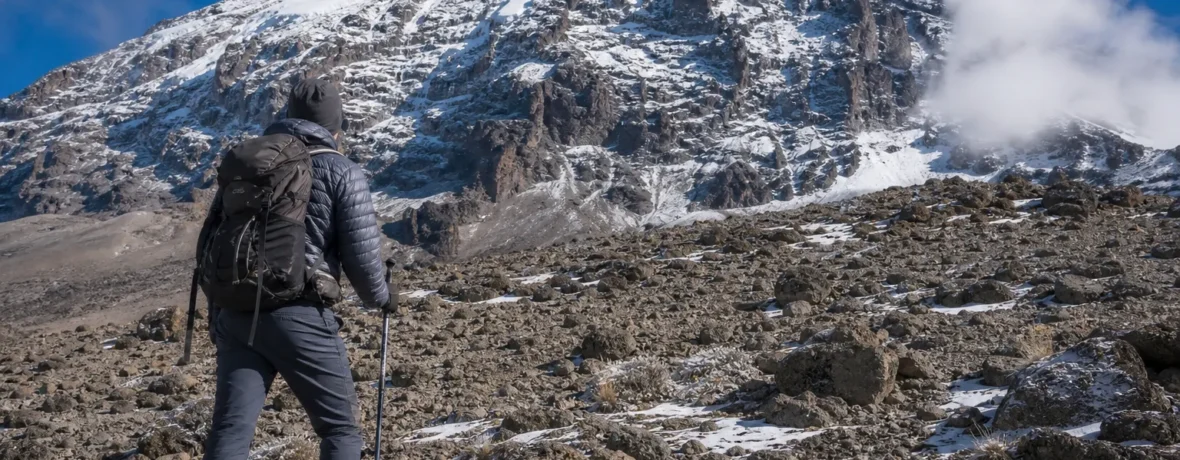
How long does it take to hike Kilimanjaro? Most treks take 5 to 9 days on the mountain, with 7 or 8 days being the smarter range for acclimatization. Fast 5-day climbs exist, but they give your body less time to adjust before Uhuru Peak at 19,341 ft [5,895 m].
How long does it take to hike Kilimanjaro by route?
The usual answer is 5 to 9 trekking days, depending on the route you choose. Tanzania National Parks lists several official mountain trails to Kilimanjaro’s high point, and each route has a different pace, camp pattern, crowd level, and acclimatization profile. You can check the park overview on the official Kilimanjaro National Park page.
Here’s the straight comparison:
| Route | Typical time on mountain | Best for | Main tradeoff |
|---|---|---|---|
| Marangu | 5-6 days | Hut sleeping, shortest classic itinerary | Fast ascent and same trail down |
| Machame | 6-7 days | Scenery, strong acclimatization profile | Popular and busy |
| Lemosho | 7-8 days | Scenery, gradual start, higher summit odds | More days and higher cost |
| Rongai | 6-7 days | Quieter northern approach | Less dramatic early scenery than western routes |
| Northern Circuit | 8-9 days | Best acclimatization and lower crowds | Longest standard route |
| Umbwe | 5-6 days | Fit, experienced trekkers | Steep and poor for acclimatization |
If you can spare the time, don’t treat Kilimanjaro like a long weekend. The mountain is not technical on the standard trekking routes, but the altitude is serious. The summit sits high enough for altitude illness to become the main reason people turn around. The CDC Yellow Book page on high-altitude travel specifically lists Mount Kilimanjaro at roughly 19,341 ft [5,895 m] and warns that altitude illness is a risk at high elevations.
How long to hike Kilimanjaro if you want the safest pace?
Plan on 7 or 8 days if your schedule allows it. That gives you a better acclimatization buffer than the shortest itineraries and still keeps the trip manageable for most hikers with two weeks of vacation.
The best pace is not the one that reaches camp fastest. It is the one that lets you eat, sleep, hydrate, and wake up ready to keep moving. Kilimanjaro guides use the Swahili phrase “pole pole,” meaning slowly, for a reason. Your legs may feel fine at 11,000 ft [3,353 m]. Your lungs may disagree at 15,000 ft [4,572 m].
For most hikers, the sweet spots look like this:
- Best all-around choice: 7-day Machame or 8-day Lemosho.
- Best acclimatization: 8- or 9-day Northern Circuit.
- Best hut-based option: 6-day Marangu, not the rushed 5-day version.
- Best quieter approach: 7-day Rongai.
- Best for limited time: 6-day Machame or Rongai, with realistic expectations.
Extra days matter because they let you sleep lower after touching higher elevations, or they simply slow the rate of ascent. The Wilderness Medical Society’s 2024 altitude illness guidance continues to emphasize gradual ascent as a key prevention strategy; see the Wilderness Medical Society altitude illness guidelines for the clinical background.
Can you climb Kilimanjaro in 5 days?
Yes, but 5 days is a rushed climb. It is possible on routes such as Marangu and Umbwe, but it gives you the thinnest margin for acclimatization.
A 5-day climb sounds neat on paper. Fewer days. Lower trip cost. Less time away from work. Then the mountain starts doing mountain things.
The problem is not the mileage. Plenty of fit hikers can walk the daily distances. The problem is the altitude curve. You go from low elevation to very high elevation fast, then ask your body to function on a summit night that usually starts around midnight and climbs into air with far less oxygen than sea level.
Choose a 5-day itinerary only if you fully understand the risk tradeoff. It is better for people who have recent high-altitude experience, know how their body reacts above 14,000 ft [4,267 m], and can turn around without ego getting in the way.
Is 6 days enough for Kilimanjaro?
Six days can work, but it is still a tight schedule. It is usually better than 5 days and noticeably less forgiving than 7 or 8 days.
A 6-day Machame climb is a common choice. A 6-day Marangu climb adds an acclimatization day compared with the shortest Marangu version. A 6-day Rongai trek can also be reasonable for hikers who want a quieter approach from the north.
Six days makes sense when:
- You have strong hiking fitness.
- You can walk slowly instead of racing the trail.
- You have no known altitude problems from past trips.
- You are comfortable turning back if symptoms build.
- You arrive in Tanzania rested, hydrated, and not sick.
Six days is not ideal if this is your first time above 10,000 ft [3,048 m], if you live at sea level and have limited prep time, or if you are trying to squeeze the climb between long international flights. Kilimanjaro already stacks a lot into a short window. Don’t make it harder than it needs to be.
Is 7 days enough for Kilimanjaro?
Yes, 7 days is enough for many hikers and is one of the best practical choices. It gives you a strong balance of acclimatization, cost, scenery, and time away.
A 7-day Machame itinerary is popular because it has a useful “climb high, sleep lower” pattern. You gain elevation, cross varied terrain, and still get more breathing room than the 6-day version. Lemosho can also be done in 7 days, though many hikers prefer 8 days because the western approach deserves the extra time.
Seven days is also a good mental length. Long enough to settle into the mountain. Short enough that the routine stays fresh. You wake, pack, walk, eat, rest, repeat. Then summit night arrives and everything narrows to your headlamp beam, your breathing, and the next slow step.
Is 8 or 9 days too long for Kilimanjaro?
No, 8 or 9 days is not too long. It is often the better choice if your priority is reaching the summit safely and feeling less crushed while doing it.
Eight days fits Lemosho beautifully. The route starts from the west, moves through forest and moorland, and joins the southern circuit before the summit push. It gives your body more time before the hardest night.
Nine days usually points to the Northern Circuit, the longest common trekking route on the mountain. It arcs around the quieter northern slopes and spreads the altitude gain across more nights. If you want fewer crowds and a measured pace, this is the grown-up answer.
The downside is obvious: more time and more money. Crews, park nights, food, and logistics all increase. But if Kilimanjaro is a once-in-a-lifetime climb, shaving one or two days off the itinerary can be a false bargain.
Which Kilimanjaro route has the best acclimatization?
The Northern Circuit usually has the best acclimatization profile. Lemosho and 7-day Machame are also strong choices.
Good acclimatization is not just total days. It is how those days are arranged. A route that gains elevation gradually, includes moderate sleeping elevations, and avoids huge jumps gives you a better shot than a direct line up the mountain.
Here is the plain-language breakdown:
- Northern Circuit: Longest standard route, quiet feel, excellent time to adapt.
- Lemosho: Gradual western approach, scenic, very good over 8 days.
- Machame: Strong route profile over 7 days, but busier.
- Rongai: Quieter and steadier, though some itineraries have less “climb high, sleep low” benefit.
- Marangu: Comfortable huts, but the shorter versions ascend quickly.
- Umbwe: Steep, direct, and best reserved for experienced high-altitude trekkers.
How long is summit day on Kilimanjaro?
Summit day usually takes 10 to 16 hours of walking. It is the longest, coldest, and most mentally demanding part of the climb.
Most summit pushes begin late at night. You leave camp in the dark, climb slowly toward the crater rim, then continue to Uhuru Peak if conditions and your body allow. After photos at the top, you descend a long way to a lower camp. That descent can feel harder than expected because you are tired, dusty, hungry, and running on very little sleep.
Typical summit-day rhythm:
- Wake before midnight: Dress in layers, drink something warm, and try to eat.
- Start climbing in the dark: Move slowly behind your guide, usually in a tight line.
- Reach the crater rim: Stella Point or Gilman’s Point comes first, depending on the route.
- Continue to Uhuru Peak: This final stretch can feel endless at 19,000 ft [5,791 m].
- Descend to high camp: Regroup, rest briefly, and eat if you can.
- Descend again: Continue to a lower camp for thicker air and better sleep.
This is why route length matters. A better-paced itinerary does not make summit night easy. It makes you more likely to start that night with enough acclimatization to keep moving.
How many total days should you plan for a Kilimanjaro trip?
Plan 10 to 14 total days for the whole trip. That includes arrival, gear checks, the climb, descent, and a buffer before flying home.
A lean schedule can work like this:
- Day 1: Arrive in Tanzania.
- Day 2: Gear check, guide briefing, sleep near the mountain.
- Days 3-9 or 10: Trek, depending on route length.
- Day 10 or 11: Finish descent and return to town.
- Day 11 or 12: Buffer day or departure.
A better schedule adds one extra day before the climb and one extra day after. Flights get delayed. Bags go missing. Stomachs revolt. Boots rub. A buffer day can save the trip before it starts.
What affects how long Kilimanjaro takes?
Your route is the biggest factor, but it is not the only one. Fitness, altitude response, weather, guide decisions, and group pace all shape the real timeline.
Here is what can stretch or change the plan:
- Acclimatization: If you feel rough, your guide may slow the pace or advise descent.
- Weather: Cold, rain, snow, or wind can make short sections take longer.
- Group size: Larger groups often move at the pace of the slowest hiker.
- Route traffic: Busy camps and trails can slow transitions.
- Fitness: Strong legs help, but cardio fitness does not make you immune to altitude.
- Gear problems: Blisters, poor layers, and bad sleep systems drain time and energy.
Choose your route for the hiker you are, not the hiker you wish you could become in the next four weeks.
How should you choose the right number of days?
Choose the longest itinerary you can reasonably afford and fit into your schedule. For most hikers, that means 7 or 8 days on the mountain.
Use this simple decision path:
- If you have 5 trekking days: Reconsider your schedule. If you still go, understand the acclimatization tradeoff.
- If you have 6 trekking days: Pick a route with a steadier profile, and arrive rested.
- If you have 7 trekking days: Look hard at Machame or Rongai; consider Lemosho if the itinerary is well paced.
- If you have 8 trekking days: Lemosho becomes one of the best choices on the mountain.
- If you have 9 trekking days: Northern Circuit is the comfort pick for acclimatization and space.
Also check how your operator structures the trip. Two companies may both sell a “7-day climb,” but the camp sequence, starting elevation, descent plan, and pace can differ. Ask for the daily sleeping elevations, not just the route name.
When to see a doctor
See a doctor before booking if you have heart disease, lung disease, sleep apnea, sickle cell trait, a history of severe altitude illness, or any condition that affects breathing or circulation. Kilimanjaro is a high-altitude trip, not just a long hike.
The CDC advises travelers with underlying medical conditions to consult a physician familiar with high-altitude medicine before high-altitude travel. The CDC’s Tanzania traveler health page also flags Kilimanjaro’s altitude as a health concern for climbers.
During the climb, tell your guide early if you develop headache, nausea, dizziness, unusual shortness of breath, loss of coordination, confusion, chest tightness, or a cough that worsens. Do not hide symptoms to protect your summit chance. Descent is often the key response when altitude illness becomes serious, and your guide’s safety call matters more than the summit photo.
What should you pack for the number of days you choose?
Pack for cold, wet, dust, sun, and long slow days. The mountain moves through several climate zones, and summit night can feel like winter even when the lower trail is warm.
Use this checklist as a starting point:
- Broken-in hiking boots
- Warm sleeping bag rated for cold mountain nights
- Base layers, fleece or active insulation, and down or synthetic puffy jacket
- Waterproof rain jacket and rain pants
- Warm hat, sun hat, gloves, and liner gloves
- Headlamp with extra batteries for summit night
- High-SPF sunscreen and UV-blocking sunglasses
- Water bottles or hydration system with enough capacity for long days
- Trail snacks you actually like eating at altitude
- Personal medications and a travel health kit
- Blister care, lip balm, and basic hygiene supplies
Longer routes do not always require dramatically more personal gear because porters carry group equipment and your packed duffel within operator limits. They do require more patience, more snacks, and better systems. Keep your daypack consistent so you can find layers fast when wind hits.
So, what is the best Kilimanjaro route length?
Seven or eight days is the best answer for most hikers. It gives you enough time to acclimatize better than the shortest climbs without committing to the longest itinerary on the mountain.
Pick 7-day Machame if you want a classic route with strong scenery and a proven profile. Pick 8-day Lemosho if you want a more gradual western approach and can spare the extra time. Pick 9-day Northern Circuit if you want the most forgiving pace and a quieter feel.
Can you do it faster? Yes. Should you? Only if you accept the risk. Kilimanjaro rewards patience. Give the mountain more days, and you give yourself a better shot at standing on top with a clear head and enough energy to enjoy the way down.
Related reading
- How Long Does It Take to Hike the Appalachian Trail?
- How Long Does It Take to Climb Mount Everest?
- Camping Food Without a Fridge: No-Cook Ideas
- How Long Does It Take to Hike Mt Fuji?
FAQ
How many days do you need to climb Kilimanjaro?
You need 5 to 9 days on the mountain, depending on the route. Most hikers should choose 7 or 8 days for a better acclimatization pace.
Can a beginner climb Kilimanjaro?
Yes, a fit beginner can climb Kilimanjaro on a standard trekking route. The bigger challenge is altitude, so beginners should avoid rushed 5-day climbs and choose a longer itinerary with a reputable operator.
What is the shortest Kilimanjaro route?
Marangu and Umbwe are among the shortest common routes by time. Short does not mean easier, because fast altitude gain can make the climb harder on your body.
Which Kilimanjaro route is best for acclimatization?
The Northern Circuit is usually best for acclimatization because it takes 8 to 9 days and gains elevation more gradually. Lemosho over 8 days and Machame over 7 days are also strong choices.
How long does summit night take on Kilimanjaro?
Summit night and the following descent usually take 10 to 16 hours of walking. You start before dawn, reach the crater rim, continue to Uhuru Peak if conditions allow, then descend to a lower camp.
Is 5 days enough for Kilimanjaro?
Five days is possible but not ideal. It leaves little time for acclimatization, so most hikers are better off choosing 6, 7, or 8 days if their schedule allows.