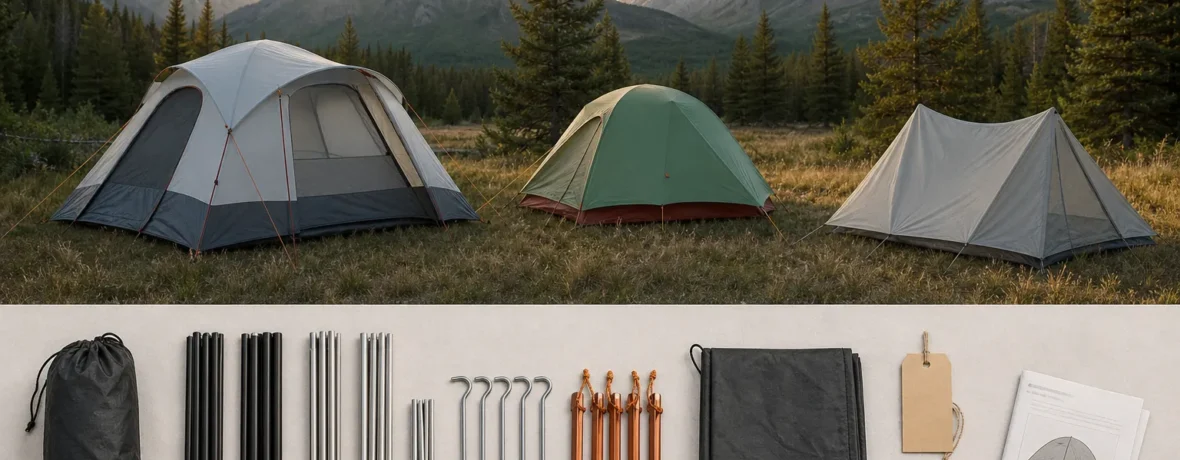
How much does a tent cost? A good camping tent usually costs $100-$250, while a solid backpacking tent costs $200-$450. Lightweight premium tents run $500-$750, and specialty ultralight shelters can cost more. Spend more when you need lower weight, stronger poles, better weather protection, and longer trail life.
How much does a tent cost for backpacking?
Plan on $200-$450 for a reliable 2-person backpacking tent.
That range gets you real trail features: aluminum poles, a full rainfly, taped seams, decent ventilation, bug netting, and packed weight that will not make your shoulders hate you by mile 6 [9.7 km]. You can spend less, but below $200 you start trading away weight savings, long-term durability, or wet-weather confidence.
As of November 2026, REI lists 2-person backpacking tents from budget-friendly models such as the REI Co-op Half Dome 2 at $329 to lighter options like the Big Agnes Copper Spur UL2 at $599.95. Their backpacking tent listings show the real spread clearly: price climbs fast as trail weight drops.
| Tent type | Typical good price | Best for | Common tradeoff |
|---|---|---|---|
| Budget camping tent | $75-$150 | Backyards, festivals, fair-weather car camping | Heavier parts, basic rain protection |
| Good car-camping tent | $150-$300 | Campgrounds and family weekends | Too bulky for backpacking |
| Good backpacking tent | $200-$450 | Overnights, weekend hikes, mixed weather | Less room than car-camping tents |
| Premium ultralight tent | $500-$750 | Long trails and weight-focused hikers | Higher cost, thinner fabrics |
How much is a tent for camping?
A good car-camping tent costs $150-$300 for most people.
Car-camping tents do not need to be featherweight. That is good news for your wallet. You can buy more floor space, taller peak height, bigger doors, thicker fabric, and friendlier setup for less money than a backpacking tent.
As of November 2026, Coleman’s 2-person and 3-person tent page lists small campground-style tents under $110, including the Sundome 2-Person sale price at $65.99 and the 2-Person Skydome at $109.99. Those are fine for mild campground nights. They are not the first pick for exposed ridgelines, repeated alpine rain, or multi-day backpacking.
Why do some tents cost so much?
Expensive tents cost more because they cut weight without falling apart.
That is the whole trick. Cheap, light, strong: pick two. A $600 tent is not just charging you for a logo. You are usually paying for better pole architecture, lighter waterproof fabrics, smarter venting, smoother zippers, stronger guyout points, and a design that gives you more usable space without adding pounds.
REI’s 2026 backpacking tent buying advice points hikers toward minimum trail weight when comparing tents, since that is the weight of the shelter essentials: tent body, rainfly, and poles. The same guide also explains the hard trade: reducing weight and packed size usually costs you either money, space, or durability.
- Poles: Aluminum poles cost more than fiberglass, but they are lighter and handle trail abuse better.
- Fabric: Thin ultralight nylon, polyester, and Dyneema Composite Fabric can save serious weight.
- Design: Steeper walls, pole hubs, two doors, and two vestibules make a small tent feel less like a coffin.
- Weather build: Better seam taping, full rainflies, bathtub floors, and venting help when the sky turns mean.
- Weight: Every pound you remove from your shelter usually costs real money.
What should you pay for a 2-person tent?
For hiking, $250-$450 is the sweet spot for a 2-person tent.
Two-person backpacking tents are the default for a reason. Solo hikers get extra space. Couples can split the load. Dog owners can keep muddy paws out of the sleeping bag, at least in theory.
A 2-person tent under $200 can work if you camp close to the trailhead, hike in mild weather, or only go out a few nights per year. For regular backpacking, $250-$450 buys a much better balance of weight, interior space, and weather protection.
Once you push past $500, the tent should be doing something special: dropping near 3 lb [1.4 kg] or less, packing smaller, using premium materials, or giving you more livable space for the same weight.
Is a $100 tent good enough?
Yes, a $100 tent can be good enough for easy camping, but it is rarely ideal for backpacking.
A $100 tent is fine for a dry weekend at a developed campground. It can be perfect for a kid’s first campout, a music festival, a backyard test night, or a simple fair-weather trip where your car is 40 ft [12 m] away.
For backpacking, be picky. A low-cost tent may use fiberglass poles, a partial rainfly, heavier fabric, weaker stakes, or zippers that get cranky after a season. None of that matters much beside a picnic table. It matters when wind hits at 2 a.m. and all your dry clothes are inside.
How much should an ultralight tent cost?
A true ultralight 2-person tent usually costs $500-$750.
Ultralight shelters are where prices jump. You are paying to remove ounces without giving up storm protection. Some tents do that with semi-freestanding designs. Some use trekking poles instead of dedicated tent poles. Some use premium fabrics that cost much more than standard coated polyester.
As of November 2026, the Zpacks Duplex Classic is listed at $749 and 17.8 oz [504 g]. That is wildly light for a 2-person shelter, but it is also a specialized tool. It needs smart site selection, careful pitching, and a buyer who actually cares about shaving pounds.
NEMO’s support comparison lists the Dragonfly OSMO 2P at 2 lb 13 oz [1.26 kg] minimum weight and the Hornet OSMO 2P at 2 lb 1 oz [948 g], showing how fast design choices change the weight equation in premium shelters.
What tent features are worth paying extra for?
Pay extra for the parts that keep you dry, comfortable, and willing to camp again.
A tent is not just a fabric box. It is your roof, bug wall, gear garage, changing room, and morale system. Spend where the upgrade fixes a real trail problem.
- Choose the right season rating. Most hikers want a 3-season tent for spring, summer, and fall.
- Check the minimum trail weight. For backpacking, aim for a shelter weight you will actually carry without resentment.
- Look for a full-coverage rainfly. Partial fly designs save money, not your dry socks.
- Count the doors. Two doors matter when two adults share one tent.
- Check vestibule space. Your pack and boots need a covered spot outside the sleeping area.
- Inspect pole material. Aluminum is the standard worth paying for on backpacking tents.
- Budget for a footprint only if needed. Some tents include one; others sell it separately.
What is the cheapest tent you should buy?
For campground use, do not go below $75 unless the trip is low-risk and dry.
For backpacking, raise that floor to $150. Below that, the tent may still work, but you are betting against wind, rain, condensation, and rough ground. Sometimes you win. Sometimes you wake up with a puddle under your sleeping pad.
Used tents can be a steal, but inspect them hard. Set the tent up before paying. Check the fly for peeling coating, smell the fabric for mildew, zip every zipper, inspect pole sections, and look for floor pinholes under bright light.
When is it worth spending more on a tent?
Spend more when you will carry it far, use it often, or camp in rough weather.
If you camp twice a year at a mellow campground, save your money. If you hike 10 mi [16 km] into the backcountry, camp above tree line, or plan multi-night routes where storms are normal, spend for better materials and lower weight.
- Spend more if your shelter will be used 10 or more nights per year.
- Spend more if your old tent weighs over 5 lb [2.3 kg] and you backpack regularly.
- Spend more if you need two doors for two people.
- Spend more if you camp in sustained rain.
- Spend less if you only car camp in mild weather.
Related reading
- How Much Does It Cost to Climb Mount Everest?
- How Much Does It Cost to Hike Machu Picchu?
- How Much Does It Cost to Get Into Yellowstone?
- How to Waterproof a Tent: Seams, Rainfly and Floor
FAQ
How much does a good 4-person tent cost?
A good 4-person car-camping tent usually costs $180-$350. Backpacking-ready 4-person tents cost more because large shelters need stronger poles, bigger flies, and more fabric while still keeping weight manageable.
Is an expensive tent always better?
No, an expensive tent is not always better for your trip. A $700 ultralight shelter can be the wrong choice for rough family car camping, where a roomier and tougher $250 tent makes more sense.
Should I buy a 1-person or 2-person tent?
Buy a 1-person tent if low weight matters most. Buy a 2-person tent if you want room for gear, a dog, or simply enough elbow space to change clothes without performing trail yoga.
How long should a good tent last?
A good tent can last several seasons with careful use. Store it dry, clean dirt off the zippers, avoid leaving it in harsh sun for days, and use a footprint or careful campsite selection on abrasive ground.
Are used tents worth buying?
Yes, used tents are worth buying if you can pitch and inspect them first. Avoid tents with mildew odor, sticky waterproof coatings, bent poles, broken zippers, or seam tape that is flaking away.