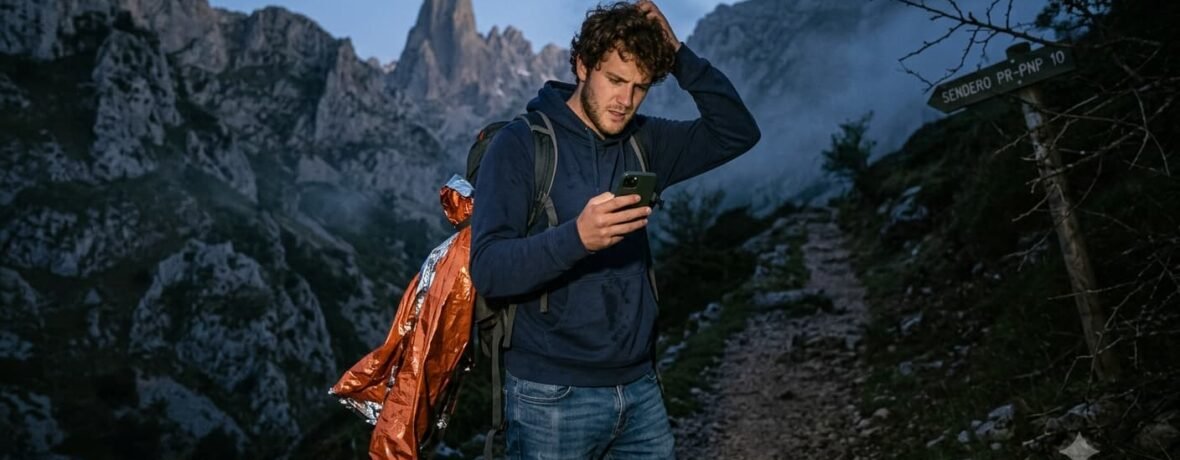
Search-and-rescue statistics are remarkably repetitive. So is the fix.
Most incidents begin with a small decision made two hours earlier.
Mountain rescue teams publish their callout data, and the patterns are strikingly consistent year after year. People get benighted because they started late. They get lost because they trusted a phone with a flat battery. They get cold because the forecast in the valley was not the weather on the ridge. Almost none of these incidents involve exotic bad luck; they involve a small, predictable list of mistakes.
The reassuring corollary is that avoiding them is mostly a matter of habit rather than skill. Here are the errors we see most often, in roughly the order they cause trouble, along with the fix for each.
The planning mistakes that set up a bad day
Starting too late is the single most common error. It compresses your margin, pushes you into afternoon heat or storms and turns a small delay into a headlamp descent. Fix it by setting a departure time based on sunset minus your estimated duration minus two hours of contingency, then leaving earlier than that. Almost nobody regrets an early start.
Underestimating the route comes next. Distance alone tells you very little; elevation gain, surface and altitude do the real work. Use Naismith’s rule as a baseline and add time for rough ground and heavy packs. The third planning error is checking the wrong forecast — valley forecasts routinely miss the fact that wind doubles and temperature drops 6°C for every 1,000 m you climb. Use a mountain-specific forecast every time.
On-trail mistakes: pace, water and navigation
Going out too fast is the classic. Set an effort you could sustain for the whole day, not the pace that feels good in the first fresh hour. Under-drinking and under-eating follow closely behind — aim for around 500 ml of water and 200 to 300 calories per hour, and start both before you feel thirsty or hungry.
Navigation errors are usually technology errors. Phones die in the cold, screens fail in rain and offline maps have to be downloaded before you lose signal. Carry a paper map and compass, know how to take a bearing, and keep a battery pack. Beyond the hardware, the discipline that prevents most navigational trouble is simply checking your position at every junction rather than only when something feels wrong.
Kit mistakes: too much, too little, and the wrong things
New hikers usually carry too much, and experienced hikers occasionally carry too little. The essentials are non-negotiable regardless of forecast: waterproof shell, insulating layer, headlamp, first aid, food, water and treatment, map and compass, and a means of calling for help. Beyond that, everything is optional, and every optional item should earn its weight.
The two most common kit errors are wearing cotton, which stops insulating the moment it gets damp, and hiking in brand-new footwear on a big day. Break footwear in on short walks, and never test a new pack, new boots and a new route on the same day. If something is going to rub, you want to find out three kilometres from the car, not fifteen.
Decision mistakes: the turnaround and the group
Summit fever is the mistake that turns discomfort into danger. Set a turnaround time before you leave and honour it even when the top looks close. Group decisions need a designated pace-setter at the front and a sweeper at the back, with the group moving at the speed of its slowest member. And never split a group to let faster walkers press on — that decision appears in rescue reports more often than almost any other.
Common hiking mistakes ranked by consequence
| Pick | Model / Option | Best for | Price | Weight | Rating |
|---|---|---|---|---|---|
| Starting too late | Benightment, rushed descent | Set turnaround time before leaving | Very high | Universal | 4.9/5 |
| No headlamp | Immobilised after dark | Carry one on every hike, always | Very high | Universal | 4.8/5 |
| Cotton clothing | Rapid heat loss when wet | Synthetic or merino base layers | High | Cool climates | 4.6/5 |
| Phone-only navigation | Lost when battery dies | Paper map, compass, power bank | High | Remote terrain | 4.7/5 |
| Under-drinking | Fatigue, cramps, poor decisions | 500 ml per hour, start early | Medium | Hot climates | 4.5/5 |
| New boots on a big day | Blisters that end the hike | Break in over 30–40 short miles | Medium | Universal | 4.4/5 |
Severity reflects how often each error appears in mountain rescue callout data relative to how easily it is prevented.
Building habits instead of relying on willpower
The hikers who rarely have incidents are not more disciplined; they have systems. A packed bag with the essentials permanently in it means you never leave the headlamp at home. A pre-departure message to a friend with your route and expected return becomes automatic after five repetitions. A written turnaround time in your phone notes removes the negotiation from a tired brain at 3 p.m.
Post-hike review is the other habit worth adopting. Spend five minutes after each outing noting what took longer than expected, what you did not use and what you wished you had. After a season, that record is more useful than any gear guide, because it is calibrated to you rather than to an average hiker.
Finally, be honest about experience. Progression is what keeps hiking safe: build from marked trails to remote routes, from summer to shoulder season, from day trips to overnights. Every step adds one variable at a time. The people who get into trouble are usually those who jumped three steps at once because a photograph made it look straightforward.
What to do when something does go wrong
Stop and think before you act. Most bad situations get worse through hurried decisions — pressing on when lost, descending an unknown gully or leaving the group to get signal. Put on a warm layer immediately, eat and drink something, and re-establish where you are. If you need help, call early rather than late, give a grid reference or coordinates, and stay put unless staying put is more dangerous than moving.
Geo guide: the mistakes that dominate in each environment
Different landscapes punish different errors.
- Desert canyons — Underestimating heat and water needs, and the climb out at the end of the day.
- Scottish and Irish hills — Navigation in cloud without a compass; conditions change faster than any forecast interval.
- Alpine terrain — Late starts that put parties on exposed ground during afternoon thunderstorms.
- Coastal routes — Ignoring tide tables and being cut off on beach sections between headlands.
- Snow-covered trails — Continuing onto steep snow without traction devices or the skill to self-arrest.
Conditions change fast in the mountains: always check the local land-manager forecast before you leave the trailhead.
Frequently Asked Questions
What is the most common hiking mistake?
Starting too late. It removes your margin for error and pushes everything else — heat, storms, fatigue and darkness — into the same compressed window at the end of the day.
What should I always carry on a hike?
A waterproof shell, an insulating layer, a headlamp, first aid, food, water with a means of treatment, a map and compass, and a way to call for help. These belong in the pack regardless of forecast.
How do I avoid getting lost while hiking?
Check your position at every junction rather than only when confused, carry a paper map and compass alongside your phone, and download offline maps before losing signal. Turn back to your last known point if you are unsure.
Is it safe to hike alone?
It can be, with preparation: share your route and return time, carry a satellite communicator in remote terrain, and choose conservative objectives. Solo hiking removes your margin for injury, so decisions should be more cautious.
What should I do if I get caught out after dark?
Stop, put on every warm layer, use your headlamp and reassess calmly. If you know the route and the ground is easy, continue slowly. If not, shelter, conserve warmth and call for help rather than descending unknown terrain in the dark.