A head net weighs eleven grams and has saved more Scottish walking holidays than any waterproof jacket.
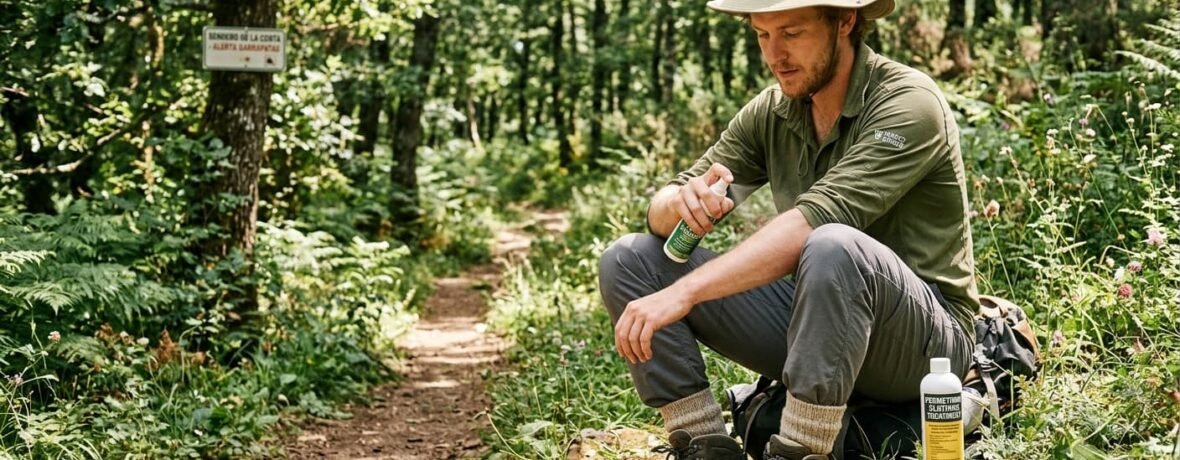
Clothing is the first line of defence; repellent is the second.
Insects are the most reliably underestimated hiking hazard. Mosquitoes and midges cost you sleep and enjoyment; ticks can transmit genuinely serious illness. The good news is that protection is cheap, light and highly effective when layered properly: treated clothing first, repellent on exposed skin second, behaviour and timing third, and a careful check at the end of the day as the safety net.
This guide covers what works according to the evidence, what does not, and how to handle a tick bite correctly if one gets through.
Repellents: what actually works
DEET at 20 to 30 per cent remains the benchmark for broad effectiveness and duration, and higher concentrations mainly extend duration rather than improve protection. Picaridin at 20 per cent performs comparably in most studies, does not damage synthetic fabrics or plastics, and has a less unpleasant feel, which is why many hikers have switched to it. Oil of lemon eucalyptus is the best-supported plant-derived option but requires more frequent reapplication and is not recommended for young children.
Permethrin is the other half of the system and works differently: it is applied to clothing rather than skin, remains effective through several washes and kills or repels ticks on contact. Treated trousers, socks and shirts dramatically reduce tick attachment, and the combination of permethrin-treated clothing with a skin repellent on exposed areas is the most effective approach available to hikers. Never apply permethrin directly to skin.
Clothing and physical barriers
Long sleeves and long trousers in light colours are the foundation, both because they block bites and because ticks are easier to spot against pale fabric. Tuck trousers into socks in tick habitat — it looks unfashionable and it works. Tightly woven fabrics resist mosquito bites better than thin stretch material, which mosquitoes can bite straight through. In midge country, a head net is the single highest-value item you can carry.
Timing, terrain and behaviour
Mosquitoes and midges peak at dawn and dusk, in still air and near standing water. A breezy ridge is close to insect-free when the valley below is unbearable, so plan breaks and camps accordingly. Ticks wait on vegetation at knee height in long grass and along the edges of paths — walking in the centre of the trail rather than brushing through undergrowth reduces exposure substantially. Deer and livestock density correlates strongly with tick numbers.
Tick checks and correct removal
Check thoroughly at the end of every day in tick country: behind knees, groin, waistband, armpits, hairline and behind ears. Most tick-borne infections require the tick to be attached for many hours, so prompt removal matters enormously. Use fine-tipped tweezers or a tick removal tool, grip as close to the skin as possible, and pull steadily upwards without twisting or crushing the body. Do not use petroleum jelly, heat or alcohol to make it detach.
Afterwards, clean the site and note the date. Watch for an expanding circular rash or flu-like symptoms over the following weeks and seek medical advice if either appears. Lyme disease is highly treatable when caught early, and the main determinant of a good outcome is simply noticing and acting rather than dismissing it.
Insect protection methods compared
| Pick | Model / Option | Best for | Price | Weight | Rating |
|---|---|---|---|---|---|
| Permethrin-treated clothing | Ticks and biting flies | Sawyer clothing spray | $18 | 6 washes | 4.8/5 |
| Picaridin 20% | Mosquitoes, ticks, midges | Sawyer Picaridin lotion | $12 | 8–12 hrs | 4.7/5 |
| DEET 25% | Broad spectrum, humid climates | Ben’s 30 wilderness | $9 | 6–10 hrs | 4.6/5 |
| Head net | Midges and blackflies | Sea to Summit head net | $12 | 11 g | 4.9/5 |
| Oil of lemon eucalyptus | Short outings, plant-based | Repel Lemon Eucalyptus | $8 | 4–6 hrs | 4.0/5 |
| Tick removal tool | Correct removal after a bite | O’Tom Tick Twister | $6 | 3 g | 4.7/5 |
Duration figures are typical manufacturer claims; humidity, sweat and swimming all shorten real-world protection considerably.
Regional realities and specific insects
Scottish midges are a scheduling problem rather than a repellent problem: they swarm in still, damp conditions from late May to September and are largely defeated by wind, altitude and a head net. Mosquitoes in northern boreal forests peak in early summer and thin out later in the season. Blackflies in North America bite around the hairline and are best handled by covering up. Chiggers in the American South congregate in tall grass and attack at the sock line.
In tropical regions, mosquito-borne disease raises the stakes considerably, and protection becomes a health measure rather than a comfort one. Use treated clothing plus a proven repellent, sleep under a treated net, and follow current travel health advice for the specific region and season rather than general guidance.
Wasps and hornets deserve a mention for anyone with a known allergy. Carry your prescribed adrenaline auto-injector, make sure a companion knows where it is and how to use it, and treat any sting reaction that involves breathing difficulty as an emergency requiring immediate help.
Protecting children and dogs
For children, use lower-concentration picaridin or DEET applied by an adult, avoid hands and faces, and rely more heavily on clothing coverage. For dogs, use a veterinary tick preventative — never a human repellent — and check them thoroughly after every walk, particularly ears, paws and belly. Dogs pick up ticks far more efficiently than people and carry them into the house.
Geo guide: where and when insects peak
Timing your trip well is often more effective than any product.
- Scottish Highlands — Midges from late May to September, worst in still humid weather; wind and altitude bring relief.
- Scandinavia and Alaska — Mosquito peak in June and July; head nets and treated clothing are standard rather than optional.
- Northeastern USA — Highest Lyme risk in late spring and early summer; treat clothing and check daily without exception.
- Central European forests — Tick-borne encephalitis is present in parts of the region; vaccination is worth discussing before a trip.
- Tropical Asia and Central America — Year-round mosquito-borne disease risk; use treated clothing, repellent and follow travel health advice.
Conditions change fast in the mountains: always check the local land-manager forecast before you leave the trailhead.
Frequently Asked Questions
What is the best insect repellent for hiking?
Picaridin at 20 per cent or DEET at 20 to 30 per cent are the most reliable for skin. Combine either with permethrin-treated clothing for the strongest protection against ticks.
How do I keep ticks off while hiking?
Treat trousers, socks and shirts with permethrin, tuck trousers into socks, walk in the centre of the trail and check your whole body at the end of every day in tick habitat.
How do I remove a tick correctly?
Grip it with fine-tipped tweezers or a tick tool as close to the skin as possible and pull steadily upwards without twisting or crushing. Clean the site, note the date and watch for a rash or flu-like symptoms.
Do natural insect repellents work for hiking?
Oil of lemon eucalyptus offers meaningful protection but needs reapplication every four to six hours. Most other plant-based products protect for well under an hour and are not adequate for a full day out.
When are midges and mosquitoes worst?
They peak at dawn and dusk in still, humid air near standing water. Breezy ridges and higher ground are noticeably better, so plan breaks and camps where there is airflow.