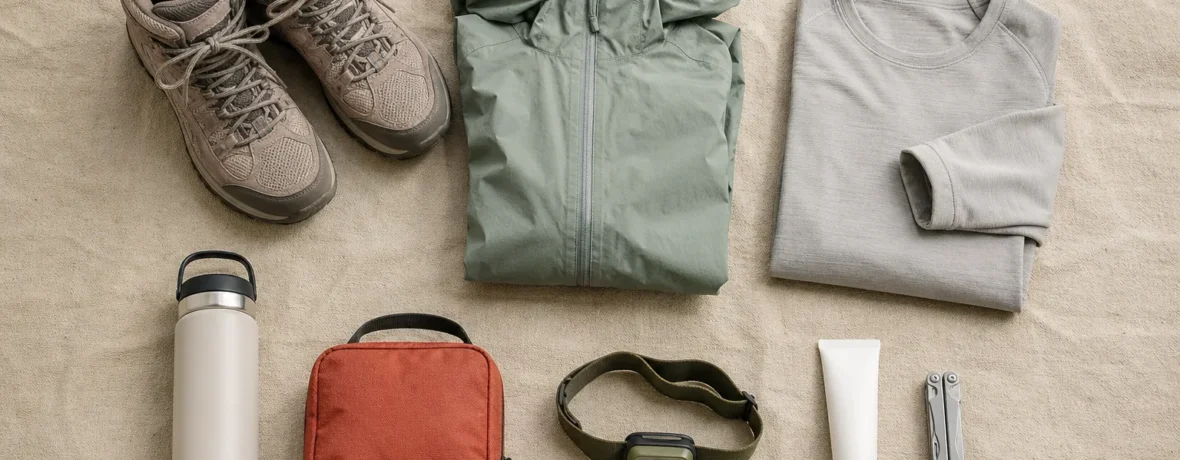
Hiking essentials for women include 10 safety basics, 2 to 3 clothing layers, 1 to 3 liters [1 to 3 L] of water, high-energy snacks, blister care, sun protection, navigation, and personal hygiene supplies. Pack more for cold, remote, wet, high-altitude, or overnight hikes.
What are the hiking essentials for women?
The core hiking essentials for women are safety gear, weather-ready clothing, supportive footwear, water, food, hygiene items, and a pack that fits your torso and hips.
You do not need a closet full of shiny gear to go hiking. You need the right things, packed in the right order, for the trail you are actually walking. A 3-mile [4.8 km] loop near town is different from an exposed 12-mile [19.3 km] ridge hike with afternoon storms in the forecast.
Start with the classic safety base: navigation, light, sun protection, first aid, knife or repair item, fire starter, shelter, extra food, extra water, and extra clothing. The National Park Service describes the Ten Essentials as basic items to carry on all hikes, regardless of time or distance.
- Backpack: 15 to 25 liters for most day hikes; 30 liters if you carry extra layers, camera gear, or supplies for kids or dogs.
- Footwear: trail runners, hiking shoes, or boots with enough traction for dirt, rock, mud, and loose gravel.
- Socks: wool or synthetic hiking socks, plus one dry backup pair.
- Clothing layers: sweat-wicking base layer, insulating midlayer, and rain or wind shell.
- Water: 1 to 3 liters [1 to 3 L], adjusted for heat, effort, distance, and water access.
- Food: salty and sweet trail snacks, plus one extra serving in case the day runs long.
- Navigation: downloaded map, paper map, compass, or GPS device.
- First aid: blister kit, bandages, gauze, tape, tweezers, and personal medications.
- Sun and bug protection: sunglasses, hat, sunscreen, and repellent where needed.
- Personal items: pee cloth or toilet paper kit, period supplies, hand sanitizer, ID, cash, and emergency contact info.
What should a woman wear hiking?
Wear sweat-wicking layers that move with you, dry fast, and protect your skin from sun, wind, brush, and cold.
Cotton feels innocent at the trailhead. Then it gets damp, clings, chills, and takes forever to dry. Choose merino wool, nylon, polyester, or blended hiking fabrics instead. Your outfit should let you climb without chafing, sit on a log without flashing half the forest, and add or remove warmth fast.
| Trail condition | Best clothing choice | Skip this |
|---|---|---|
| Hot, dry trail | Light long-sleeve sun shirt, shorts or breathable pants, brimmed hat | Thick cotton T-shirt |
| Cool morning start | Base layer, fleece or light puffy, wind shell | One bulky coat with no layers |
| Rainy or brushy route | Rain jacket, quick-dry pants, wool socks | Jeans or heavy leggings that sag when wet |
| Buggy or tick-prone area | Long sleeves, long pants, light colors, treated clothing if appropriate | Bare legs through tall grass |
For bottoms, pick what matches your movement. Hiking pants protect against sun, ticks, granite scrapes, and cold wind. Shorts feel better in heat. Leggings work if they are durable, opaque, and not misery when wet. If thigh rub is a thing for you, solve it before the hike with longer shorts, anti-chafe balm, or a base short under looser layers.
A sports bra matters too. Look for wide straps, smooth seams, and support that matches your pace. A soft bra may be fine for a mellow walk. A steep descent with a loaded pack usually calls for more support.
What should be on a women’s hiking gear checklist?
A women’s hiking gear checklist should cover safety first, then comfort, hygiene, weather, and personal fit.
Use this as your trailhead scan. It is short enough to save. It is also ruthless enough to keep you from packing three lip balms and no headlamp.
- Navigation: downloaded offline map, backup paper map, compass, or GPS device
- Light: headlamp with charged batteries or backup batteries
- Sun: sunglasses, sunscreen, UPF shirt, brimmed hat
- Warmth: fleece, puffy jacket, beanie, gloves if the forecast calls for it
- Rain and wind: waterproof or water-resistant shell
- Water: bottles or reservoir, plus filter or treatment on longer routes
- Food: snacks you will actually eat when tired
- First aid: blister care, adhesive bandages, tape, gauze, tweezers, antiseptic wipes
- Repair: small knife or multitool, gear tape, safety pins
- Emergency: whistle, emergency blanket or bivy, fire starter
- Hygiene: hand sanitizer, toilet paper kit, waste bag, pee cloth, period supplies if needed
- Personal: ID, insurance card photo, cash, keys, phone, power bank
Pack the “bad day” items even on friendly trails. A rolled ankle, wrong turn, sudden storm, or dead phone does not care that your plan was casual.
What are the best day hiking essentials for women?
The best day hiking essentials for women are a comfortable daypack, reliable shoes, water, snacks, layers, navigation, first aid, and bathroom supplies.
For a day hike, your pack should feel snug on your hips and stable across your shoulders. Women-specific packs can fit shorter torsos, narrower shoulders, and curved hips better, but they are not mandatory. Fit beats the label every time.
Try this simple day-hike packing system:
- Bottom of pack: soft items you may not need fast, such as an extra layer or emergency blanket.
- Middle of pack: food, first aid, water filter, repair items, and heavier gear close to your back.
- Top of pack: rain jacket, warm layer, toilet kit, and snacks.
- Hip belt or shoulder pocket: lip balm, sunscreen stick, phone, map, and quick calories.
- Outside pocket: water bottle, pee cloth, or wet rain shell.
For water, many hikers do well carrying 1 to 2 liters [1 to 2 L] for short, mild hikes and closer to 3 liters [3 L] for hot, exposed, or strenuous routes. Your body size, sweat rate, pace, altitude, and access to refill points all change that number. If there are natural water sources, carry a filter or treatment method and know how to use it before you are thirsty.
What hiking shoes do women need?
Women need hiking shoes that fit securely at the heel, leave toe room on descents, and match the terrain.
Trail runners are light, flexible, and comfortable for many maintained trails. Hiking shoes add structure and protection without the weight of boots. Boots can help on rough terrain, snow, off-trail travel, or when you carry a heavier pack.
Fit check:
- Your toes should not hit the front when walking downhill.
- Your heel should not lift with every step.
- The widest part of your foot should not feel squeezed.
- You should try shoes with the socks you plan to hike in.
- If your feet swell on long hikes, leave a little extra room.
Do not save brand-new footwear for a big hike. Wear it on neighborhood walks, stairs, and short trails first. Hot spots are early warnings. Treat them right away with tape, moleskin, or a blister bandage before they turn into a limping problem.
How do women handle bathroom needs while hiking?
Women handle bathroom needs on trail with privacy planning, hand hygiene, a pee cloth or toilet paper kit, and a pack-out system for waste.
For peeing, move well off the trail, away from water, and away from campsites. A pee cloth clipped to the outside of your pack can replace toilet paper for urine and dry quickly in the sun. If you use toilet paper or wipes, pack them out in a sealable bag. Do not bury wipes. They linger.
A basic bathroom kit includes:
- Hand sanitizer
- Toilet paper or unscented wipes
- Seal-able waste bag
- Opaque outer bag for privacy
- Small trowel where catholes are allowed
- Pee cloth, optional but handy
For periods, pack tampons, pads, menstrual cup supplies, or period underwear based on what you already trust. Bring extra. Add a waste bag, hand sanitizer, and one spare pair of underwear. If you use a menstrual cup, clean hands matter before and after handling it. On longer trips, plan how you will manage washing and disposal before you reach the trailhead.
What should beginner hikers bring?
Beginner hikers should bring the same safety basics as experienced hikers, just in a simpler, lighter setup.
The biggest beginner mistake is packing for the person you wish you were instead of the hike you are doing. Start with short routes, good weather, and clear trails. Build from there.
For your first few hikes, keep it clean:
- Small backpack
- Comfortable athletic or hiking shoes
- Moisture-wicking shirt
- Light jacket or fleece
- Rain shell if clouds are possible
- Water bottle or hydration reservoir
- Two snacks
- Downloaded map
- Headlamp
- Small first aid kit
- Bathroom kit
Tell someone where you are going and when you expect to be back. Check the weather at the trailhead and at the highest point of your hike if there is major elevation gain. Turn around before you are empty. The summit, overlook, or waterfall is optional. Getting home with working knees and a decent mood is the real win.
What safety items should women carry hiking alone?
Women hiking alone should carry communication, navigation, light, emergency shelter, first aid, and a clear plan shared with someone off trail.
Solo hiking is not reckless by default. Poor planning is. Your safety system should not depend on cell service, strangers, or “I’ll figure it out.”
- Share your plan: trail name, route, parking location, expected finish time, and what to do if you are late.
- Carry backup navigation: offline map plus a paper map or GPS device on remote trails.
- Bring a power bank: cold weather and constant GPS use drain phones fast.
- Use a satellite messenger: smart for remote areas where cell service drops.
- Keep a whistle accessible: not buried under your lunch.
- Trust your exit instinct: if a person, storm, injury, or trail condition feels wrong, leave.
Self-defense tools are personal. If you carry pepper spray, bear spray, or any legal defensive tool, know the local rules and practice using the holster or safety mechanism at home. A tool buried in the bottom of your pack is just pack weight.
What food and water should women pack for hiking?
Pack water you can drink before you feel desperate and food with quick energy, salt, and staying power.
Good trail food is easy to open, easy to chew, and still appealing after it has been smashed against a rain jacket. Mix sweet, salty, and real-food options so you do not end up angry-eating one melted bar at mile 7 [11.3 km].
- Nut butter packets
- Trail mix
- Jerky or meat sticks
- Cheese and crackers
- Granola bars
- Dried fruit
- Electrolyte drink mix
- Sandwich or wrap for longer hikes
- Salty chips or pretzels
On hot hikes, bring salty snacks and drink regularly. If you are sweating hard for hours, plain water may not be enough to keep you feeling sharp. Electrolyte mixes, salty food, or both can help replace what sweat takes out. Avoid trying a brand-new drink mix on a hard hike if your stomach is picky.
How do women prevent blisters, chafing, ticks, and sunburn?
Prevent trail misery by managing friction, moisture, insects, and sun before they get a vote.
Blisters usually start as heat, rubbing, or dampness. Change socks when your feet get wet. Tape hot spots early. Keep toenails trimmed so they do not hammer the front of your shoes on descents.
Chafing hits thighs, underarms, bra lines, waistbands, and anywhere a pack strap rubs. Use anti-chafe balm before you start. Choose seamless or flat-seam clothing. Adjust your pack straps after the first 10 minutes, once everything has settled.
For ticks, the CDC recommends EPA-registered insect repellents with active ingredients such as DEET, picaridin, IR3535, oil of lemon eucalyptus, para-menthane-diol, or 2-undecanone, and says clothing and gear can be treated with products containing 0.5% permethrin. Check your body after hiking, especially behind knees, around waistbands, underarms, hairline, and groin.
For sun, carry sunglasses, a brimmed hat, sunscreen, and clothing coverage. High elevations, snow, water, and pale rock can increase exposure. Do not wait until your shoulders feel hot. By then, the burn is already on its way.
When to see a doctor
See a doctor or seek urgent help when symptoms are severe, worsening, unusual, or do not improve with basic first aid.
For heat illness, move to shade, cool the body, and stop exertion. Mayo Clinic says to seek prompt medical attention if heat exhaustion symptoms do not improve within one hour after cooling and rest; emergency help is needed for signs of heatstroke such as confusion, fainting, or very high body temperature, according to Mayo Clinic heat illness first aid.
For altitude problems, descend and seek help if symptoms become severe. MedlinePlus, a service of the National Library of Medicine, describes acute mountain sickness as related to lower oxygen at high altitude and lists more serious symptoms that can progress to high-altitude pulmonary or cerebral edema; read the MedlinePlus overview of acute mountain sickness before high-elevation trips.
After tick bites, watch for rash, fever, chills, body aches, or unusual fatigue and contact a healthcare professional if symptoms appear. Do not try to diagnose yourself from a bite mark photo. Remove attached ticks with fine-tipped tweezers and follow public health guidance.
Related reading
- Women's Hiking Guide: Gear, Safety and Community
- Hiking Alone as a Woman: Practical Safety Tips
- Best Hiking Shoes for Women
- Best Hiking Boots for Women
FAQ
What are the 10 essentials for women hikers?
The 10 essentials are navigation, light, sun protection, first aid, knife or repair gear, fire starter, emergency shelter, extra food, extra water, and extra clothing. Women may also want to add period supplies, pee cloth, anti-chafe balm, and a sports bra that works under a pack.
Can I hike in leggings?
Yes, you can hike in leggings if they are durable, comfortable, and weather-appropriate. Choose thicker hiking or trail tights for brushy routes, and avoid thin cotton leggings in cold or wet conditions.
How heavy should a day hiking pack be?
A day hiking pack should feel stable and comfortable enough that you can walk naturally. For most day hikes, lighter is better, but do not remove safety items just to hit a random weight target.
What should women bring for periods while hiking?
Bring the period products you already trust, plus extras, hand sanitizer, and a sealable pack-out bag. If using a menstrual cup, plan for clean hands and private handling before you reach the trail.
Do I need hiking boots or are sneakers okay?
Sneakers can work on short, dry, easy trails if they have decent traction and fit well. For rocky, muddy, steep, snowy, or long hikes, trail runners, hiking shoes, or boots give better grip and protection.
What is the one item women forget most often?
The most painful forgotten item is often blister care. A tiny strip of tape or blister bandage can save the rest of your hike when a hot spot starts rubbing.