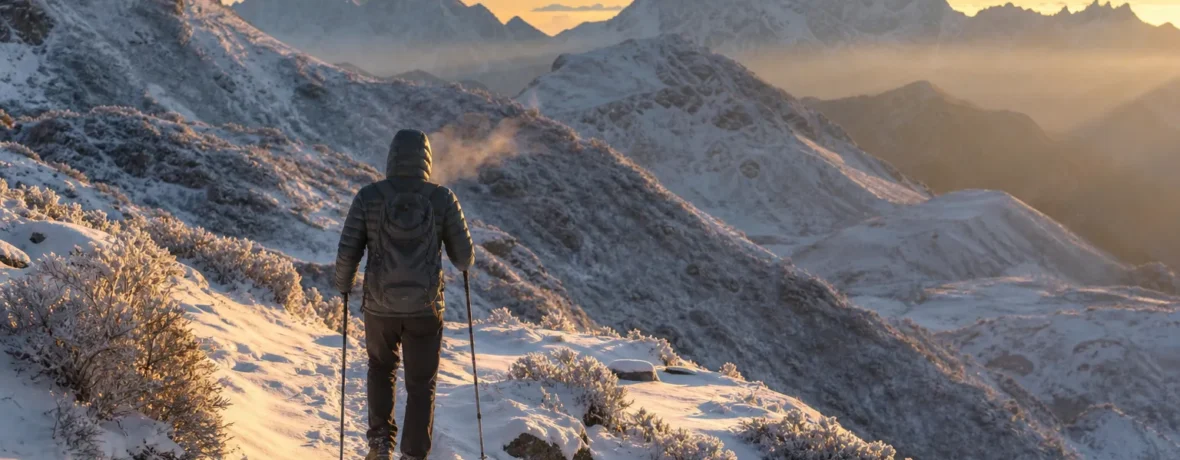
Yes, winter hiking is worth it. Absolutely, if you dress in layers, carry traction, start with a short trail, and turn around before conditions get ugly. In exchange, you get quieter miles, clearer views, fewer bugs, cooler effort, and a sharper kind of beauty summer rarely delivers.
Is winter hiking worth it?
Yes, winter hiking worth it is the rare outdoor take that gets truer the more you do it. Summer gets the postcards. Fall gets the poetry. Spring gets the wildflowers. Winter gets the hikers who are paying attention.
Here’s the case: winter strips the trail down to its best parts. The crowd noise drops. The bugs vanish. The humidity quits. The woods open up. Bare trees give you sightlines you never get in July. Snow covers scars, mud, roots, and old boot churn, turning familiar trails into clean lines and quiet rooms.
Winter also makes you more honest. You can’t fake preparation in 18°F [-8°C] wind. You can’t shrug off cotton socks, dead headlamp batteries, or a water bottle frozen solid. That sounds harsh, but it is exactly why winter hiking is so satisfying. The margin is smaller. Your decisions matter. When you get it right, the reward feels earned.
What makes winter hiking better than summer hiking?
The best part is the silence.
Summer trails can feel like a moving parking lot with switchbacks. Winter gives you space. Not everywhere, not every weekend, but often enough that you can hear your own steps: the squeak of packed snow, the click of trekking poles, the small thump of your pack settling against your shoulders.
Winter light is better, too. Low sun cuts through the trees sideways. Ice catches it. Ridges look sharper. A 3-mile [4.8-kilometer] loop you have hiked ten times can feel new because winter changes the whole stage set.
| Season | What you usually get | What winter does better |
|---|---|---|
| Summer | Long daylight, warm starts, busy trailheads | Winter gives fewer crowds and no mosquitoes |
| Fall | Color, crisp air, popular weekends | Winter gives deeper quiet after leaf season ends |
| Spring | Running water, flowers, mud | Winter gives firmer footing when trails are frozen |
That last line matters. A frozen trail can be cleaner than a thawed-out spring trail, provided you have traction and stay off routes where freeze-thaw cycles create unsafe ice. Mud season chews up tread. Winter, done right, can be gentler.
Is winter hiking safe for beginners?
Yes, if beginners choose beginner winter conditions.
That means short, familiar, low-consequence trails. Think 2 to 4 miles [3.2 to 6.4 kilometers], modest elevation, reliable cell coverage if possible, and an easy bail-out. Your first winter hike should not involve a remote ridge, an unbroken snowfield, avalanche terrain, or a road that may trap your car.
The National Park Service winter hiking guidance is refreshingly practical: check conditions, carry essentials, dress in layers, and remember that cell service may not exist. That is not scare language. That is trail sense.
Beginners should also stop measuring hikes only by mileage. In winter, 3 miles [4.8 kilometers] can take the effort of 6 miles [9.7 kilometers] if snow is soft, the trail is icy, or you are stopping to adjust layers. Time matters more than distance. Daylight matters most of all.
What should you wear hiking in winter?
Wear layers you can adjust fast.
The goal is not to feel toasty at the trailhead. That is the classic rookie mistake. If you are warm while standing still, you may be sweating 15 minutes later. Sweat is the enemy because wet clothing pulls heat away once you slow down.
- Base layer: Synthetic or wool, never cotton.
- Midlayer: Fleece, active insulation, or a light puffy.
- Shell: Windproof or waterproof-breathable, depending on weather.
- Hands: Liner gloves plus warmer gloves or mittens.
- Head: Warm hat and a buff or neck gaiter.
- Feet: Wool socks and footwear that fits with those socks without squeezing your toes.
- Traction: Microspikes or similar traction for packed snow and ice.
Do not overdress on the climb. Start slightly cool, hike for 10 minutes, then adjust. Zip open. Swap gloves. Drop the hood. Winter comfort is not one perfect outfit; it is constant small tuning.
How do you start winter hiking safely?
Start smaller than your ego wants.
That is the whole trick. Winter rewards humility and punishes swagger. You can build skill quickly, but you need clean reps first.
- Pick a trail you already know. Familiar junctions and landmarks reduce decision stress when snow changes the view.
- Check the forecast and trail conditions. Look at temperature, wind, precipitation, and road access before you leave home.
- Pack the 10 essentials. The National Park Service 10 essentials list is a solid baseline, and winter adds insulation, traction, and extra food.
- Set a turnaround time. If sunset is 4:45 p.m., your pride does not get a vote at 3:30 p.m.
- Tell someone your plan. Share the trailhead, route, expected finish time, and what to do if you miss check-in.
- Turn around early. Bad footing, numb fingers, rising wind, or a trail you keep losing are all good reasons to quit.
If your route crosses or travels beneath steep snowy slopes, treat it as avalanche terrain until you have the training to say otherwise. Check the local avalanche forecast before you go; the Avalanche.org forecast guide explains what a forecast includes and why it matters. If you do not know how to read avalanche terrain, choose a different trail.
What gear do you need for winter hiking?
You need gear that keeps you warm, found, fed, hydrated, and moving.
That does not mean you need to buy a mountaineering kit for a snowy park loop. It does mean your normal summer daypack is probably too thin. Winter adds consequences. Your pack should reflect that.
- Map and compass, plus a charged phone with offline maps
- Headlamp with spare batteries or a backup light
- Extra insulation layer packed dry
- Wind shell or rain shell
- Microspikes or other traction suited to the trail
- Trekking poles with snow baskets if conditions call for them
- High-calorie snacks that stay edible when cold
- Water carried where it is less likely to freeze
- Emergency blanket or bivy
- First-aid kit and fire starter
Two small pieces of advice save many winter days: keep snacks in an inner pocket, and carry at least one water bottle upside down. Ice forms near the air gap first, so an upside-down bottle may keep the cap usable longer.
When is winter hiking not worth it?
Winter hiking is not worth it when the risk beats the reward.
That line moves. A windy 20°F [-7°C] day on a protected forest loop can be fine. The same temperature above treeline can be miserable or dangerous. Freezing rain is rarely heroic. It is usually just a fast way to coat the trail, your jacket, your gloves, and your car in problems.
Skip the hike or change the route when you see any of these red flags:
- Freezing rain in the forecast
- High winds on exposed ridges
- Fresh snow over ice
- Unplowed or questionable access roads
- Stream crossings with ice shelves or high water
- Any avalanche concern you are not trained to assess
- Cold rain with no reliable way to stay dry
There is no shame in swapping a summit for a sheltered loop. The mountain will not remember. Your fingers might.
When to see a doctor
Get medical help fast for signs of hypothermia or frostbite.
Cold injuries are not toughness tests. The CDC frostbite guidance says redness or pain can be an early sign, and medical care is needed if frostbite signs appear. Numb, waxy, hard, grayish, or blistering skin deserves urgent attention.
Hypothermia is a medical emergency. The Mayo Clinic hypothermia first-aid guidance defines it as body temperature below 95°F [35°C] and lists warning signs such as shivering, slurred speech, shallow breathing, confusion, and loss of coordination. If someone is confused, clumsy, very drowsy, or no longer shivering despite being cold, stop the hike and seek emergency help.
Do not rub frostbitten skin. Do not keep hiking on numb feet because the car is “only” a mile away. Protect the person from wind and wet, remove wet clothing if you can do it safely, and get professional care.
Related reading
- Is the Inca Trail Worth It?
- Is an REI Membership Worth It?
- Why Night Hiking Is Worth Trying
- Is Climbing Everest Still Worth It?
FAQ
Is winter hiking harder than summer hiking?
Yes, winter hiking is usually harder at the same mileage. Snow, ice, extra layers, shorter daylight, and colder stops all raise the effort, so cut your normal distance until you know your pace.
Can you hike in regular hiking boots in winter?
Yes, on mild trails, if the boots are warm enough, fit wool socks, and accept traction devices. For deep snow, extreme cold, or long stops, insulated winter boots may be the better call.
Do I need snowshoes for winter hiking?
You need snowshoes when snow is deep or soft enough that you sink with most steps. On packed trails, microspikes are often more useful than snowshoes because ice and hard snow are the main footing problem.
What temperature is too cold for winter hiking?
There is no single cutoff that fits every hiker. Wind, wet clothing, route exposure, fitness, gear, and escape options matter more than the number on the thermometer.
Why do people like winter hiking so much?
People like winter hiking because it makes familiar trails feel wild again. The quiet, clean views, crisp air, and low crowd levels turn a simple walk into something sharper and more memorable.
What is the best first winter hike?
The best first winter hike is a short trail you already know. Choose low elevation, easy footing, clear markers, and a route where turning around early still feels like a good day.